





Table of Contents
ToggleFinishing a basement bedroom isn’t just about adding square footage, it’s about creating livable, code-compliant space that feels inviting even though the challenges of below-grade construction. Poor lighting, moisture concerns, and low ceilings can make basement bedrooms feel more like bunkers than retreats. But with deliberate material choices, thoughtful layout, and attention to building science, homeowners can turn those lower-level square feet into comfortable sleeping quarters. Whether carving out a small basement bedroom for guests or planning a basement master bedroom suite, the principles remain the same: control moisture, maximize light, and design around the space’s inherent limitations rather than fighting them.
Key Takeaways
- Basement bedroom ideas must prioritize code-compliant egress windows (minimum 5.7 square feet opening), moisture control, and proper HVAC integration to create livable, comfortable space.
- Maximize natural and artificial light through reflective window wells, layered LED lighting on multiple circuits, and daylight-temperature bulbs (5000K–6500K) to counter the cave-like atmosphere.
- Use light wall colors (soft white, pale gray, cream) and paint exposed joists or ceilings in dark matte finishes to visually expand tight quarters and increase perceived headroom.
- Install custom wardrobes, under-bed storage with moisture-sealed lids, and wall niches to maximize vertical space without losing precious floor area.
- Select moisture-resistant flooring like luxury vinyl plank (LVP) with proper underlayment, target 50% relative humidity with dehumidifiers, and layer textiles to add warmth and comfort.
- Work within the IRC-mandated 7-foot ceiling minimum by choosing low-profile furniture, wall-mounted fixtures, and vertical design elements that draw the eye upward rather than fight the space’s constraints.
Maximize Natural Light and Brighten Your Space
Basement bedrooms typically suffer from limited window area due to below-grade construction. The International Residential Code (IRC) requires bedrooms to have egress windows with a minimum 5.7 square feet of opening area and 24 inches of clear height, both for safety and habitability. If existing windows don’t meet code, install egress-compliant units, this often means cutting foundation walls and installing window wells, which requires professional excavation and masonry work.
Beyond code compliance, window wells themselves affect light penetration. Galvanized steel wells are durable but absorb light: consider white or reflective liners to bounce daylight into the room. Some homeowners install stepped wells or terraced designs that widen at the top, capturing more sunlight at varying angles throughout the day.
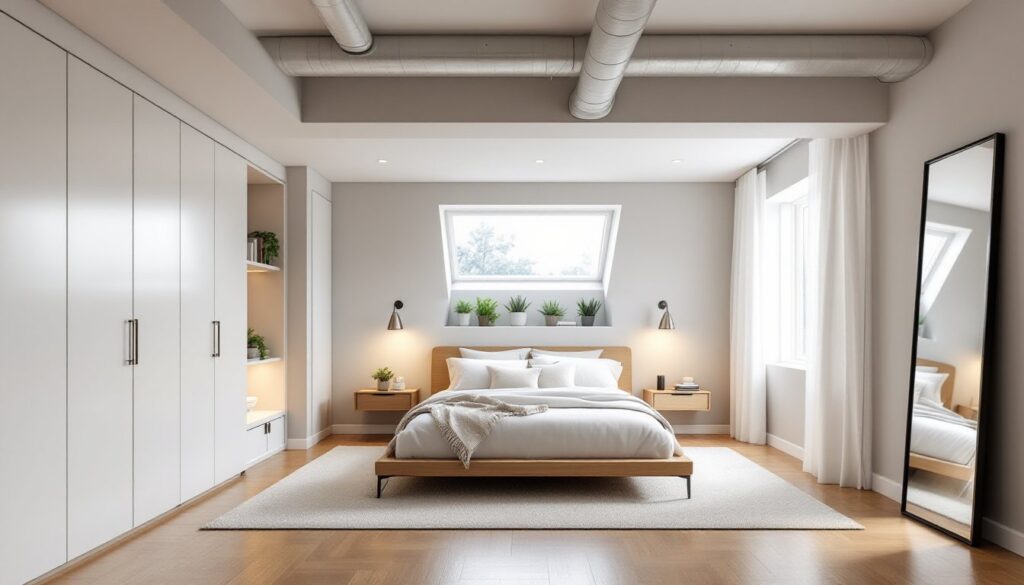
For rooms with minimal window access, supplement with quality artificial lighting on multiple circuits. Use recessed LED cans (4-inch or 6-inch housings) for general illumination, aim for roughly one fixture per 25 square feet of ceiling area. Layer in task lighting with swing-arm wall sconces flanking the bed, and add ambient options like LED strip lighting in recessed coves or behind floating shelves. Daylight-temperature bulbs (5000K–6500K) mimic natural light and help counter the cave-like feel common in basement spaces.
Choose the Right Color Palette for a Welcoming Atmosphere
Light colors reflect available lumens and visually expand tight quarters. Flat or matte-finish paints in shades like soft white, pale gray, or warm cream work well on walls: reserve semi-gloss for trim to create subtle contrast without closing in the space. A gallon of quality interior paint typically covers 350–400 square feet per coat: most basement bedrooms need at least two coats over properly primed drywall.
Avoid the temptation to go all-white, it can read sterile under artificial light. Instead, introduce warmth with accent walls in muted earth tones (greige, taupe, soft sage) or use washable low-VOC paints with slight tints that add personality without overwhelming limited natural light.
Ceilings deserve attention too. Painting exposed joists, ductwork, and the deck above in a unified color, typically matte black or charcoal, creates an industrial-chic look that visually recedes, making low ceilings feel taller. If the ceiling is drywalled, stick with white or a shade lighter than the walls to maintain headroom perception. In small basement bedroom layouts, continuity between wall and ceiling color can blur boundaries and make the room feel more expansive.
Smart Storage Solutions to Keep Your Basement Bedroom Clutter-Free
Basement bedrooms often lack closets, especially in retrofit builds. Install custom-built wardrobes or wall-mounted closet systems to maximize vertical space. IKEA PAX or similar modular units work well: anchor them to studs with 3-inch construction screws rated for the load. For foundations with metal studs or concrete walls, use appropriate anchors, toggle bolts for drywall over metal framing, Tapcon concrete screws for direct masonry attachment.
Under-bed storage is critical in compact layouts. Platform beds with built-in drawers or beds on risers (adding 12–18 inches of clearance) create room for rolling bins. Choose bins with tight-sealing lids to protect contents from potential moisture, even well-waterproofed basements experience higher relative humidity than upper floors.
Wall niches framed between studs offer recessed storage without eating floor space. Standard 2×4 framing (actual dimensions 1.5″ x 3.5″) creates shallow niches ideal for books or decor: 2×6 walls (actual 1.5″ x 5.5″) provide deeper shelving. Line niches with LED tape lighting for functional display areas. Floating shelves work too, but verify mounting: drywall anchors rated for 50 pounds per shelf minimum, or better yet, locate and fasten directly into studs with 2.5-inch wood screws.
Create Proper Ventilation and Climate Control
Basements are prone to moisture and poor air exchange. The bedroom must tie into the home’s HVAC system, both supply and return ducts, to meet code and ensure comfort. An undersized or imbalanced system leads to stuffiness, mold risk, and temperature swings. Consult an HVAC professional to calculate load and verify duct sizing: adding a bedroom often requires upsizing the furnace or adding a dedicated zone with its own thermostat.
If tying into existing ductwork isn’t feasible, mini-split heat pumps offer efficient heating and cooling without major demo. Units rated for the room’s square footage (typically 9,000–12,000 BTU for a standard bedroom) handle climate control while providing dehumidification, which is crucial below grade.
Standalone dehumidifiers are often necessary even with HVAC. Target 50% relative humidity or below to prevent mold growth on organic materials like drywall paper, wood trim, and textiles. Units rated for 50–70 pints per day suit most basement bedrooms: models with built-in condensate pumps eliminate the need for manual emptying and can drain directly into a floor drain or sump.
Ensure adequate ventilation at the window as well. Egress windows should open fully, and adding a quiet exhaust fan (rated at 50–80 CFM) ducted to the exterior helps manage humidity and improve air quality, especially in basement master bedroom ideas where occupants spend extended time.
Design Tips for Low Ceilings and Small Spaces
Basement ceiling heights vary, but many fall short of the upper-floor standard 8 feet. IRC mandates a minimum 7-foot ceiling height for habitable rooms, with allowances for beams and ducts as low as 6 feet 8 inches if they don’t occupy more than 50% of the room’s area. Work within these constraints rather than fighting them.
Exposed ceilings (painted joists and mechanicals) can actually increase headroom compared to a dropped drywall ceiling that eats 4–6 inches with framing and panels. Route new electrical in surface-mount conduit or use shallow pancake junction boxes to avoid further height loss.
Furniture scale matters in tight quarters. Low-profile platform beds reduce visual bulk and make ceilings feel higher. Skip tall dressers in favor of wide, shallow units. Wall-mounted nightstands and floating desks preserve floor space and ease cleaning.
In small basement bedroom ideas, mirrors strategically placed opposite windows amplify light and create depth. Vertical design elements, floor-to-ceiling curtains, tall narrow artwork, shiplap or board-and-batten wainscoting running vertically, draw the eye upward. Avoid heavy crown molding or ornate ceiling details that emphasize the low plane overhead.
Add Comfort with Thoughtful Flooring and Textiles
Concrete slab floors are cold and unforgiving. Engineered hardwood, luxury vinyl plank (LVP), or tile all work below grade, but require appropriate underlayment. Use moisture-barrier underlayment rated for basement applications, typically 6-mil polyethylene sheeting overlapped and taped at seams, or proprietary foam underlayments with integrated vapor barriers.
LVP is a practical choice: waterproof, warmer underfoot than tile, and forgiving over minor slab imperfections. It installs as a floating floor, so no fasteners penetrate the slab’s moisture barrier. Avoid solid hardwood and laminate, both of which are vulnerable to moisture-related swelling and delamination.
Carpet adds warmth but poses mold risk if the slab isn’t bone-dry. If installing carpet, use closed-cell foam padding rather than rebond (which retains moisture) and ensure the slab has been tested with a calcium chloride moisture test, readings above 3 pounds per 1,000 square feet per 24 hours indicate too much moisture for most carpet adhesives and padding.
Layering textiles helps. Washable area rugs over hard flooring provide warmth and sound absorption without the commitment or risk of wall-to-wall carpet. Heavy curtains or cellular shades on egress windows add insulation and light control. Quality bedding, down comforters, flannel sheets in winter, counters the basement’s inherent coolness and makes the space feel like a true retreat rather than an afterthought.
Conclusion
Basement bedrooms demand more planning than upper-level rooms, but the payoff is real: added capacity, increased home value, and usable space that would otherwise sit unfinished. Focus on the fundamentals, egress, moisture control, HVAC integration, and code compliance, then layer in design choices that address light, scale, and comfort. Done right, a basement bedroom becomes a genuine asset, not just a placeholder with a mattress.