




Table of Contents
ToggleA backyard deck should be a place to unwind, not a stage for the neighborhood. Whether it’s curious neighbors, street traffic, or an overlooking second-story window, lack of privacy can make even the nicest outdoor space feel exposed. The good news? Creating a private deck doesn’t require tearing everything down and starting over. From fast-growing plants to DIY screen panels, homeowners have dozens of ways to carve out seclusion without very costly or violating HOA rules — enough to finally enjoy a private sun lounger setup without feeling like you’re on display. This guide covers 15 practical deck privacy ideas, natural barriers, structural additions, and flexible screens, that work for different budgets, skill levels, and yard layouts.
Key Takeaways
- Deck privacy ideas range from natural solutions like fast-growing bamboo and evergreen shrubs to structural options like fences and pergolas, each suited to different budgets and maintenance preferences.
- Natural privacy solutions such as climbing vines and ornamental grasses take time to fill in, but buying larger plant specimens can deliver mature screening within one to two years instead of waiting longer.
- Structural privacy options like horizontal slat walls and corrugated metal panels require permanent installation and potential permits, but provide 15–25 years of durability with minimal ongoing care.
- Fabric and screen solutions, including outdoor curtains and retractable privacy screens, offer flexible deck privacy at moderate cost ($200–$600 for motorized systems) but typically last 5–10 years and need seasonal storage in freeze-prone climates.
- Before installing any privacy solution, identify which sightlines need blocking, measure height requirements (6 feet for standing adults, 7–8 feet for second-story views), and verify local zoning rules and HOA restrictions to avoid costly removals.
- Combining multiple privacy approaches—such as a low fence paired with tall grasses or curtains added to a pergola—often delivers superior results and visual interest compared to relying on a single solution.
Why Deck Privacy Matters for Your Outdoor Living Space
Privacy transforms how people use their decks. Without it, families skip morning coffee in pajamas, avoid lounging by the pool, or hesitate to host evening gatherings. A shielded deck extends usable living space and increases property value, buyers pay more for outdoor areas that feel like true extensions of the home.
Beyond comfort, privacy addresses practical concerns. Decks facing busy streets benefit from sound dampening that plants and solid panels provide. Homes with close-set neighbors need visual barriers that don’t create hostile “fortress” vibes. The right solution balances seclusion with airflow, light, and local building codes.
Most municipalities regulate fence height (typically 6-8 feet in rear yards, 3-4 feet in front setbacks) and require permits for permanent structures. Homeowners should check zoning rules before installing anything anchored to the ground or attached to the house. Temporary solutions like potted plants and freestanding screens usually dodge permit requirements, making them smart starting points for renters or those testing layouts.
Natural Privacy Solutions: Plants, Trees, and Living Screens
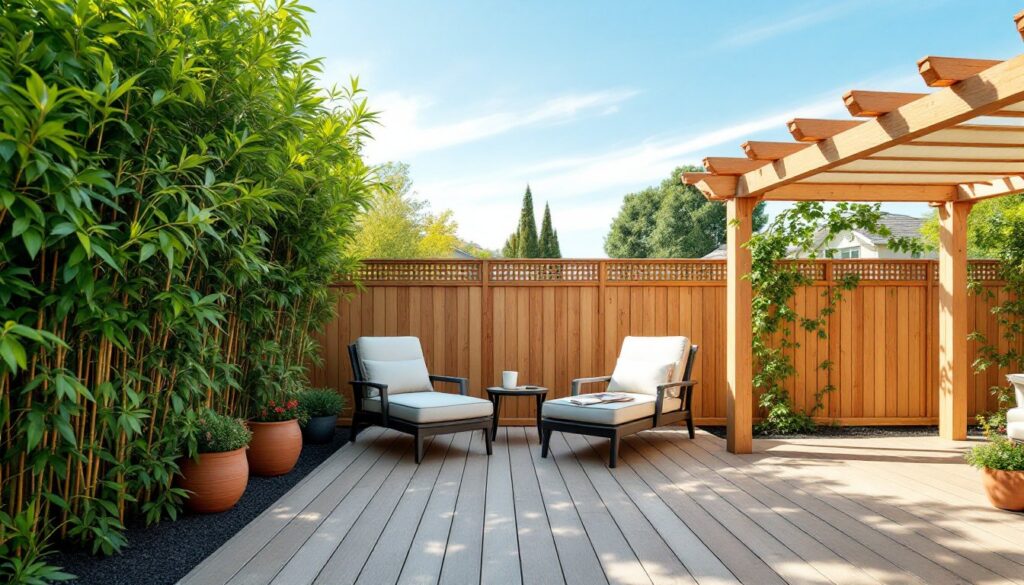
Containerized bamboo creates dense screens fast, some clumping varieties grow 3-5 feet per year. Use 30-gallon pots minimum to prevent tipping and choose clumping species (not running types that spread aggressively). Bamboo tolerates full sun to partial shade and needs weekly watering during establishment.
Evergreen shrubs like arborvitae, skip laurel, or boxwood provide year-round coverage. Plant them 18-24 inches apart for a solid hedge within two growing seasons. Pair with drip irrigation on timers, hand-watering a long hedge gets old fast.
Climbing vines on trellises work well for narrow spaces. Clematis, climbing hydrangea, and jasmine soften hard edges while filtering sightlines. Attach cattle panels (welded wire fencing from farm supply stores, about $20 per 16-foot panel) to deck posts using galvanized fence staples. The 4-inch grid supports vine tendrils better than chain-link.
Ornamental grasses like miscanthus or pampas grass grow 6-10 feet tall in full sun and need zero maintenance beyond an annual spring cutback. Space them 3 feet apart for a flowing, natural screen that moves with the wind.
Living screens take time to fill in. Homeowners wanting instant results should buy larger specimens, a 5-gallon shrub costs 2-3 times more than a 1-gallon but arrives at mature size two years sooner.
Structural Privacy Options: Fences, Walls, and Pergolas
Vertical board fences offer complete seclusion. Use pressure-treated 2x6s or cedar 1x6s spaced tight or with 1-inch gaps for airflow. Attach boards to horizontal 2×4 rails fastened to 4×4 posts set in concrete. A 6-foot fence requires posts every 6-8 feet and two rails: go to three rails for 8-foot heights. Budget $15-$30 per linear foot for materials, depending on wood species.
Horizontal slat walls create modern deck privacy wall ideas with a clean, architectural look. Run 1×4 or 1×6 boards horizontally with ½-inch to 2-inch spacing. This design needs sturdy vertical supports, use 4×4 posts sunk at least 24 inches below grade (deeper in frost-prone areas per local code). The gap size controls privacy: tighter spacing blocks views, wider spacing filters light while maintaining airflow.
Lattice panels (premade 4×8 sheets, $25-$50 each) mount quickly to existing deck railings using exterior-grade screws. Paint or stain them to match the deck. Lattice alone provides partial screening: combine it with vines for full coverage.
Pergolas with crossbeams and shade cloth add overhead and side privacy. Build with 2×8 or 2×10 rafters spanning no more than 12 feet without support. Drape shade cloth (available in 50%-90% UV block ratings) along open sides and secure with zip ties or grommets. This combo blocks sightlines from second-story windows while keeping the deck cool.
Corrugated metal panels work for industrial or farmhouse aesthetics. Use 26-gauge galvanized or Cor-Ten steel sheets attached to a 2×4 frame. Panels come in 8-12 foot lengths and cost $2-$4 per square foot. Wear gloves, cut edges are razor-sharp. Drill pilot holes before screwing into metal to avoid splitting.
Fabric and Screen Solutions for Flexible Privacy
Outdoor curtains mount to pergola beams or eye hooks screwed into deck posts. Use marine-grade grommets and stainless steel cable or curtain rods rated for exterior use. Fabrics labeled solution-dyed acrylic (like Sunbrella) resist fading and mildew better than polyester. Expect to pay $30-$80 per panel depending on size.
Roll-up bamboo shades install like window blinds. Attach mounting brackets to the underside of a pergola or deck overhang, then roll them down for instant deck screening ideas. They filter light, block wind, and store compactly when not needed. Bamboo weathers to gray unless sealed annually with exterior varnish.
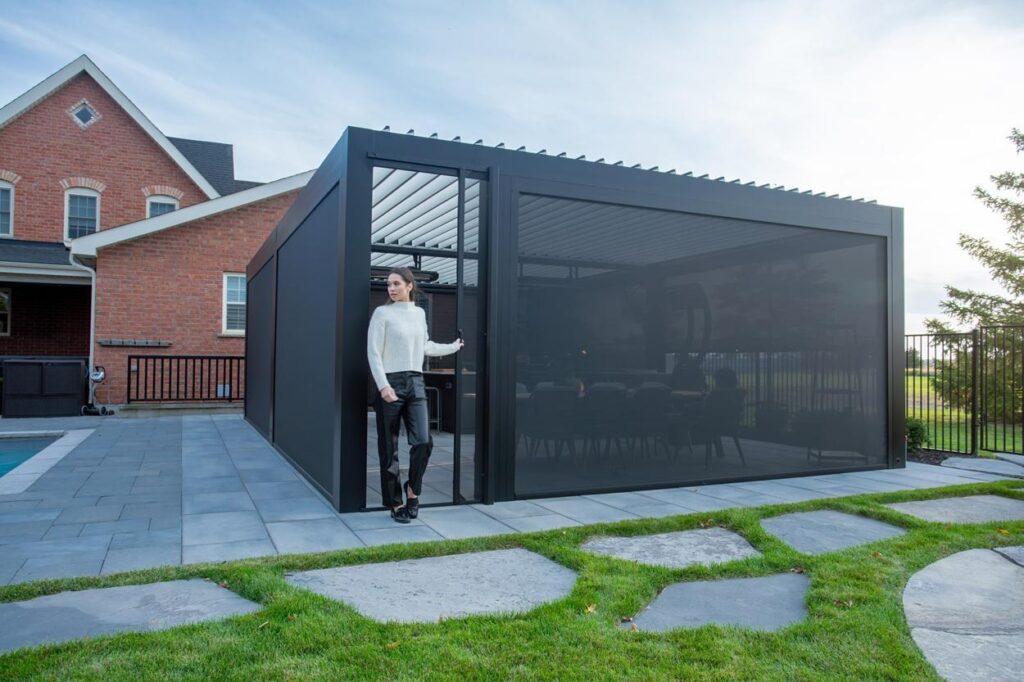
Retractable privacy screens (manual or motorized) slide along overhead tracks. DIY kits run $200-$600 for an 8-foot section. They’re ideal for decks where permanent walls would block desirable views or violate setback rules. Installation requires level mounting, use a laser level and check manufacturer specs for weight load on attachment points.
Shade sails stretched at angles provide overhead and partial side coverage. Anchor them to deck posts, fascia boards, or ground-mounted anchors. Use turnbuckles on each corner to adjust tension and prevent sagging. UV-rated sails last 5-8 years before requiring replacement.
All fabric solutions need seasonal storage in freeze-prone climates. Wet fabric left up through winter can freeze, tear, and promote mold growth on the deck below.
Creative DIY Deck Privacy Ideas on a Budget
Pallet walls repurpose free or cheap shipping pallets into rustic screens. Disassemble pallets, remove nails, sand rough edges, and rebuild boards into vertical or horizontal patterns. Treat with exterior wood stain or paint. Cost: under $50 for fasteners and finish.
PVC pipe trellises support climbing plants at a fraction of wood’s cost. Build a grid from 1-inch schedule 40 PVC pipe using elbow and tee fittings (no glue needed for temporary setups). A 10-foot-tall, 8-foot-wide frame uses about $40 in materials. Spray-paint it to avoid the plastic look.
Outdoor privacy screen panels made from canvas drop cloths stretched over 2×2 frames take an afternoon to build. Staple cloth to the frame back, then screw frames together at corners or hinge them for a folding screen. A 6-foot-tall, three-panel screen costs about $60.
Vertical gardens using pocket planters or gutter sections mounted to railings create living walls. Fill with herbs, succulents, or trailing flowers. Use landscape fabric to line containers and prevent soil spill. Drill drainage holes to avoid root rot.
Reclaimed doors or shutters lean against railings or hang from hooks for instant vintage charm. Check Habitat for Humanity ReStores or salvage yards, old doors run $10-$30 each. Clean, sand, and seal them with exterior polyurethane to handle weather. These repurposed pieces can also add practical privacy and shade to outdoor spaces while maintaining their character. For a more functional window treatment, roller shutters Five Dock can complement vintage elements while offering additional light and weather control. Combining salvaged features with practical upgrades creates an outdoor area that feels both distinctive and comfortable.
Choosing the Right Privacy Solution for Your Deck
Start by identifying which sightlines need blocking. Walk the deck at different times of day and note where neighbors, streets, or buildings intrude. Measure the height needed, 6 feet blocks standing adults, 7-8 feet shields against second-story views.
Consider airflow and light. Solid walls trap heat and create wind tunnels: slatted or louvered designs let breezes through. Decks facing west benefit from screens that filter afternoon sun without eliminating it entirely.
Match materials to the deck’s existing finishes. Cedar screens pair well with wood decks, while metal or composite panels complement modern composite or PVC railings. Mixing textures (wood with fabric, plants with metal) adds visual interest without clashing.
Budget realistically. Natural solutions cost less upfront but require ongoing maintenance (watering, pruning, fertilizing). Structural options have higher initial costs but last 15-25 years with minimal care. Fabric and screens fall in between, moderate cost, 5-10 year lifespan, and seasonal setup.
Check HOA rules and local codes before buying materials. Some neighborhoods restrict fence styles, colors, or heights. Call the permit office for anything permanently attached to the house or anchored below grade. Most jurisdictions allow temporary, freestanding elements without permits.
Conclusion
Deck privacy doesn’t require a complete overhaul or a contractor’s quote. Whether it’s fast-growing bamboo in planters, a DIY horizontal slat wall, or retractable shade screens, the right solution depends on budget, skill level, and how much coverage the space needs. Combining approaches, like pairing a low fence with tall grasses or adding curtains to a pergola, often delivers better results than any single fix. With a tape measure, a weekend, and a clear plan, any deck can become the private retreat it was meant to be.