



Table of Contents
ToggleA deck without a roof limits outdoor enjoyment to fair-weather days. Rain, harsh sun, and UV damage leave furniture faded and guests scrambling indoors. Adding a roof transforms a basic deck into a year-round retreat, extending living space, protecting investments, and creating a shaded gathering spot that holds up in any season. Whether the goal is full weather protection or just enough shade to keep things comfortable, the right deck roof balances function, style, and budget. From traditional gable designs to sleek modern pergolas, the options fit every home and skill level.
Key Takeaways
- A deck roof transforms outdoor living into a year-round retreat by providing weather protection, extending usability, and increasing home value through expanded functional square footage.
- Popular deck roof ideas range from traditional gable and hip designs that match house architecture to modern options like louvered systems, cable-supported canopies, and polycarbonate panels that offer adjustability and contemporary aesthetics.
- Budget-friendly alternatives including retractable canopy pergolas ($300–$800), shade sails ($50–$300), and corrugated fiberglass panels ($1.50–$3 per square foot) deliver shade and weather protection without major structural work.
- Material selection—from asphalt shingles ($1–$3/sq ft) and metal panels ($3–$8/sq ft) to polycarbonate and tile—should match your climate, maintenance tolerance, and long-term durability goals.
- Local building permits, proper ledger attachment to house framing, adequate post footings below frost line, and a minimum roof slope of 1/4 inch per foot are critical to ensure safety, code compliance, and longevity.
Why Add a Roof to Your Deck?
A covered deck extends usability beyond summer weekends. UV protection keeps outdoor furniture, grills, and finishes from degrading. A roof also reduces deck surface temperatures by 15–20°F on hot days, making barefoot traffic more comfortable.
Homeowners in wet climates gain year-round access without puddles or slip hazards. In dry regions, shade lowers cooling costs by blocking direct sun from entering adjacent interior rooms through sliding doors or windows.
Structurally, a roof adds value. Appraisers recognize covered outdoor space as functional square footage, often boosting resale appeal. But adding a roof isn’t purely cosmetic, most jurisdictions classify it as a structural modification requiring permits and engineered plans, especially if attaching to the house. Check local codes before committing to a design.
Deck ideas with roof structures also allow for integrated lighting, ceiling fans, and even outdoor speakers, turning a simple deck into a true outdoor room.
Traditional Deck Roof Designs
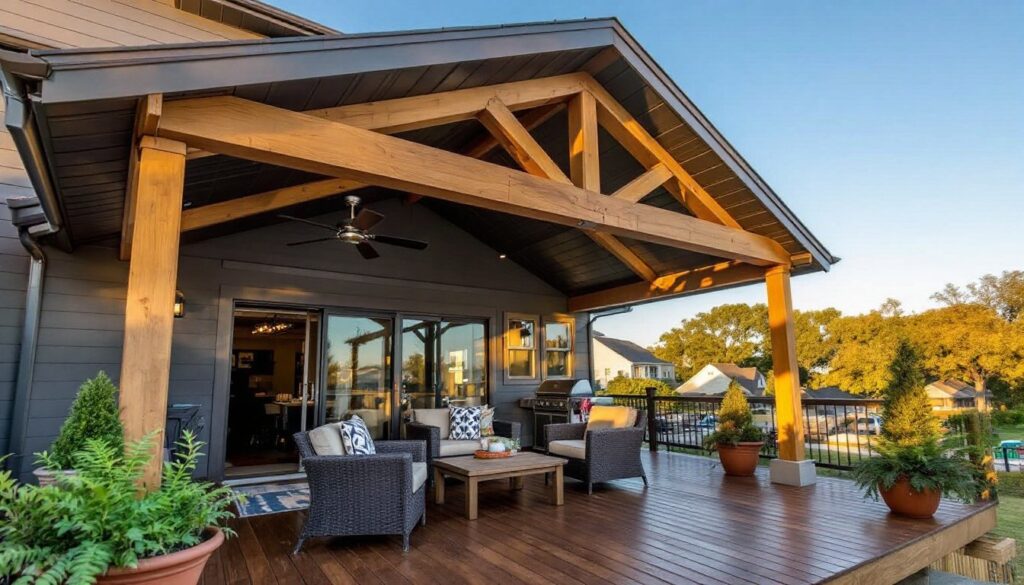
Traditional roofs mirror main-house architecture, creating visual continuity. These are fully enclosed structures with solid roofing material, shingles, metal panels, or tiles, offering complete weather protection.
Gable and Hip Roof Styles
Gable roofs feature two sloped planes meeting at a central ridge, shedding water efficiently and providing generous headroom. They’re straightforward to frame using standard 2×6 or 2×8 rafters spaced 16 or 24 inches on center, depending on snow load and span. A gable roof works well for rectangular decks and suits homes with traditional pitched roofs.
Hip roofs slope on all four sides, offering a lower profile and better wind resistance, ideal for coastal or high-wind zones. Framing is more complex, requiring angled hip rafters and jack rafters, but the result is cleaner sightlines and symmetrical aesthetics.
Both styles require flashing where the roof meets the house, proper drainage via gutters, and often an engineered ledger board bolted to wall studs or rim joists. Roofing material should match or complement the main house: asphalt shingles for affordability, metal panels for longevity, or standing seam for a modern twist on a classic form.
These roofs typically demand footings for support posts sunk below frost line (consult local frost depth requirements). Expect to pull permits and possibly hire a structural engineer for load calculations.
Modern and Contemporary Deck Roof Options
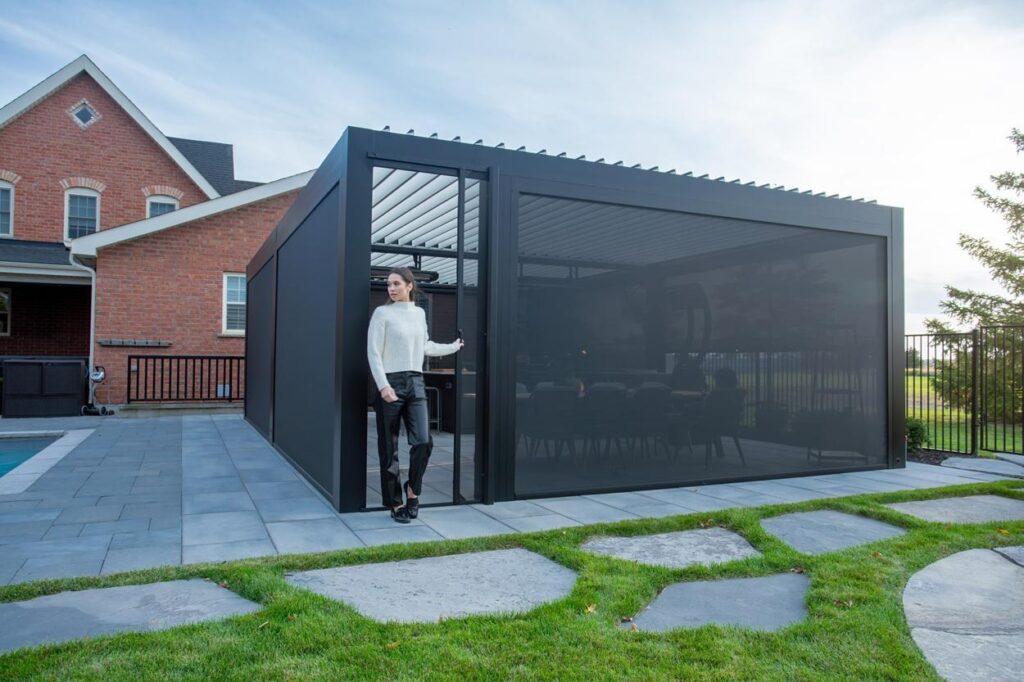
Modern deck with roof ideas emphasize clean lines, open airiness, and integration with indoor-outdoor living. Materials lean toward metal, polycarbonate, and minimalist framing.
Flat or low-slope roofs use aluminum or steel beams with corrugated metal panels or polycarbonate sheets. Polycarbonate offers UV filtering and translucency, letting diffused light through while blocking direct sun. Panels come in clear, bronze, or frosted finishes and install over 2×4 or 2×6 purlins spaced per manufacturer specs (commonly 24 inches on center). Seal edges with closure strips to prevent insect entry and water infiltration.
Louvered roofs add adjustability. Motorized or manual systems rotate slats from fully open to fully closed, controlling sun, shade, and ventilation. These are pricier, often $4,000–$12,000 installed depending on size, but deliver flexibility and a high-end aesthetic.
Cable-supported canopies stretch waterproof fabric (like Sunbrella or PVC-coated polyester) over a steel frame with tensioned cables. They provide shade without visual bulk, though fabric requires periodic replacement (typically 5–10 years depending on climate).
All modern designs benefit from integrated LED strip lighting or recessed cans. Wire during framing to avoid surface-mount retrofits.
Budget-Friendly Deck Roof Solutions
Homeowners can achieve shade and weather protection without major structural work or five-figure budgets. These solutions prioritize function and DIY feasibility.
Pergolas with retractable canopies offer adjustable coverage. Build a basic pergola frame using pressure-treated 4×4 posts and 2×6 or 2×8 beams, then add a retractable fabric canopy on tracks. Kits start around $300–$800 and install in a weekend. Fabric retracts to let winter sun through and extends for summer shade.
Corrugated fiberglass or polycarbonate panels laid over a simple rafter frame deliver waterproofing at low cost. Panels run $1.50–$3 per square foot at home centers. Overlap panels by one corrugation and fasten with neoprene-sealed screws to prevent leaks. Slope at least 1/4 inch per foot for drainage.
Shade sails are the fastest, cheapest option. UV-rated polyethylene sails (often 12×12 or 16×16 feet) anchor to posts or existing structure with stainless-steel hardware. Cost: $50–$300 per sail. They provide 85–95% UV block but aren’t waterproof. Remove or loosen in high winds to prevent damage.
Lattice-top pergolas with climbing plants (wisteria, grapevines, or jasmine) create natural shade over time. This approach costs less upfront but requires patience, and regular pruning.
All budget options benefit from pressure-treated lumber rated for ground contact (for posts) and proper post anchors or concrete footings to prevent wobble.
Material Choices for Your Deck Roof
Material selection impacts durability, maintenance, aesthetics, and code compliance. Match material to climate, budget, and desired coverage level.
Asphalt shingles are economical ($1–$3 per square foot installed) and widely available. They work over solid sheathing (1/2-inch OSB or plywood) and require underlayment. Lifespan: 15–30 years depending on quality. Shingles suit traditional gable or hip roofs.
Metal panels (corrugated steel, aluminum, or standing seam) last 40+ years with minimal maintenance. Cost: $3–$8 per square foot. They’re lightweight, fire-resistant, and shed snow easily. Install over purlins without sheathing, reducing framing costs. Metal expands and contracts, so use screws with rubber washers and allow for thermal movement at panel ends.
Polycarbonate and corrugated fiberglass let light through while blocking UV. Polycarbonate is stronger and resists yellowing better than fiberglass. Cost: $2–$5 per square foot. Both are DIY-friendly but can be noisy in heavy rain unless installed with sound-dampening spacers.
Clay or concrete tiles deliver a Mediterranean look and exceptional longevity (50+ years) but require beefier framing due to weight, often 2×8 or 2×10 rafters and engineered load calculations. Cost: $8–$15 per square foot installed.
Cedar shakes offer natural beauty and insulation but demand annual maintenance (sealing, moss removal). They’re best in dry climates with low fire risk.
Choose fasteners and flashing appropriate to the material, galvanized or stainless steel for longevity.
Design Considerations Before Building
Planning prevents costly mistakes and code violations. Address these factors before purchasing materials or swinging a hammer.
Building codes and permits: Most municipalities require permits for roofs attached to the house or exceeding a certain square footage (often 120–200 square feet). Inspections verify footing depth, ledger attachment, load-bearing capacity, and egress requirements. Skipping permits risks fines and complicates future home sales.
Roof pitch and drainage: A minimum slope of 1/4 inch per foot prevents standing water. Steeper pitches (4/12 or greater) handle snow loads better and allow for vaulted ceilings underneath. Integrate gutters and downspouts to direct runoff away from the deck and foundation.
Headroom and ceiling height: Allow at least 7 feet of clearance under beams to meet IRC minimums and avoid head-bumping. Higher ceilings (8–9 feet) feel more open and accommodate ceiling fans.
Attachment vs. freestanding: Attaching a roof to the house requires flashing, proper ledger bolting into wall framing (not just siding or sheathing), and consideration of existing roof overhangs. Freestanding structures avoid house penetration but need four corner posts and cross-bracing for lateral stability.
Wind and snow loads: Consult local building tables or an engineer to size beams, posts, and footings. Coastal and mountain zones have stringent requirements. Underlighting the structure risks collapse.
Utilities: Plan electrical runs for lighting, outlets, and fans during framing. Conduit buried in posts or run overhead in beams keeps wiring clean. Hire a licensed electrician if unsure, outdoor circuits require GFCI protection and weather-rated boxes.
Aesthetics and privacy: Orient the roof to preserve views and sunlight in adjacent rooms. Add privacy screens, lattice, or curtains as needed without blocking cross-ventilation.