



Table of Contents
ToggleA dated fireplace can drag down an entire room. Whether it’s a builder-grade brick box from the ’80s or a cracked tile surround that’s seen better days, the fireplace often becomes the focal point for all the wrong reasons. The good news? A fireplace remodel doesn’t always mean gutting the structure or calling in a mason. Many makeovers are achievable over a long weekend with the right materials and a clear plan. From sleek modern designs to cozy farmhouse updates, homeowners have more options than ever to bring new life to this central feature without very costly or pulling permits.
Key Takeaways
- Fireplace remodel ideas range from modern minimalist designs to rustic farmhouse updates, with many projects achievable over a weekend without structural gutting or expensive permits.
- A fireplace remodel improves both aesthetics and function by eliminating soot stains, outdated styles, and safety hazards while boosting home value for properties on the market.
- Budget-friendly options like painting brick with high-heat masonry paint, replacing mantels, or installing peel-and-stick wood veneer can deliver dramatic results for under $300.
- Modern minimalist fireplaces use floor-to-ceiling smooth stucco, large-format porcelain panels, or linear gas inserts to create clean lines and make the flame the focal point.
- Subway tile, stacked stone veneer, and handmade terracotta tiles offer flexible surround options, though all adhesives and grout must be rated for high heat within 12 inches of the firebox.
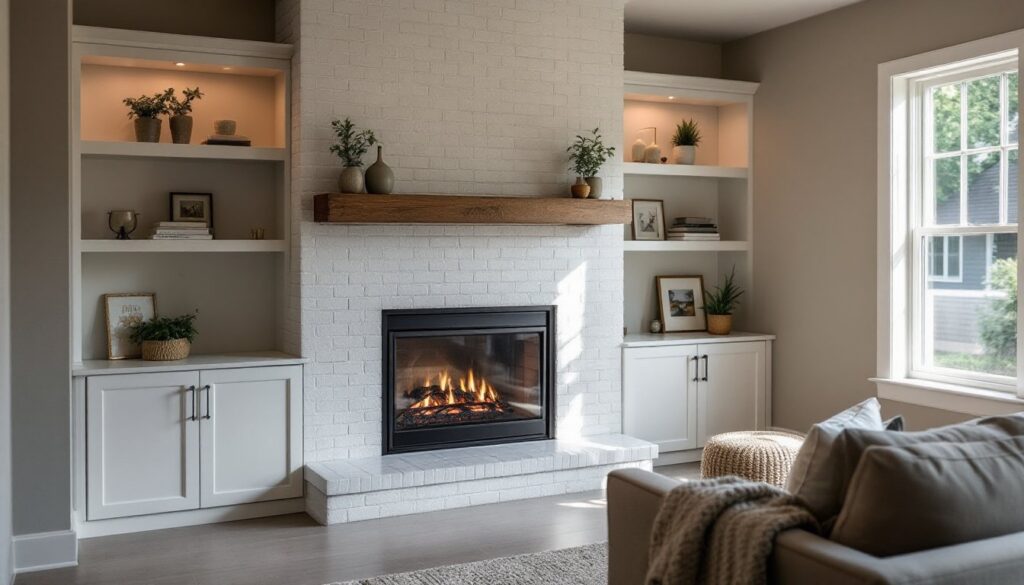
- Built-in shelving and floor-to-ceiling cabinets flanking the fireplace transform it into an integrated focal wall while adding storage, display space, and modern functionality to any room.
Why Remodel Your Fireplace?
Beyond aesthetics, fireplace renovations solve real problems. Old masonry can harbor soot stains that no amount of scrubbing will remove. Brick absorbs smoke and odors over decades, leaving a permanent haze. Outdated surrounds also reflect trends from their era, honey oak mantels, brass trim, or Mediterranean tile that clashes with modern interiors.
A remodel also improves function. Swapping a wood-burning firebox for a gas or electric insert cuts maintenance and improves heat efficiency. Adding a proper mantel creates display space and anchors the room’s design. For homes on the market, an updated fireplace boosts perceived value, buyers notice focal points first.
Safety matters, too. Cracked fireboxes, damaged dampers, or deteriorating mortar joints aren’t just ugly, they’re fire hazards. Any structural work around the firebox or chimney requires inspection and often a permit, so homeowners should distinguish cosmetic updates (painting brick, replacing a mantel) from mechanical changes (installing a new insert, repairing a flue). When in doubt, hire a certified chimney sweep or HVAC tech to assess the unit before starting cosmetic work.
Modern Minimalist Fireplace Designs
Modern fireplace remodel ideas strip away ornamentation in favor of clean lines and neutral palettes. The goal: let the flame be the focal point, not the surround.
One popular approach is a floor-to-ceiling smooth stucco or plaster finish. This requires applying a skim coat of joint compound or plaster over existing brick or drywall, then sanding smooth. Use a high-heat primer rated for at least 200°F near the firebox opening. Finish with matte paint in white, light gray, or greige. The result is a seamless, gallery-like wall that works in lofts and contemporary homes.
Large-format porcelain panels offer another modern look. These are typically 24″ × 48″ or larger, installed with thinset mortar and minimal grout lines. Porcelain withstands heat better than natural stone and comes in concrete, marble, and wood-look finishes. Installation requires a flat substrate, if the existing brick is uneven, furring strips and cement board may be needed first.
For a warmer minimalist vibe, consider a live-edge wood mantel with no other trim. Mount it on hidden steel brackets anchored into studs or masonry. Keep combustibles at least 6 inches away from the firebox opening per IRC guidelines, and verify local codes, some jurisdictions are stricter.
Linear gas inserts pair perfectly with modern surrounds. These units are wider than they are tall, creating a ribbon of flame across the wall. They require professional installation and venting, but they eliminate the clutter of logs and tools.
Rustic and Farmhouse Fireplace Updates
Rustic fireplace makeover ideas lean into texture and reclaimed materials. The farmhouse aesthetic has staying power because it’s forgiving, imperfections add character rather than detract.
Reclaimed wood planks make a dramatic statement. Shiplap, barnwood, or rough-sawn pine can clad the entire surround, installed horizontally or vertically. Use construction adhesive and finish nails into studs or masonry anchors. Leave a gap around the firebox per code (typically 6 inches for wood mantels, more for combustible cladding). Seal the wood with a clear, heat-resistant topcoat to prevent warping from temperature swings.
Another classic move: whitewashing existing brick. This isn’t the same as painting. Mix equal parts white latex paint and water, then brush it onto the brick and immediately wipe with a rag to let some of the original texture show through. The result is a soft, aged look that works in cottages and farmhouses. For a more opaque finish, use limewash paint, which is breathable and ages gracefully. Both methods require cleaning the brick first with trisodium phosphate (TSP) and a stiff brush.
Chunky wood mantels anchor the rustic look. A rough-hewn beam, 6″ × 8″ or larger, adds mass and authenticity. Source these from salvage yards or buy new from lumber mills that sell dimensional timbers. Sand any splinters, but leave saw marks and natural edges intact. Secure with heavy-duty lag bolts into studs or masonry.
Pair rustic surrounds with wrought iron fireplace tools, a cast iron firebox screen, or a sliding barn door to cover the opening in off-season.
Tile and Stone Surround Makeovers
Tile offers near-limitless design flexibility, and a surround makeover can range from DIY-friendly to pro territory depending on the material and layout.
Subway tile remains a go-to for fireplace reno ideas. It’s affordable, easy to cut, and timeless. Install 3″ × 6″ ceramic or porcelain tiles in a running bond or herringbone pattern using high-temp thinset mortar. Keep grout lines tight (1/8″ or 3/16″) for a modern look. Use unsanded grout for narrow joints and epoxy grout for easier cleaning around soot-prone areas. A tile saw or wet saw makes clean cuts: a scorer works for straight lines on ceramic, but porcelain requires a diamond blade.
For a bolder statement, try zellige or handmade terracotta tiles. These have irregular edges and color variation, which hides minor layout imperfections. They’re pricier and often require a professional installer due to their inconsistent thickness.
Natural stone slabs, marble, granite, or quartzite, create a high-end look. A single slab surround with bookmatched veining costs more upfront but eliminates grout lines and adds instant luxury. Stone is heavy: make sure the substrate is structurally sound. This usually means cement board over studs or directly onto masonry. Stone also needs sealing to resist soot and moisture.
Stacked stone veneer gives texture without the weight of full stone. These thin panels install with mortar or adhesive and work over existing brick or drywall. Choose ledger stone, dry-stack, or river rock depending on the room’s style. Cut pieces with a circular saw and diamond blade. Wear a respirator, cutting stone creates silica dust.
Always verify that tile adhesive and grout are rated for high heat, especially within 12 inches of the firebox.
Budget-Friendly Fireplace Renovation Tips
Not every fireplace makeover requires new materials or major demo. Strategic updates can deliver dramatic results for under $300.
Paint the brick. High-heat masonry paint transforms a dated red or orange brick fireplace. Clean thoroughly with TSP, let dry 24 hours, then apply high-heat primer (rated to at least 200°F) followed by two coats of latex or acrylic masonry paint. White and charcoal are popular, but deep navy or forest green add character. Use a thick-nap roller for speed and a brush for mortar lines. One gallon covers roughly 300 square feet, so a standard fireplace takes a quart or less.
Replace or refinish the mantel. A new mantel runs $100–$400 depending on material. For an even cheaper fix, sand and stain an existing wood mantel or wrap it in peel-and-stick wood veneer. Secure a floating mantel with heavy-duty brackets, toggle bolts work for drywall, tapcons for masonry.
Update the hearth. If the hearth is tile or stone, a fresh grout color can modernize the whole setup. Scrape out old grout with a grout saw (tedious but doable), then regrout with a contemporary shade like charcoal or bone. If the hearth is concrete, consider an acid stain for a mottled, natural look, or coat it with high-temp epoxy paint.
Swap the firebox screen or doors. Replacing shiny brass doors with matte black or removing doors entirely opens up the visual. New mesh curtain screens cost $50–$150 and install without tools.
DIY a faux shiplap surround. Use 1/4″ plywood ripped into 6-inch planks. Paint before installing, then nail or glue to the wall with nickel-gap spacing. Keep combustible materials away from the firebox opening per code. This project costs under $100 in materials and takes a weekend.
Adding Built-Ins and Shelving Around Your Fireplace
Built-ins transform a fireplace from standalone feature to integrated focal wall. They also add storage and display space without eating into the room.
Floor-to-ceiling cabinets flanking the fireplace create symmetry and mass. Start by framing the openings with 2×4s anchored to studs and the ceiling. Sheath with 1/2″ plywood or MDF, then apply face frames and doors. Use inset or overlay doors depending on style, shaker-style overlays suit farmhouse looks, while inset panels read more traditional. Paint in the same color as the walls for a seamless built-in look, or contrast with wood stain.
Open shelving is simpler and works in modern or casual spaces. Use 3/4″ hardwood or plywood shelves cut to length. Support each shelf with concealed brackets, steel pins, or corbels. Space shelves 10–14 inches apart for books and decor. Anchor brackets into studs or use heavy-duty drywall anchors rated for the load.
For a hybrid approach, combine closed lower cabinets (for hiding media equipment, firewood, or games) with open uppers for styling. Run electrical and low-voltage wiring behind the framing before closing up the walls, this is the time to add outlets, cable pass-throughs, or LED strip lighting.
Floating shelves on one or both sides create asymmetry, which feels more modern. Use 2-inch-thick solid wood or hollow-core boxes with a cleat mount. A 36-inch level is essential for alignment.
Built-ins around a fireplace also offer a great spot for mounting a TV. Recessing the screen between shelves keeps it from dominating the wall. Check fireplace manufacturer guidelines, some gas units produce too much heat for electronics mounted directly above. If in doubt, install a heat shield or mantel to deflect rising air.
Conclusion
A fireplace remodel reshapes a room faster than almost any other single upgrade. Whether the goal is modern minimalism, rustic warmth, or budget-conscious refresh, the key is matching the approach to the home’s style and the homeowner’s skill level. Prep work, heat-rated materials, and respect for code requirements separate successful projects from costly do-overs. With the right plan, a tired hearth becomes the anchor a room deserves.