



Table of Contents
ToggleDesigning a kid’s bedroom means balancing today’s needs with tomorrow’s reality. A room that works for a five-year-old rarely fits a preteen without major overhaul, unless it’s planned right from the start. Instead of committing to cartoon character wallpaper or toddler-sized furniture that’ll be replaced in three years, smart parents build adaptable spaces that evolve alongside their children. This guide covers practical kids bedroom ideas that prioritize flexibility, storage, and function without sacrificing style. From scalable furniture to clever zoning strategies, these bedroom ideas for kids help create spaces that handle LEGOs today and assignments tomorrow.
Key Takeaways
- Design kids bedroom ideas around adaptable, neutral foundations that evolve with your child instead of committing to trendy themes that become dated in years.
- Smart storage systems using low-mounted cube organizers, under-bed rolling drawers, and vertical wall shelves keep toys accessible and rooms manageable without high shelves toddlers can’t reach.
- Multi-functional furniture like loft beds with workspaces underneath, adjustable-height desks, and daybeds with trundles maximize square footage and grow with kids from elementary through high school.
- Create dedicated zones for sleep, play, and study using area rugs, furniture dividers, and task lighting to help kids focus and transition between activities.
- Budget-friendly DIY updates like accent wall painting ($35–60 per gallon), fabric-wrapped headboards, and hardware swaps deliver major impact without gut renovations.
- Mid-tone neutrals such as greige and warm taupe paired with swappable accent colors in bedding and decor let kids express interests without permanent paint commitment.
Creative Themes That Spark Imagination
Themes give a bedroom personality, but hard-coded designs become dated fast. The trick is building a flexible foundation that lets kids express interests without permanent commitments.
Neutral base with swappable accents works best for longevity. Paint walls in versatile shades, soft grays, warm whites, or muted blues, then layer in themed elements through removable decals, bedding, and art. A space-themed room doesn’t need galaxy wallpaper: constellation bedding and a solar system mobile do the job and swap out easily when dinosaurs become the new obsession.
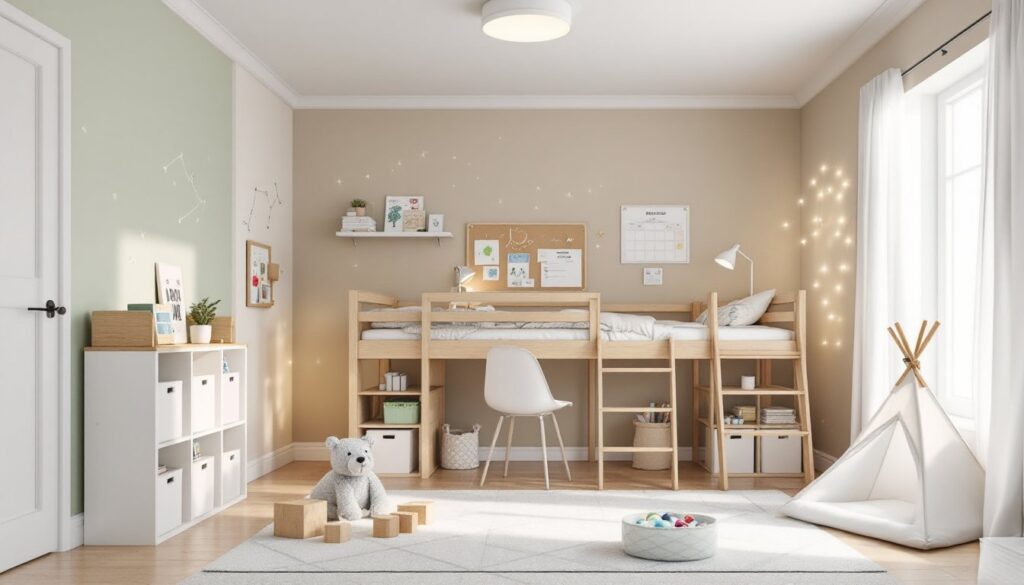
Adventure zones tap into universal play themes. A reading nook styled as a tent or treehouse, built with a simple wooden frame and fabric panels, encourages imagination without locking into any single narrative. Add battery-powered string lights and floor cushions. When interest shifts, swap the fabric and it becomes a fort, stage, or rocket ship.
For kids bedroom decor ideas that age gracefully, use open-ended visual elements: a world map mural, chalkboard wall (one gallon of chalkboard paint covers roughly 100 square feet), or pegboard gallery for rotating artwork. These adapt as tastes mature, maps stay relevant from elementary geography lessons through high school travel planning.
Avoid character licensing overkill. A single themed accent wall using peel-and-stick wallpaper gives impact without the permanence of fully papered rooms. Brands like RoomMates and WallPops offer designs that remove cleanly without damaging drywall, ideal for renters or commitment-phobes.
Smart Storage Solutions for Toys and Clutter
Kids generate clutter exponentially. Effective storage isn’t about hiding mess, it’s about systems that kids can actually use.
Low, accessible bins beat high shelves every time for younger children. Open cubbies with labeled fabric bins (12″ × 12″ cubes fit standard organizers) let kids see contents and return items without help. Mount cube organizers 18–24 inches off the floor so toddlers reach easily but bins don’t become step stools.
Under-bed storage reclaims dead space. Rolling drawers or bins on casters slide out for access and tuck away for clean floors. For DIY builders, a platform bed with built-in drawers uses the full footprint. Frame it with 2×6 lumber for the base, add 3/4-inch plywood for the platform, and install soft-close drawer slides rated for 75–100 lbs. Finish with low-VOC polyurethane for durability.
Vertical storage maximizes small rooms. Wall-mounted shelves, pegboards, or slatwall panels keep toys off the floor without eating floor space. Install shelves with hollow wall anchors rated for at least 50 lbs if hitting studs isn’t possible, though lag bolts into studs always handle weight better for book-heavy shelves.
Toy rotation systems cut visible clutter. Store half the toys in closet bins, swap them monthly. Kids rediscover “new” toys, and the room stays manageable.
For books, forward-facing book ledges (IKEA’s Flisat or DIY versions using 1×4 pine and a 1×2 lip) make covers visible, turning books into decor and encouraging reading. Mount them 24–30 inches high for easy access.
Color Schemes That Work for Any Age
Color sets the room’s mood, but kid-friendly doesn’t mean primary-color overload or nursery pastels.
Mid-tone neutrals provide the most adaptable backdrop. Greige (gray-beige hybrids), warm taupes, or soft sage green work from toddlerhood through teenage years. Brands like Sherwin-Williams’ Accessible Beige (SW 7036) or Benjamin Moore’s Revere Pewter (HC-172) offer warm neutrals that pair with any accent color a child chooses later.
Accent walls add personality without commitment. One wall in a bolder shade, navy, forest green, or even charcoal, creates visual interest and handles evolving tastes better than four bright walls. Use premium paint with primer (covers in one coat on previously painted drywall) to minimize labor. Expect one gallon to cover 350–400 square feet with proper application.
Two-tone walls offer a practical compromise. Paint the lower third in a darker, scuff-resistant shade (or use semi-gloss finish for easier cleaning), and keep upper walls light to preserve brightness. The chair rail or dividing line sits 30–36 inches high in most kids’ rooms, roughly at light-switch height.
For bedroom ideas for kids who want bold choices, let them pick accent colors through decor, rugs, curtains, bedding, and artwork, rather than paint. A child obsessed with purple today might hate it next year, but swapping a duvet is easier than repainting.
Matte or eggshell finishes hide wall imperfections but show scuffs. Satin finishes balance durability with washability, crucial in high-traffic kids’ spaces. Test cleaning ease: satin wipes down with a damp cloth and mild soap without leaving shiny marks.
Multi-Functional Furniture for Growing Kids
Furniture that serves multiple purposes or adjusts over time delivers better ROI than pieces that age out in three years.
Loft beds with workspace underneath double usable square footage. The raised sleeping platform (typically 60–72 inches high, so verify ceiling clearance, most codes require 7-foot-6-inch minimum ceiling height) frees floor space for a desk, reading nook, or play zone. Many loft kits use twin or full mattresses (39″ × 75″ or 54″ × 75″) and assemble with standard hex keys. Check that ladder rungs are spaced 10–12 inches apart for safe climbing.
Adjustable-height desks and chairs grow with kids. Look for desks with pneumatic or crank-adjustable legs that span roughly 22–30 inches in height, accommodating elementary through high school ergonomics. Pair with a chair that adjusts similarly to keep feet flat and elbows at 90 degrees while working.
Daybeds or trundle beds convert from single sleepers to guest accommodations. A twin daybed (39″ × 75″) with a pull-out trundle handles sleepovers without dedicated bunk beds. Ensure the trundle frame clears at least 12 inches for bedding thickness and rolling clearance.
Modular storage units reconfigure as needs shift. Cube organizers start as toy bins, then transition to book storage and sports equipment. Avoid particleboard if the furniture will be disassembled and moved, solid wood or plywood construction handles repeated reassembly better.
When building custom pieces, use pocket-hole joinery (Kreg jigs simplify this) for strong joints without visible fasteners. Finish with water-based polyurethane for low odor and quick dry times, important in occupied bedrooms.
Creating Dedicated Zones for Sleep, Play, and Study
Even small bedrooms function better when activities have designated zones. Clear boundaries help kids focus and transition between tasks.
Sleep zones prioritize calm and darkness. Position the bed away from the door and windows if possible to minimize noise and light disruption. Blackout curtains or cellular shades block early morning sun, especially useful for younger kids. If installing curtain rods, mount them 4–6 inches above the window frame and extend brackets 3–4 inches beyond each side for full coverage.
Play zones need durable flooring and contained chaos. Area rugs define the space and soften hard floors for play. Choose low-pile or flatweave rugs (easier to vacuum LEGO bricks) over shag. For active play, consider interlocking foam tiles (Eva foam, 2′ × 2′ squares) that cushion falls and clean with damp cloths.
Study zones require good task lighting and minimal distractions. Position desks near windows for natural light when possible, but add an adjustable desk lamp (LED, 450+ lumens, 4000K color temperature) for evening assignments. If the desk faces a wall, mount a corkboard or whiteboard for assignments and reminders. Keep this zone away from toys, visible distractions tank focus for younger students.
In shared bedrooms, use furniture as dividers. A bookshelf or cube organizer placed perpendicular to the wall creates a visual (and sometimes acoustic) barrier between kids without the permanence of room dividers. For rooms under 120 square feet, keep zones flexible with furniture on casters that rolls for reconfiguration.
Zoning with color or rugs works when space is tight. A blue rug marks the sleep area, a green one the play zone, no walls required.
Budget-Friendly DIY Ideas and Quick Updates
Refreshing a kid’s bedroom doesn’t require gut renovations. Targeted DIY projects deliver impact without major investment.
Paint transformations top the budget-friendly list. A gallon of quality interior paint runs $35–$60 and covers 350–400 square feet. An accent wall takes 2–3 hours including prep (taping trim, moving furniture). Use FrogTape Multi-Surface for clean lines, it seals better than blue painter’s tape on textured walls.
DIY headboards personalize beds cheaply. Options include:
- Fabric-wrapped plywood: Cut 1/2-inch plywood to size (twin: 39″ × 24″), wrap with batting and fabric, staple to the back with a heavy-duty stapler, and mount with French cleats or L-brackets.
- Pallet wood planks: Sand heat-treated pallets (marked HT, not chemically treated MB), cut to width, and attach horizontally to a backing board. Seal with polyurethane.
- Pegboard panels: Paint pegboard, mount above the bed, and use hooks for hats, bags, or string lights.
Lighting upgrades change ambiance instantly. Swap builder-grade fixtures for pendant lights (ensure the junction box is rated for the fixture weight, most handle 50 lbs). Add plug-in wall sconces (no electrical work required) for reading lights. Battery-powered puck lights inside closets eliminate the need for hardwiring.
Stenciled or hand-painted murals add custom art without hiring a muralist. Use craft stencils and foam rollers for geometric patterns, or project images with a cheap digital projector and trace outlines for murals. Mistakes erase with fresh paint.
Hardware updates refresh furniture cheaply. Swap standard knobs on dressers for colorful or themed pulls (ceramic, rope-wrapped, or leather). Drill new holes if needed, wood filler (DAP Plastic Wood) patches old ones invisibly after sanding and painting.
Always wear safety glasses when cutting or drilling, and use a dust mask (N95 or better) when sanding or working with spray paint.
Conclusion
Designing kids bedroom decor ideas around adaptability saves money and headaches. Neutral foundations, flexible storage, and multi-functional furniture handle evolving needs without constant overhauls. Whether tackling a full room redesign or quick weekend updates, the best bedroom ideas for kids balance today’s fun with tomorrow’s practicality, and keep a drill handy for when they change their minds again.