





Table of Contents
ToggleMost homeowners look up at their elevated deck and see shade. What they’re missing is prime real estate, dry, level, and already framed. The space beneath a raised deck offers anywhere from 100 to 400 square feet of usable area that typically collects nothing but leaves and forgotten soccer balls. With a few strategic upgrades, that neglected zone can become a functional patio, workshop, storage hub, or garden retreat. The key is matching the project to the deck’s height, drainage setup, and the homeowner’s actual needs, not just what looks good in a photo gallery.
Key Takeaways
- Under deck ideas transform 100–400 square feet of wasted space into functional outdoor living areas, storage zones, or garden retreats by addressing drainage first.
- Install an under-deck drainage system with vinyl panels or DIY gutters to prevent water pooling, then build a solid concrete or permeable paver foundation for any outdoor patio.
- Outdoor lounges and dining areas require at least 7 feet of clearance, all-weather furniture, string lights, and lattice privacy screens without triggering building code reviews.
- Storage under a deck works best with pressure-treated lumber racks for open storage or framed walls with T1-11 siding for enclosed structures that need ventilation and a secure door.
- Workshop spaces and potting stations need task lighting (LED shop lights), GFCI outlets, and ventilation; fold-down workbenches maximize limited headroom.
- Shade-tolerant plants like hostas and ferns, vertical gardens, and child play areas with rubber mulch are ideal for low-clearance decks while protecting wood posts from rot.
Why Your Under Deck Space Is Wasted Potential
An elevated deck leaves behind a footprint that’s already graded and cleared. The deck boards above act as a roof, imperfect, but functional with the right drainage system. Unlike building a detached shed or patio, homeowners aren’t starting from scratch. The posts and beams are load-bearing structure, and the perimeter is defined.
Most codes don’t classify under-deck improvements as new structures if they don’t alter the deck’s framing or add enclosed walls that require egress windows. That said, electrical work, gas lines, or fully enclosed rooms usually trigger permit requirements. Check with the local building department before running conduit or framing walls.
The biggest obstacle is water. Standard deck boards let rain through, and without a drainage system, the area becomes a mud pit. Solutions range from DIY tarps and gutters to manufactured under-deck ceiling systems with integrated channels that route water to downspouts. Addressing drainage first makes everything else possible.
Outdoor Living and Entertainment Spaces
Create a Cozy Outdoor Lounge or Dining Area
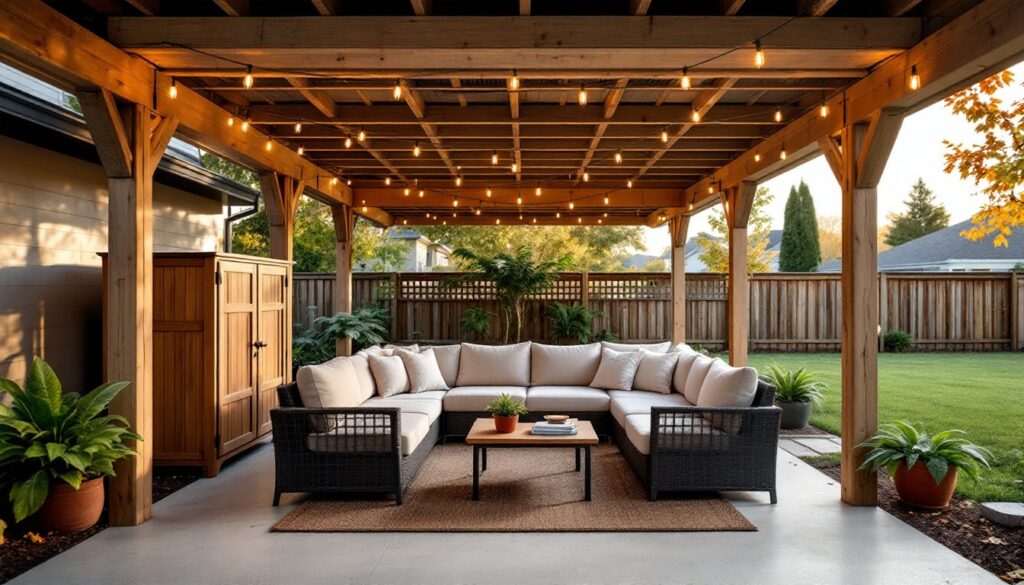
Under deck patio ideas work best when the clearance is at least 7 feet, enough headroom to walk comfortably and hang a ceiling fan or string lights. For shorter spaces, low-profile furniture and built-in bench seating keep the area from feeling cramped.
Start with a solid floor. Concrete patio under deck ideas deliver the most durable base: a 4-inch slab over compacted gravel, with a slight slope (1/4 inch per foot) away from the house for drainage. For a faster install, concrete pavers or porcelain tile over a sand-and-gravel base work well and allow water to percolate between joints. Skip wood decking directly on soil, it’ll rot without airflow.
Install an under-deck drainage system if the deck above isn’t already equipped. Products like Trex RainEscape or TimberTech DrySpace use vinyl panels that attach to the underside of joists, creating a watershed that funnels runoff into gutters. DIY versions use corrugated plastic panels and aluminum drip edge, though they’re less refined.
Once the area is dry, treat it like an outdoor room. Outdoor rugs define zones, all-weather furniture handles humidity, and battery-powered LED string lights (or low-voltage landscape lighting tied into an existing transformer) add ambiance without pulling permits. For dining setups, a propane patio heater extends usability into shoulder seasons, and a weatherproof storage bench keeps cushions dry.
Enclosing one or two sides with lattice, pressure-treated 2×2 framing, or roll-down shades adds privacy and wind protection without creating an enclosed structure that triggers code reviews. Just leave the other sides open for ventilation.
Storage Solutions That Keep Your Yard Organized
Under-deck storage is a no-brainer for homeowners drowning in lawn equipment, pool supplies, or seasonal decorations. The space is already sheltered, and with minimal effort, it becomes more organized than most garages.
For open storage, build a simple pressure-treated lumber rack using 4×4 posts anchored to concrete footings and 2×4 horizontal supports. This keeps mowers, wheelbarrows, and bikes off the ground and away from moisture. Add hooks for shovels, rakes, and garden hoses.
For enclosed storage, frame walls with pressure-treated 2x4s on 16-inch centers and sheath with T1-11 siding, cement board, or vinyl siding to match the house. Install a pre-hung exterior door (32 inches wide minimum) and add a hasp for a padlock. Ventilation is critical, use gable vents or a louvered panel to prevent mold and let moisture escape.
Electrical outlets make the space far more useful. Running 12-2 NM cable from an existing circuit (if capacity allows) to a weather-resistant GFCI outlet is straightforward, but it requires a permit in most jurisdictions and should be done by a licensed electrician if the homeowner isn’t comfortable working inside a panel.
Skip drywall and insulation unless the space will be climate-controlled. For basic storage, exposed framing is fine. Seal the sill plate where the framing meets concrete with self-leveling polyurethane caulk to block insects and drafts.
Functional Outdoor Rooms and Work Spaces
For homeowners with at least 8 feet of clearance, the under-deck area can become a workshop, potting station, or hobby space. These setups require better lighting, power, and often a workbench or counter.
A fold-down workbench is the space-saving standard: 3/4-inch plywood on a piano hinge, mounted to wall studs with 2×4 support brackets that swing down when the bench is in use. Keep the depth at 24 inches so it doesn’t dominate the space when folded up.
Task lighting matters more than ambient lighting. Mount a 4-foot LED shop light (4,000–5,000 lumens) to the underside of the deck joists or to a cleat if the drainage system is in the way. Plug into a GFCI outlet and use a switched power strip for control.
For a potting station or gardening hub, install a utility sink. If there’s existing plumbing nearby, a licensed plumber can tap into the cold water supply and run a drain line. Otherwise, use a hose bib for water and a bucket for drainage, low-tech, but functional.
Ventilation and dust control are key for workshops. A box fan in a window opening or between framing bays moves air, and a shop vacuum with a HEPA filter handles sawdust. If power tools will see regular use, dedicated 20-amp circuits prevent tripped breakers.
Garden and Green Space Transformations
Under-deck areas don’t get full sun, but they’re ideal for shade-tolerant plants, container gardens, or vertical growing systems. For low-clearance decks (under 6 feet), this is often the best use of the space.
Hostas, ferns, astilbes, and coral bells thrive in dappled light and handle the occasional drip from above. Plant them in raised beds framed with landscape timbers or composite decking scraps to keep roots above grade and improve drainage. Fill beds with a 50/50 mix of topsoil and compost, and mulch with shredded hardwood to retain moisture.
Vertical gardens maximize limited square footage. Mount cedar planters or galvanized metal troughs to the deck posts using lag screws into the post (not the decorative trim). Grow lettuce, herbs, or strawberries, crops that tolerate part shade and don’t need deep root zones.
For a kids’ play area, the under-deck shade is a natural fit. Spread playground mulch (shredded rubber or engineered wood fiber) over landscape fabric to cushion falls and suppress weeds. Add a sandbox, climbing holds mounted to posts, or a low swing hung from a beam hanger-rated eye bolt. Inspect the deck framing first, if it’s not built to handle dynamic loads, consult a structural engineer before hanging swings.
Keep plants and mulch at least 6 inches away from wood posts and siding to reduce rot and termite risk. Install a soaker hose on a timer if hand-watering becomes a chore.
Essential Considerations Before Building Under Your Deck
Before committing to any project, check these four things: clearance, drainage, access, and codes.
Clearance: Measure from the ground to the underside of the lowest joist. Anything under 6 feet limits usability. For living spaces, 7 feet is the minimum comfortable height.
Drainage: Walk under the deck during a rainstorm. If water pours through or pools, install a drainage system before doing anything else. No amount of furniture or paint will fix a swamp.
Access: If the only entry is a narrow gap between posts, the space won’t be practical for storage or entertaining. Widen the opening or add a gate if lattice or skirting blocks entry.
Codes and permits: Electrical work almost always requires a permit. Enclosed storage structures may need one depending on square footage. Plumbing definitely does. Call the local building department or check their website before ordering materials.
Finally, inspect the deck’s structure while planning. Look for rotted posts, sagging beams, or loose ledger board connections. If the deck isn’t sound, fix that first. Adding weight or use to a failing structure is a safety hazard, and a liability.