



Table of Contents
ToggleA dated brick or plain drywall fireplace can drag down an entire room, but a well-executed tile surround changes everything. Tile offers durability, heat resistance, and near-limitless design options, from timeless subway patterns to bold geometric mosaics. Whether someone’s tackling a weekend DIY refresh or planning a full remodel, the right tile fireplace surround ideas can anchor a space, add resale value, and deliver a custom look without custom pricing. This guide covers proven fireplace surround tile ideas across classic and modern styles, material selection, color strategies, and practical installation advice to help homeowners make confident decisions in 2026.
Key Takeaways
- Tile fireplace surrounds offer superior durability, heat resistance, and zero-maintenance benefits compared to outdated brick or drywall, requiring only a damp cloth wipe-down and grout sealing every 1-2 years.
- Popular tile fireplace ideas range from timeless subway and marble styles to modern large-format porcelain slabs and bold geometric patterns, giving homeowners design flexibility to match any aesthetic.
- Porcelain tile is the top material choice for active fireplaces due to its imperviousness to moisture and thermal shock resistance, while natural stone and ceramic work best for gas fireplaces or decorative accents.
- Proper installation requires cement backerboard substrate, heat-rated thinset mortar, 24-48 hour cure time, and grout sealing—making it an accessible 1-2 day DIY project for intermediate homeowners.
- Tile fireplace costs range from $3-$12 per square foot for porcelain to $8-$25+ for natural stone, with professional installation running $600-$2,500, but DIY installation delivers custom-look value without custom pricing.
Why Tile Is the Perfect Material for Fireplace Makeovers
Tile checks every box for fireplace applications. Porcelain and ceramic tile are rated for high heat, non-combustible, and won’t warp or discolor near a firebox. Natural stone options like slate, marble, and travertine bring organic texture and handle temperature fluctuations without cracking when properly installed.
Unlike painted drywall or wood trim, tile doesn’t require annual touch-ups. A quick wipe-down with a damp cloth removes soot and dust, and grout sealer applied every 1-2 years keeps the surround looking fresh. This makes tile ideal for wood-burning fireplaces that see regular use.
From a design standpoint, tile offers flexibility no other material matches. Large-format slabs create seamless modern looks, while smaller mosaics enable intricate patterns. Homeowners can mix finishes, matte subway tile with a polished marble hearth, for example, to add depth without overwhelming the space.
Finally, tile installation is accessible to intermediate DIYers with the right prep and tools. Backerboard, thinset mortar, and proper clearances from the firebox opening make this a weekend project, not a month-long renovation. And if the aesthetic changes in five years, tile can be removed and replaced without structural work.
Classic Tile Fireplace Styles That Never Go Out of Fashion
Subway tile remains the workhorse of fireplace surround tile ideas. Standard 3×6-inch white subway tiles in a running bond or herringbone pattern pair with any decor style, from farmhouse to transitional. For a twist, stack them vertically or use a contrasting grout color, charcoal grout with white tile adds definition without busy patterns.
Stacked stone or stone veneer tile delivers rustic warmth and texture. Products like ledger stone or split-face travertine create shadow lines that add dimension. These work especially well on floor-to-ceiling surrounds and pair naturally with wood mantels. Keep in mind that natural stone requires sealing to prevent staining from soot.
Marble tile brings timeless elegance. Carrara, Calacatta, or Statuario marble in large-format tiles (12×24-inch or bigger) minimizes grout lines and showcases the stone’s veining. Marble is softer than porcelain, so it’s best suited for gas fireplaces or low-use wood burners. A honed finish hides minor scratches better than polished.
Hexagon or penny round mosaics in neutral tones add vintage charm. White or black penny tiles on the surround with a simple wood mantel nod to 1920s bungalows and Craftsman homes. These smaller tiles require more grout, so plan for extra sealing and maintenance.
Modern and Contemporary Tile Fireplace Designs
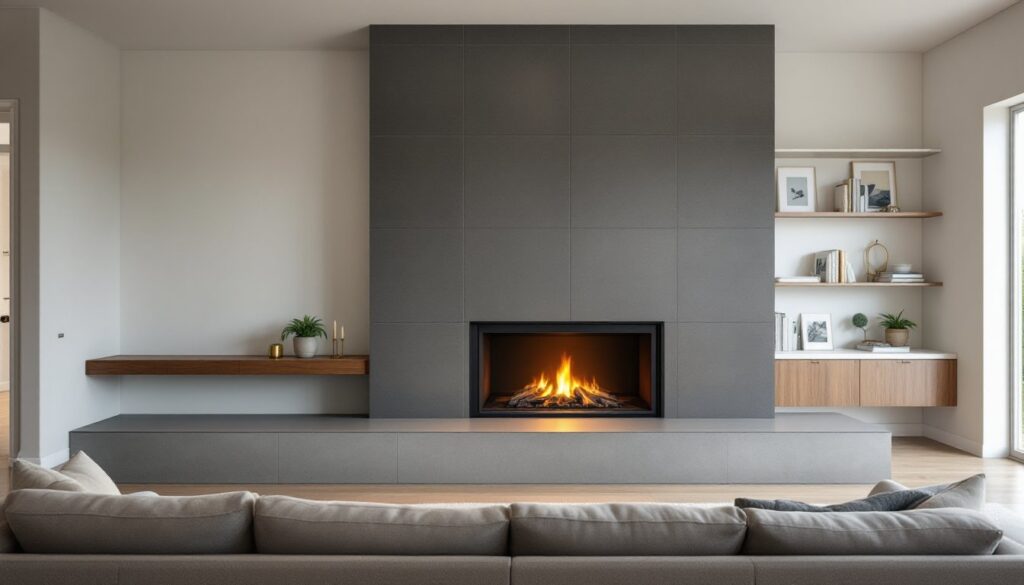
Large-format porcelain slabs in solid colors or subtle concrete looks define modern tile fireplace ideas. Slabs measuring 24×48 inches or even 4×8 feet (book-matched for symmetry) eliminate grout lines and create a sleek, uninterrupted surface. Anthracite gray, charcoal, and matte black are popular choices that complement minimalist interiors.
Geometric tiles, hexagons, chevrons, or 3D relief patterns, introduce visual interest without color overload. A fireplace surround clad in white geometric tiles with shadow gaps or dimensional surfaces becomes a sculptural focal point. These work well in open-plan spaces where the fireplace is visible from multiple angles.
Metallic or glass tiles add shimmer and reflection. Stainless steel or brushed brass mosaic tiles catch light and pair well with mid-century modern or industrial decor. Glass tiles in smoky gray or iridescent finishes reflect the glow of flames, amplifying the ambiance. Both require heat-resistant adhesives: verify the tile’s temperature rating before installation.
Horizontal stacking or linear patterns in wood-look porcelain tile offer a contemporary take on texture. These planks mimic reclaimed barn wood or weathered cedar but withstand heat. Install them in a horizontal stack bond to emphasize width and make a narrow room feel broader.
Choosing the Right Tile Material for Your Fireplace
Porcelain tile is the top choice for active fireplaces. It’s impervious to moisture (water absorption below 0.5%), resistant to thermal shock, and available in endless styles. Porcelain rated for floor use (PEI 4 or 5) handles the occasional dropped log or cleaning abuse. For fireplace surround tile ideas that mimic marble or concrete, porcelain delivers the look at a fraction of the cost.
Ceramic tile works for gas fireplaces and low-heat applications. It’s less dense than porcelain, which means it’s easier to cut but slightly more prone to chipping. Glazed ceramic resists stains, but avoid it directly around the firebox opening on wood-burning units.
Natural stone, slate, granite, marble, or travertine, offers authentic texture. Slate’s layered surface and earthy tones suit rustic or lodge-style homes. Granite handles heat exceptionally well and comes in a range of colors. Travertine’s pitted surface adds Old World character but needs sealing every year to prevent soot absorption.
Glass and metal tiles are accent materials. Use them as borders, inserts, or in combination with porcelain. Never install standard glass tile directly adjacent to a firebox: look for products rated for high-heat zones.
Backerboard substrate is non-negotiable. Install 1/2-inch cement board over studs before tiling. This provides a stable, fire-resistant base and prevents tile from cracking due to heat expansion.
Color and Pattern Ideas to Match Your Home’s Aesthetic
Neutral palettes, white, gray, beige, and black, anchor nearly any room. White subway or large-format gray porcelain keeps the focus on furniture and art. Pair neutral tile with a stained wood mantel or black metal fireplace insert for contrast.
Monochromatic schemes use varying shades of one color. A gradient from light gray at the top to charcoal near the hearth adds depth without introducing competing hues. This approach works well in minimalist or Scandinavian-inspired spaces.
Bold accent colors make the fireplace the hero. Deep emerald green, navy blue, or terracotta tiles in a herringbone or chevron pattern draw the eye and set the room’s tone. Balance bold tile with subdued walls and furnishings to avoid visual clutter.
Mixed materials and textures create custom looks. Combine smooth marble with rough-cut slate, or pair glossy white subway tile with matte black grout and a reclaimed wood mantel. These layers add richness and prevent the surround from feeling flat.
Patterned or encaustic tiles bring Mediterranean or Spanish Revival vibes. Cement tiles with intricate geometric or floral motifs work as full surrounds or as accent strips. These are labor-intensive to install and require sealing, but the payoff is a one-of-a-kind fireplace.
Installation Tips and Cost Considerations
Prep work determines success. Remove any existing tile, brick, or drywall down to the studs around the firebox. Check local codes for clearances, typically 6 inches minimum between combustible materials and the firebox opening. Install cement backerboard with corrosion-resistant screws spaced 8 inches on-center. Tape and thinset all seams.
Layout and dry-fit before mixing mortar. Snap a level line and arrange tiles to minimize cuts in visible areas. For subway tile, center the pattern or start with full tiles at eye level. With large-format slabs, plan seams at symmetrical points.
Thinset mortar should be modified or high-heat rated. Use a 1/4-inch notched trowel for tiles up to 8 inches and a 1/2-inch trowel for larger formats. Back-butter large tiles to ensure full coverage. Set tiles with 1/8-inch spacers for grout lines: larger tiles can go with 1/16-inch for a tighter look.
Grouting and sealing: Let thinset cure 24-48 hours, then apply unsanded grout (for joints 1/8-inch or smaller) or sanded grout (for wider joints). Clean off haze immediately. After the grout cures (72 hours), apply a penetrating grout sealer to resist soot and moisture.
Cost breakdown (mid-2026 estimates, U.S. averages):
- Porcelain or ceramic tile: $3–$12 per sq. ft.
- Natural stone tile: $8–$25 per sq. ft.
- Specialty or imported tile: $15–$50+ per sq. ft.
- Backerboard, thinset, grout, sealer: ~$100–$200 for an average fireplace
- DIY labor: Free, but plan 1-2 full days
- Professional installation: $600–$2,500 depending on complexity and region
Tools needed: Tile wet saw or snap cutter, notched trowel, grout float, level, tape measure, margin trowel, sponges, buckets. Rent a wet saw ($50–$70/day) if cutting porcelain or stone.
Safety: Wear safety goggles and a dust mask when cutting tile. Use knee pads during installation. Ensure proper ventilation when working with thinset and grout.
Conclusion
Tile fireplace surround ideas span every style and budget, from classic subway to modern geometric slabs. The right combination of material, color, and pattern transforms a fireplace from overlooked to unforgettable. With proper substrate prep, heat-rated adhesives, and attention to layout, a tile surround is a manageable DIY project that delivers lasting value and visual impact. Whether someone leans toward timeless marble or bold, contemporary porcelain, tile remains the smartest choice for durability, design flexibility, and ease of maintenance in 2026.