



Table of Contents
ToggleChoosing the right artwork for a bedroom isn’t just about filling blank walls, it’s about creating a space that promotes rest while reflecting personal style. Unlike living rooms or entryways, bedrooms demand artwork that balances visual interest with calming energy. The right pieces can make a cramped room feel spacious, a sterile box feel inviting, or a dated space feel current. This guide covers practical bedroom wall art ideas that work with real budgets, real wall conditions, and real mounting hardware, no lifestyle fluff, just actionable approaches to selecting, sizing, and hanging art that transforms a sleep space.
Key Takeaways
- Bedroom art ideas work best when they balance visual interest with calming energy, using low-contrast abstracts and nature photography to support sleep quality and melatonin production.
- Artwork above the bed should measure 40–48 inches wide for a queen bed, hang at gallery height (56–60 inches from the floor), and leave 6–10 inches of clearance between the frame bottom and mattress top.
- Gallery walls in bedrooms require restraint—use asymmetrical layouts with one larger anchor piece surrounded by smaller works, maintaining 2–4 inches of consistent spacing, and limit frames to two finishes to prevent visual chaos.
- Alternative art solutions like textile wall hangings, removable wallpaper panels, and mirrors provide flexibility for renters and complement traditional bedroom wall art ideas without permanent installation.
- Color coordination should pull one or two accent colors from existing bedding or furniture rather than introduce new palettes, using analogous color schemes (adjacent on the color wheel) for more restful compositions.
- Proper installation matters—use drywall anchors rated for 25–50 lbs for standard frames, locate studs with a stud finder for heavy pieces, and always use a level to avoid crooked art that disrupts the sleep space.
Why Art Matters in Your Bedroom
Artwork in a bedroom serves multiple functions beyond decoration. Studies on environmental psychology show that visual elements in sleep spaces directly affect mood regulation and perceived comfort levels. A bare wall reads as unfinished or institutional, while an overcrowded one can trigger visual stress.
Bedrooms benefit from art that supports circadian rhythms, cooler tones and low-contrast imagery promote melatonin production better than high-energy compositions. This doesn’t mean every piece needs to be bland: it means intentional selection matters. A bold abstract above the bed can anchor the room without overstimulating at bedtime.
Art also solves practical design problems. Large-scale pieces make low ceilings feel higher when hung with 6–8 inches of space between the mattress top and frame bottom. Horizontal works visually widen narrow rooms. Vertical pieces draw the eye up in rooms with awkward proportions. These aren’t just aesthetic preferences, they’re spatial corrections using framed paper and canvas instead of drywall and studs.
Above the Bed: Statement Art Placement
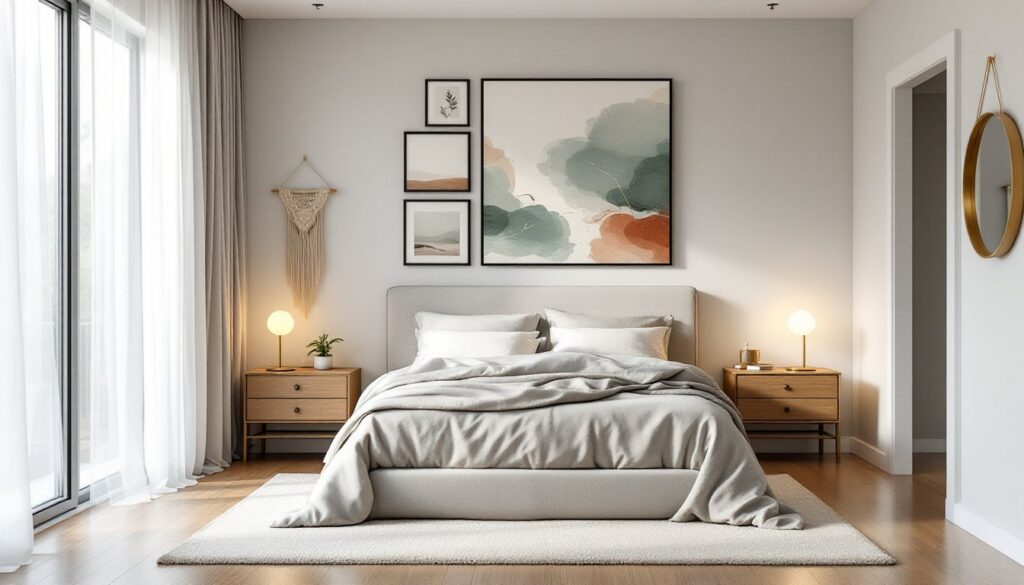
The wall above a bed is prime real estate for bedroom artwork ideas, but it comes with specific sizing rules. A single piece should span two-thirds to three-quarters the width of the headboard or mattress if there’s no headboard. For a queen bed (60 inches wide), that means artwork or a grouping measuring roughly 40–48 inches across.
Hanging height matters more than most DIYers realize. The center of the artwork should sit 56–60 inches from the floor, which is standard gallery height. For pieces above furniture, leave 6–10 inches of clearance between the mattress/headboard top and the frame bottom. Too much space creates a visual disconnect: too little makes the art feel like it’s sliding off the headboard.
Installation depends on frame weight and wall type. Drywall anchors rated for 25–50 lbs handle most framed prints and canvases. For heavier pieces (wood frames, thick glass), locate studs with a stud finder and use 2.5-inch wood screws. On plaster walls, toggle bolts provide better hold than standard anchors. Always use a level, eyeballing leads to crooked art that’s impossible to ignore when lying in bed.
For leaning art (resting on a shelf or headboard), secure it with earthquake putty or velcro strips to prevent shifting. This works well for renters who can’t put holes in walls, though weight limits apply, most adhesive strips max out at 16 lbs per set.
Gallery Wall Designs for Bedrooms
Gallery walls allow for mixing frame sizes and subjects, but bedrooms require more restraint than living spaces. Asymmetrical layouts work best when there’s a visual anchor, one larger piece (16×20 or 24×36) surrounded by smaller works (8×10, 11×14).
Start by laying out the entire arrangement on the floor, maintaining 2–4 inches of consistent spacing between frames. Photograph the layout, then trace each frame onto kraft paper or newspaper. Tape the templates to the wall and adjust until the composition feels balanced. Mark nail placement through the paper before removing it, this eliminates guesswork and extra holes.
For renters or commitment-phobic homeowners, picture ledges or gallery rails offer flexibility. A 3–4 foot floating shelf installed with heavy-duty brackets (rated for 30+ lbs) lets occupants swap and layer frames without new hardware. IKEA’s Mosslanda and similar designs work well, though verifying stud placement is non-negotiable, drywall anchors alone won’t hold multiple frames long-term.
Color consistency ties gallery walls together. Limiting frames to two finishes (black and natural wood, or all white) prevents visual chaos. Mat boards in neutral tones (white, cream, gray) create breathing room between busy images.
Art Styles That Enhance Relaxation
Not all wall art ideas for bedroom spaces promote rest equally. Research on color psychology and environmental design points to specific styles that support sleep quality.
Abstract and Minimalist Works
Low-contrast abstracts in muted palettes (sage, dusty blue, terracotta) provide visual interest without demanding attention. Organic shapes and watercolor-style washes create softer focal points than geometric compositions with hard edges. These work particularly well in modern and Scandinavian interiors.
Nature and Landscape Photography
Landscape photography triggers the same psychological response as actual nature exposure, reduced cortisol and lowered heart rate. Forests, coastal scenes, and mountain ranges work better than cityscapes or wildlife close-ups. Black-and-white photography offers a middle ground for those wanting nature themes without introducing too much color.
Botanical Prints and Line Drawings
Vintage botanical prints and modern line art hit the sweet spot between decoration and calm. Single-line figure drawings, leaf studies, and architectural sketches add sophistication without visual weight. These scale well, a large fern print works above a bed, while a series of smaller herb illustrations suits gallery walls.
Avoid high-energy subjects: action sports, crowds, intense facial expressions, or anything that creates narrative tension. A bedroom isn’t the place for conversation-starting art, it’s where the brain needs permission to shut down.
Creative Alternative Art Ideas
Framed prints aren’t the only option for bedroom wall art ideas. Alternative approaches solve problems like rental restrictions, budget limits, or the need for texture.
Textile Wall Hangings
Woven tapestries, macramé, or quilts add warmth and sound absorption, a practical benefit in echo-prone rooms. Hang textiles using a wooden dowel threaded through a sleeve or a curtain rod with decorative finials. Secure with simple cup hooks screwed into studs or heavy-duty adhesive hooks rated for the textile’s weight (usually 3–8 lbs).
Removable Wallpaper Panels
Peel-and-stick wallpaper applied to a single accent wall or framed sections creates impact without permanence. Cut panels to fit standard frame sizes (24×36, 30×40) and mount in simple frames from big-box stores. This works especially well with bold patterns that would overwhelm a full room.
DIY Art Projects
Stretched canvas (available at craft stores in standard sizes) becomes affordable custom art with acrylic paint or fabric. Even non-artists can create textured pieces using joint compound applied with a putty knife, then painted in one or two tones. The result reads as expensive plaster art at a fraction of the cost.
Mirrors as Art
Decorative mirrors serve double duty, reflecting light and acting as sculptural elements. Sunburst, arched, or geometric shapes work as statement pieces above dressers or flanking beds. Ensure proper anchoring: mirrors over 10 lbs need wall anchors or stud mounting, not adhesive strips alone.
Choosing the Right Colors and Sizes
Selecting art isn’t just about personal taste, it’s about how colors and proportions function in a specific room.
Color Coordination
Artwork should pull one or two accent colors from existing bedding, rugs, or furniture rather than introducing entirely new palettes. A navy print ties together navy throw pillows and a cream duvet. A terracotta abstract echoes wood furniture tones. This creates cohesion without requiring a full redesign.
Analogous color schemes (colors next to each other on the color wheel, blue, blue-green, green) feel more restful than complementary schemes (opposites like blue and orange). Save high-contrast combinations for spaces where energy is the goal.
Sizing for Different Wall Heights
Standard 8-foot ceilings call for vertical orientation or stacked arrangements that draw eyes upward. Rooms with 9–10 foot ceilings can handle oversized horizontal pieces (40×60 or larger) without overwhelming the space. In rooms with vaulted or cathedral ceilings, clustering art on one section of wall (like above the bed) prevents it from looking lost.
Small rooms benefit from fewer, larger pieces rather than multiple small ones. A single 30×40 canvas reads as intentional: six 8×10 frames read as clutter unless carefully arranged.
Matting and Framing
Mats create visual breathing room. A 2–3 inch mat border around an 11×14 print bumps the framed size to roughly 16×20, giving it more presence. White or off-white mats keep focus on the image, while colored mats should match a specific element within the artwork.
Frame depth matters for floating shelves and ledges, frames thicker than 1.5 inches may not balance properly without additional support.
Conclusion
Bedroom artwork ideas work best when they balance aesthetics with function, anchoring proportions, reinforcing color schemes, and supporting the room’s primary purpose: rest. Whether hanging a single statement piece above the bed, building a gallery wall, or exploring textile alternatives, the key is intentional selection and proper installation. Skip the guesswork on measurements and hardware, rooms look finished when art fits the space, not when it’s squeezed in as an afterthought.