



Table of Contents
ToggleThe entryway sets the tone for an entire home, and wallpaper offers an unmatched opportunity to make that first impression count. Unlike paint, wallpaper introduces texture, pattern, and depth, transforming a narrow hallway or compact foyer into a curated design moment. It’s also a practical choice for high-traffic zones that need durable, washable surfaces. From bold geometric prints that energize the space to subtle grasscloth that adds warmth, the right wallpaper can disguise architectural quirks, enhance natural light, and establish a cohesive design thread that flows into adjacent rooms. For DIYers ready to tackle installation or homeowners working with designers, these entryway wallpaper ideas deliver both visual impact and functional benefits.
Key Takeaways
- Entryway wallpaper ideas offer superior durability and visual impact compared to paint—vinyl-coated options resist moisture and scuff marks while adding texture, pattern, and depth to transform your entry space.
- Bold geometric prints and jewel-tone wallpapers make dramatic statements in well-lit foyers, while vertical stripes and small-scale patterns create the illusion of height and space in compact, narrow entries.
- Textured wallpapers like grasscloth and linen-textured vinyl add organic warmth and light-catching dimension, working best in coastal or farmhouse styles while remaining easy to maintain in high-traffic zones.
- Nature-inspired designs such as botanical prints and woodland murals bring welcoming appeal but require careful scale consideration—oversized patterns suit entries with high ceilings, while small-scale florals work throughout compact foyers.
- Proper installation is critical: measure accurately (adding 15–20% for pattern waste), prep walls with primer, and align patterns at eye level first to prevent bubbles, shrinkage, and crooked seams.
- Peel-and-stick wallpaper offers a renter-friendly, quick-install alternative that removes cleanly while delivering design quality at a fraction of traditional wallpaper costs.
Why Wallpaper Is the Perfect Choice for Entryways
Entryways endure more wear than most rooms, scuffed baseboards, doorknob dents, and dirty fingerprints are inevitable. Vinyl-coated or solid vinyl wallpapers resist moisture and scrub clean without fading, making them ideal for mudroom-adjacent entries or homes with kids and pets. Many modern wallpapers are Type II (medium-duty) rated, meaning they withstand repeated washing with a damp sponge and mild cleaner.
Wallpaper also solves common entryway design challenges. A vertical stripe pattern visually raises low ceilings, while large-scale prints distract from awkward angles or narrow dimensions. In homes with open floor plans, a bold entryway wall anchors the transition between outside and inside without requiring furniture or built-ins.
Unlike paint, which can feel flat in windowless entries, wallpaper’s texture catches ambient light, grasscloth, silk-screened metallics, and embossed designs all add dimension. Installation has become more DIYer-friendly, too: peel-and-stick (removable) wallpaper requires no paste or booking time, and most patterns now come pre-pasted, cutting labor by half compared to traditional methods.
Bold Patterns That Make a Statement
For homeowners who want guests to stop and stare, large-scale geometric prints deliver immediate impact. Think oversized hexagons, overlapping circles, or abstract Art Deco fans in contrasting colors. These patterns work best in entryways with at least 6 feet of uninterrupted wall space, hanging coats or mirrors over busy geometrics creates visual clutter.
Black-and-white damask or trellis patterns offer classic drama without trend fatigue. Pair them with brass or matte black hardware and a single pendant light for a cohesive look. In narrow hallways, a vertical chevron or herringbone print draws the eye upward and forward, making the space feel longer.
Saturated jewel tones, emerald, sapphire, or deep burgundy, create a gallery-like atmosphere. These work especially well in foyers with good natural light: in windowless entries, balance dark wallpaper with bright white trim and ceiling paint to prevent a cave effect. If the entryway opens directly into a living area, echo one accent color from the wallpaper in adjacent rooms (throw pillows, artwork) to avoid a jarring transition.
Bold patterns demand precise alignment. Measure and mark plumb lines with a laser level before hanging the first strip, and order 15% extra material to account for pattern repeats, most statement prints have a 20- to 36-inch repeat, which increases waste.
Elegant Textured and Neutral Wallpapers
Not every entryway needs a visual shout. Grasscloth wallpaper brings organic texture without competing for attention, and its natural fibers (jute, sisal, or arrowroot) absorb sound, a useful feature in homes with tile or hardwood flooring that echoes. Grasscloth does show seams more visibly than printed papers, so it’s best installed by someone comfortable with random-match or free-match patterns.
Linen-textured or woven vinyl wallpapers mimic fabric but offer better stain resistance. They’re a smart choice for coastal or farmhouse aesthetics, pairing well with shiplap trim or reclaimed wood consoles. For a modern minimalist look, consider tone-on-tone geometric embossing, subtle squares, triangles, or waves that reveal themselves only when light hits at an angle.
Neutral palettes (warm grays, taupes, soft whites) work in nearly any architectural style and won’t clash with changing decor. But, “neutral” doesn’t mean boring: look for papers with metallic ink accents or a slight sheen that catches morning light. Brands like Phillip Jeffries and Thibaut offer luxury grasscloths and linens that hold up in high-traffic zones, though expect to pay $4–$8 per square foot installed.
Textured papers often require liner paper underneath if walls are uneven or previously patched. This adds a step but prevents shadows from drywall imperfections showing through.
Nature-Inspired Designs for a Welcoming Feel
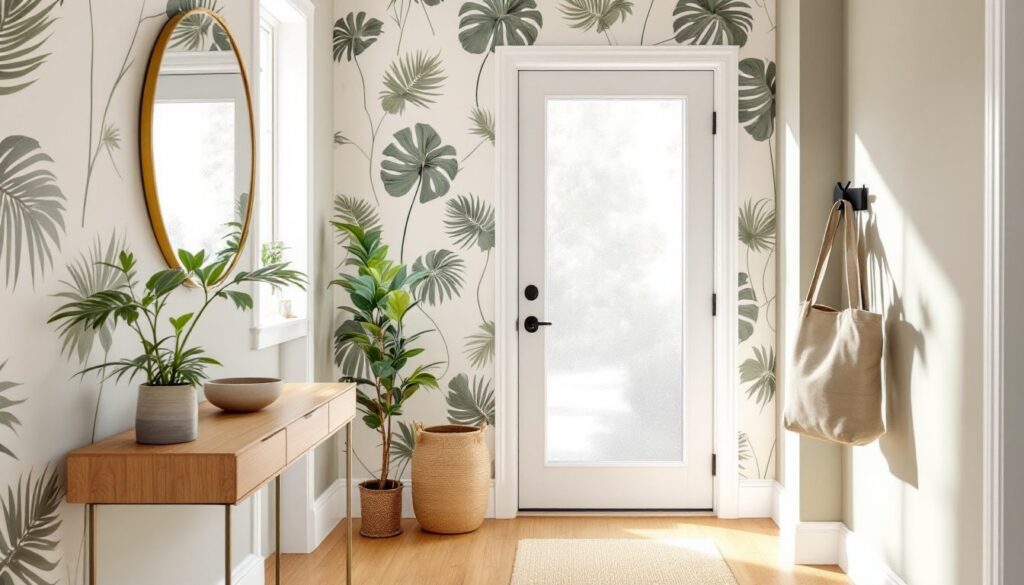
Botanical prints, oversized palm leaves, delicate ferns, or trailing vines, bring the outdoors in and suit everything from mid-century modern to traditional Colonial homes. Large-scale tropical motifs work best on a single accent wall (the wall opposite the entry door), while small-scale floral patterns can wrap an entire foyer without overwhelming.
Woodland murals featuring birch trees, mountain silhouettes, or misty forests create a calming, gallery-like effect. These are often sold as multi-panel murals (three to six strips that form one image), so careful alignment is critical. Use a digital level and mark each panel’s position before peeling any backing.
For a subtler nature nod, consider faux-finish wallpapers that mimic stone, weathered wood, or linen. Brick or reclaimed barnwood patterns add rustic warmth without the weight or installation headaches of real materials, and they’re far more renter-friendly.
Outdoor-inspired color palettes, sage greens, sky blues, terracotta, pair well with natural fiber rugs and live plants. If the entryway lacks windows, supplement with full-spectrum LED bulbs (5000K color temperature) to prevent nature prints from looking muddy or dull.
Be mindful of scale: a 10-foot-tall palm frond mural in a 5-foot-wide hallway will feel claustrophobic. Save oversized botanicals for entries with at least 8-foot ceilings and adequate floor space.
Small Entryway Wallpaper Solutions
In compact or narrow foyers, the wrong wallpaper can shrink the space further. Light-reflective finishes, pearlescent, metallic, or high-gloss, bounce available light and prevent that tunnel effect. Stick with small-scale prints or micro-patterns (tiny dots, thin stripes, mini florals) that read as texture from a distance.
Vertical stripes are the go-to for raising visual ceiling height, but don’t default to basic pinstripes. Look for varied-width stripes, ombré gradients, or hand-painted stripe wallpapers that add character. Run stripes all the way to the ceiling, stopping at picture-rail height chops the wall and emphasizes the space’s small size.
Accent one wall only if the entryway is under 40 square feet. Wallpapering all four walls in a tiny space can feel busy: instead, paper the wall opposite the door (the “hero wall”) and paint the others a coordinating neutral. This draws focus without overwhelming.
Peel-and-stick wallpaper is particularly useful in small entryways, especially for renters. It installs in under an hour, removes cleanly, and costs less upfront, expect $30–$60 per roll (covers about 30 square feet). Brands like Tempaper and Chasing Paper offer designs that rival traditional wallpaper in quality.
For windowless small entries, avoid dark or heavily saturated colors unless paired with excellent artificial lighting. A dimly lit navy wallpaper reads black, not moody.
Practical Tips for Choosing and Installing Entryway Wallpaper
Measure accurately before ordering. Multiply wall height by width for each wall, add the totals, then divide by the square footage per roll (usually 25–30 sq. ft. for standard rolls). Add 15% for pattern matching and waste. For large-repeat patterns (over 24 inches), bump that to 20%.
Prep the walls properly. Wallpaper magnifies every flaw. Fill nail holes with spackle, sand smooth with 120-grit paper, and prime with a pigmented wallpaper primer (like Zinsser Shieldz or Roman Pro-977). Primer seals porous drywall, improves adhesion, and makes future removal far easier. Let primer dry 24 hours before hanging.
Use the right tools. A 6-inch broad knife, smoothing brush, seam roller, and sharp utility knife are essential. For peel-and-stick, a plastic squeegee works better than a brush. Rent or buy a laser level if hanging vertical patterns, eyeballing plumb lines leads to crooked seams.
Book pre-pasted paper correctly. After soaking in a water tray, fold the strip paste-to-paste (top and bottom meet in the middle) and let it rest 3–5 minutes. This allows the paper to expand fully before hanging: skipping this step causes bubbles and shrinkage.
Match patterns at eye level first. Align the pattern where it’s most visible (typically 4–5 feet off the floor), then work up and down. Seams should butt together tightly but not overlap. Wipe excess paste immediately with a damp sponge, dried paste yellows over time.
Safety note: Wear nitrile gloves and work in a ventilated area. Some wallpaper adhesives contain VOCs: low-VOC or water-based pastes are safer for enclosed spaces.
Conclusion
Wallpaper transforms an entryway from a pass-through into a curated design statement, whether that’s bold geometrics that command attention or subtle grasscloth that whispers elegance. The key is matching pattern scale and durability to the space’s size and traffic level, then committing to proper surface prep and installation technique. With the right choice, an entryway goes from overlooked to unforgettable.