




Table of Contents
ToggleA well-designed front deck transforms the entire face of a home. Unlike backyard spaces that stay hidden from view, a front deck announces style, invites conversation, and adds measurable value to property. It’s the first thing guests see and the last detail neighbors remember. Yet many homeowners overlook this prime real estate, treating it as an afterthought rather than an opportunity. The right front deck balances curb appeal with function, somewhere to set down grocery bags, greet visitors, or enjoy morning coffee. From modern minimalist platforms to traditional wraparounds, the options span every architectural style and budget. This guide walks through proven front deck ideas, material choices, and design strategies that work in 2026.
Key Takeaways
- Front deck ideas that prioritize curb appeal can add 3–5% to home value and set the tone for your entire property’s first impression.
- Modern front deck designs emphasize clean lines, glass railings, and high-quality materials like composite or hardwood to create a sleek, contemporary look.
- Building codes require a minimum 36-inch-deep landing for decks, with railings at least 36 inches high for decks over 30 inches above grade; always consult local building departments.
- Composite and tropical hardwood decking offer superior durability with less maintenance than pressure-treated wood, though they cost significantly more upfront.
- Small front deck spaces maximize visual impact through diagonal board layouts, built-in storage benches, and cable railings that preserve sightlines without cramping the entryway.
- Thoughtful furnishings—durable doormats, weather-resistant seating, planters, and lighting—transform a front deck from functional to welcoming while signaling care and attention to guests.
Why Your Front Deck Matters More Than You Think
Front decks occupy a unique position in home design. They serve as a transition zone between public sidewalk and private entrance, setting expectations for what’s inside. Real estate studies consistently show that strong curb appeal can add 3–5% to home value, and the front entry zone plays an outsized role in that equation.
From a practical standpoint, front decks solve multiple problems at once. They create a level landing that meets building code requirements for entryways (the International Residential Code typically requires a landing at least 36 inches deep in the direction of travel). They provide a weather-protected spot to shake off snow or set down packages. And they define the approach to the front door, guiding visitors naturally toward the entrance.
Front door deck ideas also influence the perceived size of a home. A thoughtfully proportioned deck, neither too cramped nor oversized, makes even a modest house feel more substantial. The reverse is also true: a sagging, outdated front deck drags down the entire façade, no matter how well-maintained the siding or landscaping might be.
Beyond aesthetics and function, front decks offer an opportunity to express architectural character. A craftsman bungalow calls for tapered columns and exposed beam ends. A mid-century ranch suits a low, linear platform with metal railings. Matching the deck style to the home’s architecture creates visual cohesion that elevates the whole property.
Modern Front Deck Design Ideas
Modern front yard deck ideas emphasize clean lines, restrained details, and a connection to the surrounding landscape. These designs strip away ornament in favor of bold geometry and high-quality materials.
One popular approach pairs a composite deck surface in charcoal or espresso tones with frameless glass railing panels. The transparent barrier preserves sightlines to the street while meeting code-required 36-inch minimum railing height for decks more than 30 inches above grade. Aluminum or powder-coated steel posts anchor the glass, keeping the visual weight low.
Another modern strategy uses cantilevered construction to eliminate visible support posts at the front edge. This floating effect works best on smaller front decks where the joist span stays within structural limits, typically 10–12 feet for 2×10 joists on 16-inch centers using species like Douglas fir or Southern yellow pine. Always consult a structural engineer or local building department for load calculations on cantilevered designs, as soil conditions and frost lines vary by region.
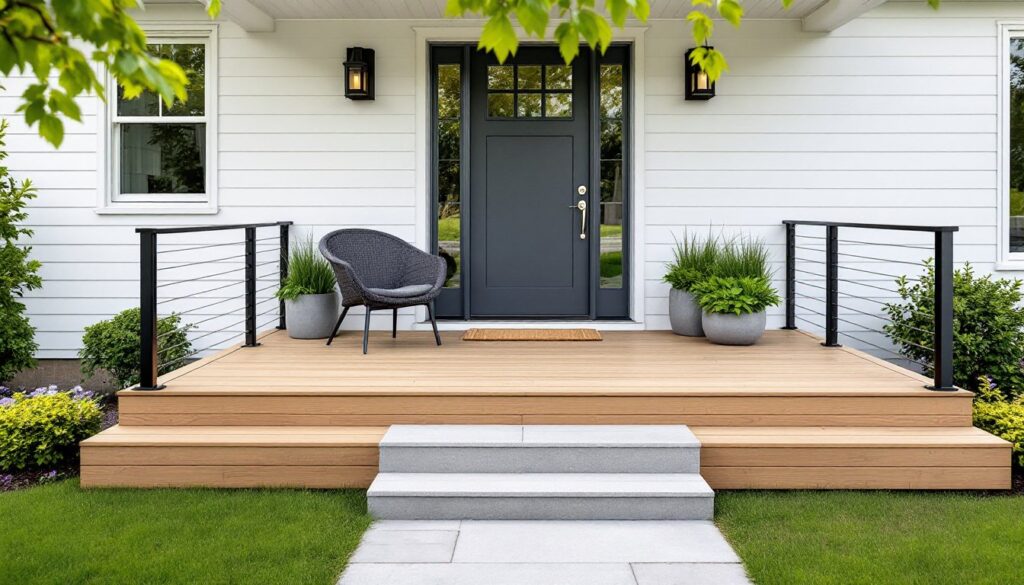
For a softer take on modern design, consider a deck finished with Ipe or Cumaru hardwood in a simple rectangular layout. The rich, tight grain of tropical hardwoods provides texture without fussiness. Pair it with low, horizontal cable railing to maintain the minimalist vibe. Cable systems require tensioning and end posts strong enough to resist lateral pull, usually 4×4 posts set in concrete footings at least 42 inches deep in cold climates.
Minimalist and Contemporary Styles
Minimalist front of house deck ideas take the modern aesthetic a step further, often incorporating single-material palettes and asymmetrical layouts. A monochrome deck built entirely from gray composite decking and matching fascia boards creates a seamless, almost sculptural appearance. Built-in bench seating along one edge eliminates the need for separate furniture and reinforces the streamlined look.
Contemporary designs might layer materials for visual interest, say, a concrete paver landing that transitions into a wood or composite deck surface. This mix of textures defines zones without adding clutter. Keep transitions clean with metal or composite edge trim, and ensure the paver base is properly compacted and leveled to avoid settling that could create trip hazards.
Traditional and Classic Front Deck Designs
Traditional front deck designs lean on historical precedent, drawing from colonial, Victorian, and craftsman architecture. These styles embrace decorative details, symmetry, and warm, natural materials.
A classic wraparound porch-style deck suits homes with generous setbacks and traditional proportions. The continuous surface wraps around at least one corner, extending the usable space and creating multiple entry points. Pressure-treated 5/4×6 decking laid perpendicular to the house works well here, offering durability at a reasonable cost. Finish with a solid stain in a heritage color, barn red, slate gray, or deep green, to protect the wood and enhance the period aesthetic.
Turnouts and alcoves add visual interest to traditional front decks. A small bump-out at the door landing provides room for a bench or potted plants without expanding the entire deck footprint. This approach works especially well on narrow lots where side yard setbacks limit width. Frame the alcove with matching newel posts and balusters, maintaining consistent spacing between balusters (no more than 4 inches apart) to meet code and prevent small children from slipping through.
For Victorian or Queen Anne homes, consider decorative spandrels, carved post caps, and painted railings in contrasting colors. These details require more upkeep, expect to repaint every 3–5 years depending on sun exposure and climate, but the period authenticity they provide is difficult to replicate with low-maintenance materials.
Colonial revival front door deck ideas often feature symmetrical stairs, centered on the entry and flanked by matching planters or lanterns. Use straight stair stringers rather than notched for a more formal appearance, and cap the railings with a smooth, continuous handrail in a hardwood like white oak. The key is proportion: stairs should feel generous, with treads at least 11 inches deep and risers no taller than 7.75 inches, per IRC guidelines.
Small Front Deck Ideas That Maximize Space
Not every home has room for a sprawling front deck, but small doesn’t mean limited. Strategic design choices make compact front decks feel larger and more functional.
Start with a simple rectangular platform, sized just large enough to meet code requirements, a 36-inch-deep landing is the minimum, but 4 feet provides enough room to comfortably open a storm door and step to the side. Extend the width to at least 5 feet if the budget allows, which creates space for a small chair or a pair of flanking planters.
Diagonal decking boards visually expand a small deck by drawing the eye across the longest dimension. Use a 45-degree angle for maximum effect, though this approach generates more waste during cutting. A miter saw makes quick work of angle cuts, while a circular saw with a guide works in a pinch.
Built-in storage benches serve double duty on small front decks. A hinged bench seat provides hidden storage for garden tools, seasonal decor, or outdoor cushions, keeping the surface clutter-free. Frame the bench with 2×4 or 2×6 lumber, and line the interior with 3/4-inch plywood for strength. Add a hydraulic lid support to prevent the seat from slamming shut.
Choose railing designs carefully on small decks. Bulky balusters and wide handrails eat up visual space. Cable railing, horizontal metal slats, or even tempered glass panels keep the deck feeling open. If code permits, a low border planter built into the deck perimeter can sometimes substitute for railing on decks less than 30 inches high, though this varies by jurisdiction, check with the local building department.
Vertical elements add function without consuming floor area. A trellis or pergola mounted to the house wall supports climbing vines and creates a sense of enclosure. Fold-down wall-mounted tables provide a surface for setting down bags or keys without a permanent footprint.
Material Options for Your Front Deck
Material selection shapes the look, maintenance requirements, and longevity of a front deck. Each option carries trade-offs worth considering before the first board goes down.
Pressure-treated pine remains the most affordable option, running roughly $2–$3 per square foot for materials in many markets. It accepts stain and paint, handles moisture well when properly maintained, and works with standard fasteners. The downsides: it requires annual cleaning and re-staining every 2–3 years to prevent graying and splitting. Look for ground-contact-rated lumber (labeled 0.60 retention) for joists and posts in contact with concrete or soil.
Composite decking eliminates most maintenance in exchange for a higher upfront cost, typically $4–$8 per square foot. Modern composites resist fading, won’t splinter, and require only occasional cleaning with soap and water. Quality matters here: low-end composites can experience thermal expansion and staining from tannins in certain hardwoods. Choose a capped composite with a protective polymer shell for the best performance. Note that composites require specific fastening systems, hidden clips or grooved boards, that add to installation time.
Cedar and redwood offer natural beauty and rot resistance from tannins and oils in the wood. Both cost more than pressure-treated lumber, $4–$6 per square foot, and still need protection from UV and moisture. Expect to apply a clear sealer or semi-transparent stain every 1–2 years. Use stainless steel or coated fasteners to avoid black staining from tannin reactions.
Tropical hardwoods like Ipe, Cumaru, or Tigerwood deliver exceptional durability and rich color, but they demand specialized tools and techniques. These dense woods require pre-drilling for every fastener to avoid splitting, and they dull saw blades quickly. Budget $8–$15 per square foot for materials. The payoff: a 25-year-plus lifespan with minimal maintenance beyond annual cleaning.
PVC decking represents the top tier in weather resistance. Fully synthetic PVC boards won’t rot, warp, or absorb moisture, making them ideal for shaded front decks prone to mildew. Expect to pay $6–$10 per square foot. The material feels slightly softer underfoot than wood or composite, and light colors can show dirt more readily.
Decorating and Furnishing Your Front Deck
A structurally sound deck needs the right furnishings and details to become a welcoming front entry. Keep decoration purposeful, front decks face public view and endure weather, so every element should earn its place.
Start with a durable doormat in a material that scrapes clean and sheds water. Coir or rubber-backed mats hold up better than fabric in wet conditions. Size the mat proportionally to the deck, a standard 24×36-inch mat works for most single doors, while double doors call for a 36×60-inch runner.
Seating makes sense if the deck measures at least 6 feet wide. A compact bench, a pair of weather-resistant resin wicker chairs, or a single Adirondack chair provides a resting spot without crowding the entry. Avoid cushions on front decks unless there’s covered overhead space: unprotected fabric fades and mildews quickly. Instead, choose furniture with contoured seats that drain water.
Planters anchor the deck visually and soften hard edges. Use containers in materials that match the home’s style, terracotta or ceramic for traditional homes, powder-coated metal or concrete for modern designs. Drainage is critical: drill additional holes if needed to prevent root rot. Choose plants suited to the deck’s sun exposure: shade-tolerant hostas or ferns for north-facing decks, drought-resistant sedums or ornamental grasses for full sun.
Lighting extends usability into evening hours and improves safety. Flush-mount ceiling fixtures or wall sconces flanking the door provide ambient light, while low-voltage step lights (typically 12-volt systems) prevent trips on stairs. Solar options work for accent lighting, but hardwired fixtures deliver more consistent output. Any electrical work on the exterior requires weatherproof boxes and GFCI protection per NEC Article 210.8, hire a licensed electrician if running new circuits.
Railings offer opportunities for seasonal decoration without permanent commitment. Simple swags of greenery for holidays, or weather-resistant fabric bunting for summer, add color without drilling holes or creating maintenance headaches. Avoid anything that blocks sightlines or interferes with the railing’s structural purpose.
Finally, keep a broom, boot brush, or small storage bin nearby for quick cleanups. A tidy front deck signals care and attention, qualities that resonate with visitors and passersby alike.