



Table of Contents
ToggleBlue bedrooms aren’t just a passing trend, they’re rooted in solid design logic. The color has a documented calming effect that makes it ideal for sleep spaces, but the real challenge lies in execution. Too much navy can make a room feel cave-like, while pale blue without proper anchoring reads juvenile. The sweet spot? Knowing which shade works with a room’s natural light, size, and existing architecture. This guide walks through practical blue bedroom ideas that range from dramatic dark blue walls to subtle light blue accents, with specific paint techniques, furniture pairings, and decor choices that actually hold up beyond the inspiration photo.
Key Takeaways
- Blue bedroom ideas work best when the shade choice matches your room’s natural light, size, and existing architecture—test paint samples on 8″x10″ poster board at different times of day before committing.
- Dark navy and light blue require opposite lighting strategies: navy needs multiple light sources at different heights, while light blue benefits from high ceilings and should be anchored with darker furniture or textiles to avoid a washed-out appearance.
- Use the 60-30-10 design rule for cohesion: 60% blue walls, 30% neutral bedding and rugs, 10% darker accent pieces like charcoal headboards or walnut nightstands to prevent cold, flat results.
- Navy blue bedrooms achieve sophistication through proper pairing materials—swap builder-grade nickel fixtures for brass or aged bronze hardware, add textured linens, and incorporate natural materials like jute and raw wood.
- Trim color dramatically impacts blue bedroom design: bright white trim makes blue pop and defines architectural features, while shiplap or board-and-batten treatments add architectural interest without clashing undertones.
- Avoid wall-to-wall blue carpeting and default blue artwork on blue walls; instead, choose area rugs in natural fibers, statement lighting fixtures in matte black or wood, and artwork with warm neutrals or contrasting colors for visual balance.
Why Blue Is the Perfect Color for Bedrooms
Blue lowers heart rate and reduces blood pressure, measurable physiological effects that translate to better sleep quality. Studies from color psychology research consistently show blue as the top performer for promoting rest, outperforming neutrals and warmer tones.
From a design standpoint, blue offers unmatched versatility. It works across historical styles (colonial, coastal, mid-century) and pairs cleanly with both warm woods and cool metals. Unlike trendy colors that date a room within five years, blue maintains long-term relevance.
Practical advantages include its ability to recede visually, making smaller bedrooms feel more spacious, and its compatibility with various lighting temperatures. North-facing rooms with cool natural light handle warm-toned blues (those with slight gray or green undertones) better than pure cobalt, while south-facing spaces can support deeper, saturated shades without feeling dim.
Choosing the Right Shade of Blue for Your Bedroom
Paint chips lie. The 2″x2″ swatch under store fluorescents won’t match how that color performs on a 10-foot wall under your bedroom’s specific light conditions. Always test with 8″x10″ poster board samples mounted on multiple walls, observed at different times of day.
Light blue bedroom ideas for adults work best in rooms with ample natural light or high ceilings. Shades like powder blue, sky blue, or Robin’s egg create airy, open feels but require deliberate contrast through darker furniture or textiles to avoid a washed-out look. Pair with charcoal bed frames, walnut nightstands, or black-framed artwork.
Dark blue bedroom ideas demand more calculation. Navy, Prussian blue, and midnight tones absorb light, so they need either generous window square footage or a well-planned lighting scheme: multiple sources at different heights (bedside lamps, recessed cans on dimmers, picture lights). Rooms smaller than 12’x12′ risk feeling cramped unless one wall remains white or light neutral.
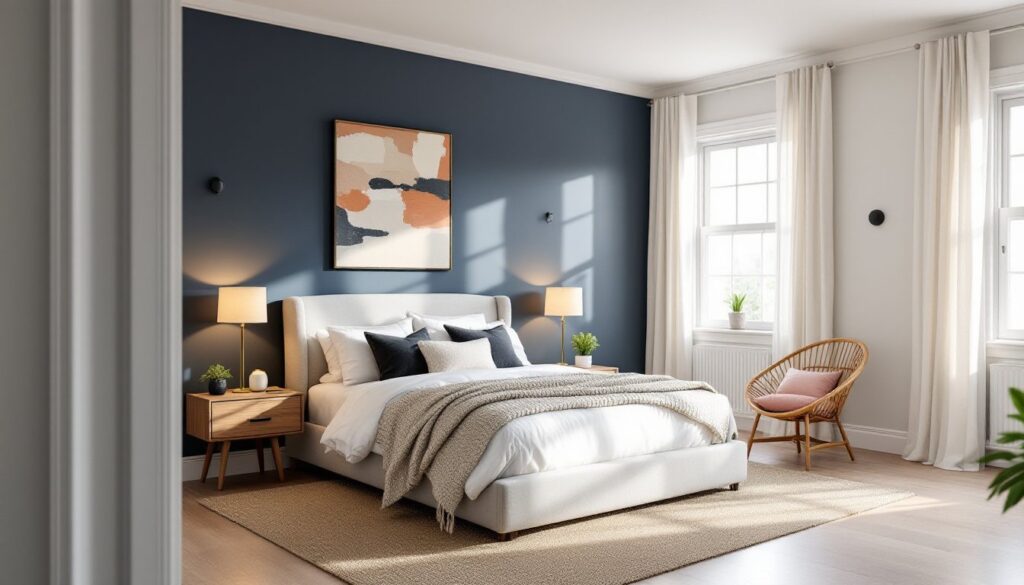
Blue master bedroom ideas often benefit from two-tone approaches, deeper blue on the bed wall with lighter tones or neutrals on remaining walls. This creates focal drama without overwhelming the space. Consider existing undertones in flooring and trim: cool-toned blues (with purple or green hints) clash with orange-toned oak, while warmer slate blues harmonize.
Sheen matters as much as color. Flat or matte finish hides wall imperfections but shows scuffs. Eggshell sheen offers the best balance for bedrooms, minimal glare, easy touch-ups, and slight washability. One gallon covers roughly 350-400 sq ft with proper priming.
Navy Blue Bedroom Ideas for Sophisticated Elegance
Navy delivers instant sophistication but requires commitment. It’s not a forgiving color, poor lighting or mismatched undertones turn elegant into gloomy fast.
Wall application techniques:
- Full four-wall navy works in rooms with white or cream crown molding, baseboards, and door casings. The contrast defines architectural features.
- Three walls navy with one accent wall in warm white or soft gold prevents the closed-in effect in rooms under 150 sq ft.
- Navy wainscoting (36″ height is standard) with lighter upper walls adds formality without dominating.
Lighting strategy for dark walls:
- Install recessed lighting on dimmers, 4″ cans spaced 4-6 feet apart for ambient coverage.
- Add task lighting: swing-arm sconces flanking the bed, minimum 60W equivalent LED.
- Include an uplight (torchiere or wall-mounted) to bounce light off the ceiling and counter the light-absorbing walls.
Pairing materials:
Navy loves brass hardware, aged bronze, and brushed gold finishes. Swap out builder-grade nickel drawer pulls and light fixtures. Introduce natural textures, linen duvet covers, jute area rugs, raw wood furniture, to prevent the space from reading too formal or hotel-like.
White bedding acts as a visual reset against navy walls. Layer with textured throws (cable knit, waffle weave) in cream, camel, or light gray to add warmth without competing with the wall color.
Light Blue and Coastal-Inspired Bedroom Designs
Light blue bedroom decor thrives on contrast and texture. Pale blue walls alone read flat and underdeveloped, they need anchoring elements.
Coastal approach without the clichés:
Skip the anchors and rope art. Instead, focus on natural materials: weathered teak furniture, Belgian linen curtains, seagrass baskets. The palette should include sandy beiges, warm whites, and driftwood grays. Paint the ceiling a shade lighter than the walls (or pure white) to enhance the airy effect.
Shiplap installation adds architectural interest to light blue rooms:
- Use 1×6 pine boards (actual dimensions 3/4″ x 5-1/2″).
- Run horizontally with a nickel-gap spacing (5¢ coin thickness).
- Prime and paint before installation for cleaner edges.
- Requires basic carpentry skills, a miter saw, and a brad nailer or construction adhesive.
Flooring choices matter with light walls. Wide-plank white oak (7″ or wider) in a matte finish complements without competing. Avoid high-gloss or orange-toned woods that clash with cool blues.
For light blue that doesn’t feel juvenile, incorporate darker grounding elements: a charcoal upholstered headboard, black window frames (popular in modern farmhouse designs), or deep walnut bedside tables. The 60-30-10 rule applies, 60% light blue walls, 30% neutrals (bedding, rugs), 10% darker accents.
Accent Wall and Color Combination Ideas
A light blue accent wall bedroom setup works best on the wall behind the bed, it’s the natural focal point and doesn’t create awkward color breaks mid-sightline.
Application methods beyond flat paint:
- Grasscloth wallpaper in blue tones adds depth and texture. Costs $2-4 per sq ft for materials: professional installation recommended for pattern matching.
- Venetian plaster technique (requires two-person team and practice) creates subtle dimension in deeper blues.
- Board and batten treatment: install vertical trim strips (1×2 or 1×3 boards) at 12″-16″ intervals over painted blue wall for classic detailing. Paint wall and trim the same blue for a tonal effect or contrast with white trim.
Color pairing strategies:
Blue + White: Timeless but risks feeling sterile. Warm it with natural wood tones, rattan, or terracotta accessories.
Blue + Gray: Works when blue has cool undertones. Use medium grays (not too light or too dark) in bedding and window treatments. Avoid blue-grays that muddy together.
Blue + Blush or Terracotta: The warm/cool contrast creates energy. Use warmer accent colors in pillows, throws, or artwork, not in large furniture pieces that compete for dominance.
Blue + Mustard or Gold: Rich combination for eclectic or bohemian styles. Keep the ratio controlled, no more than 15% of the room in warm accent colors.
Trim color decisions: Bright white (not cream) trim makes blue pop and defines edges crisply. Use semi-gloss paint on trim for durability and contrast with eggshell walls.
Blue Bedroom Decor and Furniture Styling Tips
Decor choices can support or undermine good wall color. Blue bedrooms benefit from intentional styling that adds warmth and prevents the space from feeling cold.
Furniture finishes:
- Dark woods (walnut, espresso, mahogany) provide contrast against light blues.
- Natural oak and maple work with navy or medium blues.
- Painted white furniture suits coastal light blue schemes but needs texture (distressed finish, carved details) to avoid looking flat.
- Avoid matchy-matchy bedroom sets, mix finishes for a collected, less formulaic look.
Textile layering:
Blue walls allow for pattern play in bedding and curtains. Consider:
- Geometric prints in blues and neutrals for modern spaces
- Traditional florals or toile for classic styled rooms
- Striped duvet covers (horizontal or ticking stripe) that incorporate the wall color
Curtains should puddle slightly (1″-2″ on the floor) or break right at floor level. Mount rods at ceiling height, not at window casing, to add vertical emphasis. Linen or cotton blends in natural tones (oatmeal, sand, soft white) work across blue shades.
Lighting fixtures:
Swap builder-grade fixtures for statement pieces. In navy rooms, try brass or aged bronze pendants or chandeliers. In light blue rooms, matte black or natural wood fixtures add definition. Avoid chrome and polished nickel, they read too clinical against blue.
Artwork and wall decor:
Don’t default to blue art on blue walls. Instead, choose pieces with:
- Warm neutrals and earth tones to balance cool walls
- Black and white photography for graphic contrast
- Abstract pieces incorporating blues alongside contrasting colors
Frame color matters: black frames against navy, natural wood or white against light blue.
Rug selection:
Area rugs should anchor the bed and extend 18″-24″ beyond each side. For blue rooms, choose:
- Natural fiber rugs (jute, sisal, wool) in neutrals for texture
- Vintage or Persian-style rugs that incorporate blue along with warmer tones
- Geometric patterns in blues and grays for contemporary schemes
Avoid wall-to-wall carpeting in saturated blues, it’s hard to change and dates quickly.
Conclusion
Blue bedroom ideas succeed when color choice aligns with room conditions, light levels, size, and existing architecture. Test samples thoroughly, invest in proper lighting for darker shades, and layer textures to prevent flat, cold results. The difference between a sophisticated blue bedroom and a disappointing one usually comes down to preparation and follow-through on the details: trim work, lighting placement, and deliberate contrast through furniture and textiles. Start with one wall if commitment feels risky, but measure, prime, and plan as if it’s permanent.