



Table of Contents
ToggleAn entryway sets the tone for every visitor and family member walking through the door. It’s also where keys disappear, shoes pile up, and bags get dumped in a chaotic heap. A well-chosen bench solves these problems while adding function and style to what’s often the most overlooked room in the house. From compact corner seats to built-in storage solutions, the right entryway bench decor ideas can turn a cluttered passthrough into an organized, welcoming space. Whether working with a grand foyer or a narrow hallway, these 25+ entryway ideas with bench designs offer practical options for every layout, budget, and skill level.
Key Takeaways
- Entryway bench ideas transform cluttered passageways into organized, welcoming spaces by providing functional landing zones for shoes, bags, and daily essentials while anchoring the area visually.
- Standard entryway benches should measure 36 to 60 inches wide and 16 to 18 inches deep for comfort, with narrower 12 to 14-inch depths suitable for hallways under 42 inches wide.
- Storage-smart bench designs like lift-top models, cubbies, and shoe racks maximize utility by hiding seasonal clutter and keeping items within arm’s reach without creating visual mess.
- Built-in benches with hidden compartments and custom designs can be tailored to awkward spaces, but require proper framing, stud anchoring, and potential permits for structural modifications.
- Style-focused entryway bench designs blend modern minimalist aesthetics with rustic farmhouse options, using materials like powder-coated steel, reclaimed wood, and durable cushions to match home architecture.
- Space-saving bench solutions such as corner benches, fold-down wall-mounted options, and multipurpose storage ottomans work effectively in small entryways while maintaining at least 36 inches of clear pathway width.
Why Every Entryway Needs a Bench
A bench provides an immediate landing zone for daily routines. Putting on shoes becomes easier, especially for kids and older family members who need the stability. It offers a place to drop bags, sort mail, or set down groceries while fumbling for keys.
Beyond function, a bench defines the entryway as intentional space rather than leftover square footage. It anchors the area visually and gives designers a focal point to build around with hooks, mirrors, or lighting.
From a resale perspective, a thoughtfully designed entryway adds perceived value. Home buyers notice cohesive, organized spaces, and a bench signals attention to detail. It’s a modest investment that pays off in daily convenience and first impressions.
Most entryways can accommodate a bench between 36 to 60 inches wide and 16 to 18 inches deep, the standard seat depth that provides comfort without eating floor space. For narrow hallways under 42 inches wide, a shallow bench at 12 to 14 inches deep keeps the path clear while still offering a perch.
Storage-Smart Entryway Bench Ideas
Storage benches turn dead space into high-utility real estate. They hide seasonal clutter, contain shoe chaos, and keep everyday essentials within arm’s reach without visual mess.
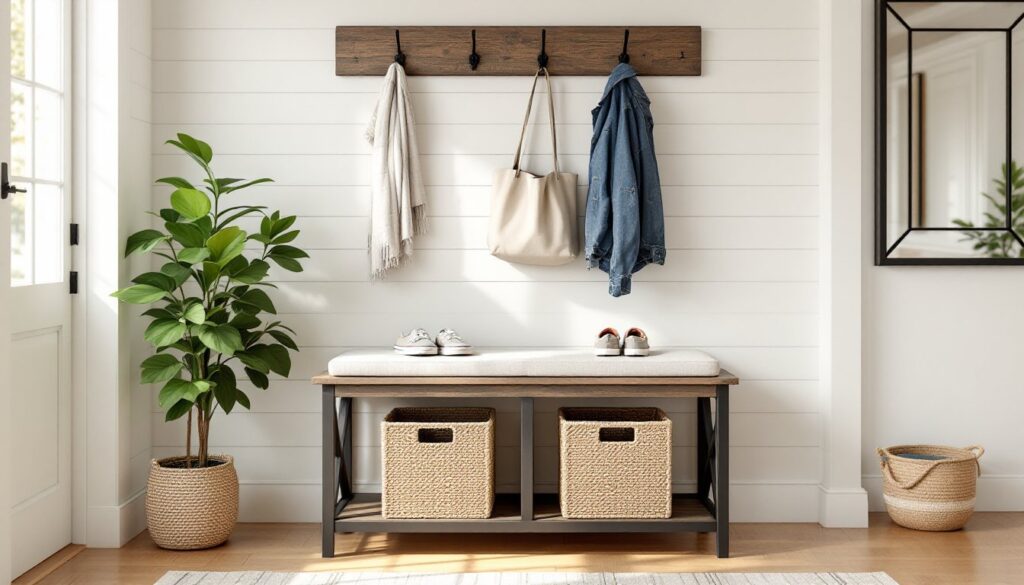
Cubbies and Open Shelving: A bench with open cubbies underneath works well for families. Each person gets a designated space for shoes or bags, making it easy to maintain order. Build or buy benches with 12-inch-square cubbies, large enough for adult sneakers or kids’ boots. Pair with fabric bins or baskets for smaller items like gloves and hats.
Lift-Top Storage Benches: These offer concealed storage under a hinged seat. They’re ideal for hiding out-of-season gear, pet leashes, or sports equipment. Choose benches with soft-close hinges to prevent slamming and pinched fingers. Standard lift-top benches hold 3 to 5 cubic feet of storage, enough for several pairs of shoes or bulky winter accessories.
Bench with Coat Hooks and Shelves Above: Combining a bench with vertical storage maximizes function in tight spaces. Mount coat hooks 60 to 66 inches from the floor for adult use, and add a second row at 42 to 48 inches for children. A shelf above the bench at 72 to 78 inches provides space for baskets, décor, or everyday items like sunglasses and wallets.
Shoe Rack Benches: These feature slatted shelves or angled racks beneath the seat, keeping footwear visible and ventilated. They’re practical for mudrooms or active households. Look for benches with adjustable or removable shelves to accommodate boots or low-profile sandals.
Built-In Benches with Hidden Compartments
Built-ins offer a custom look and can be tailored to awkward spaces. A basic built-in bench consists of a 2×4 frame secured to wall studs, topped with ¾-inch plywood or MDF, and finished with trim and cushions.
For hidden storage, frame the bench with a front-access panel or lift-top lid. Use piano hinges for durability on lids wider than 24 inches. Line the interior with ¼-inch plywood to prevent items from falling through gaps.
Built-ins in load-bearing walls or those involving electrical outlets require careful planning. Always locate studs with a stud finder and anchor the frame with 3-inch wood screws. If the bench will support heavy loads, like adults sitting while holding children, use 2×6 framing instead of 2×4s for added strength.
Finish built-ins with trim-grade pine or poplar for a paintable surface, or match existing baseboards and casings for a cohesive look. Add a cushion cut from 3- to 4-inch high-density foam wrapped in durable fabric like canvas or outdoor-grade polyester to resist daily wear.
Note: Built-ins attached to walls in rental properties or condos may require landlord approval. In some jurisdictions, structural modifications require permits, especially if altering load-bearing walls or covering electrical panels.
Style-Focused Entryway Bench Designs
Style choices depend on the home’s architecture and the homeowner’s taste, but function shouldn’t be sacrificed for looks. The best designs blend both.
Modern Minimalist Benches
Modern benches emphasize clean lines, neutral colors, and uncluttered profiles. Materials like powder-coated steel, solid walnut, or white oak with natural finishes dominate this category.
Floating benches mounted to wall studs create the illusion of more floor space, ideal for small entryways. Use heavy-duty floating shelf brackets rated for at least 200 pounds to ensure the bench supports seated weight. Mount brackets into at least two studs with lag bolts.
Benches with hairpin legs or thin metal frames offer an airy, mid-century aesthetic. Pair with simple cushions in linen, leather, or wool in neutral tones like charcoal, oatmeal, or black. Avoid excessive décor, modern design thrives on restraint.
Slatted wood benches in light tones like ash or maple add warmth without heaviness. The gaps between slats keep the design light and allow air circulation for damp shoes or bags.
Rustic and Farmhouse Bench Ideas
Rustic benches lean into reclaimed materials, visible joinery, and weathered finishes. Think barn wood, distressed pine, or rough-sawn oak.
Live-edge benches showcase natural wood grain and irregular edges, often paired with industrial metal legs. Choose hardwoods like walnut, cherry, or maple for durability: softer woods like pine dent easily in high-traffic areas.
X-frame or trestle-style benches suit farmhouse aesthetics. Build them from dimensional lumber (2×4s, 2×6s, or 2×10s) with traditional joinery like mortise-and-tenon or modern shortcuts like pocket screws hidden under plugs. Finish with chalk paint, milk paint, or water-based stains for a matte, hand-rubbed look.
Add texture with woven baskets, galvanized metal bins, or vintage crates underneath for shoe storage. Cushions in ticking stripe, plaid, or burlap fabrics reinforce the farmhouse vibe.
Entryway bench decor ideas for rustic spaces include wall-mounted hooks made from railroad spikes or vintage coat racks, paired with mason jar organizers for small items. Keep décor functional, every piece should serve a purpose.
Space-Saving Bench Solutions for Small Entryways
Small entryways demand creative solutions. The goal is maximum function with minimal footprint.
Corner benches use awkward angles that are hard to furnish otherwise. Build or buy L-shaped benches that tuck into corners, or use a simple triangular bench with storage underneath. These typically measure 24 to 36 inches per side, fitting snugly without blocking pathways.
Wall-mounted fold-down benches flip up when not in use, freeing floor space. Secure them to studs with heavy-duty hinges rated for the bench’s weight plus a seated person (plan for at least 250 pounds total). Add a soft-close mechanism or chain stays to prevent the bench from slamming down.
Narrow benches under 12 inches deep work in hallways. Pair with wall-mounted hooks or a shallow console above to create a vertical storage system. These won’t accommodate shoes underneath, but they provide a perch for putting on footwear and a surface for keys and mail.
Bench with slide-out storage features hidden drawers or pull-out bins on casters. This design works well for seasonal items that don’t need daily access. Use drawer slides rated for 75 to 100 pounds if storing heavy items like winter boots or toolkits.
Backless benches feel less bulky than designs with backs and arms. They’re easier to tuck under windows or against short walls. Add cushions with non-slip backing to prevent sliding.
Multipurpose furniture like a storage ottoman or trunk-style bench can move between rooms as needed. Choose designs with flat, stable tops that support seated weight without tipping.
Tip for renters: Freestanding benches with removable legs or modular designs can be disassembled and moved without damaging walls. Avoid permanent installations unless landlord approval is secured.
For entryway ideas with bench in compact spaces, layer function vertically. A slim bench paired with floating shelves, pegboard, or a wall-mounted mail organizer above makes use of every inch without crowding the floor. Keep pathways at least 36 inches wide to meet accessibility standards and maintain comfortable traffic flow.