



Table of Contents
ToggleSummer afternoons turn decks into solar ovens without the right shade. Smart homeowners know that effective deck shade isn’t just about comfort, it protects furniture, lowers cooling costs, and extends the usable hours of outdoor spaces. Whether working with a sprawling multi-level deck or a modest 10×12 platform, the right shade ideas for deck spaces balance function, aesthetics, and budget. From permanent structures anchored into joists to fabric solutions that roll away in minutes, this guide covers proven shade for deck ideas that work across climates and home styles. Each option includes installation considerations, structural requirements, and realistic cost expectations.
Key Takeaways
- Permanent deck shade structures like attached roof extensions and freestanding pavilions provide year-round protection and increase home resale value, but require permits, proper footings, and structural planning to handle local snow load and wind requirements.
- Retractable shade solutions—motorized awnings, pergola canopies, and drop screens—allow homeowners to adjust coverage throughout the day and adapt to changing weather conditions, with quality fabrics lasting 5+ years and wind sensors automatically protecting equipment in high winds.
- Shade sails and canopies deliver 85–95% UV protection with flexible anchor options, but require proper tensioning with stainless-steel turnbuckles and 20–30 degree angles to prevent sagging, water pooling, and premature wear.
- Budget-friendly deck shade ideas like bamboo roll-up panels, pallet wood pergola toppers, and climbing vines on cable trellises cost under $200 and provide 60–70% shade coverage, though fabric and natural solutions need 2–3 years to mature and seasonal maintenance.
- Assess your deck’s load capacity, sun exposure direction, local wind patterns, and architectural style before selecting a shade solution to ensure structural safety and long-term aesthetic success without exceeding HOA restrictions.
- Factor maintenance requirements into your budget—fabric fades every 3–7 years, wood structures need sealing every 2–3 years, and motorized components require periodic lubrication to prevent shade solutions from deteriorating quickly.
Permanent Shade Structures for Year-Round Comfort
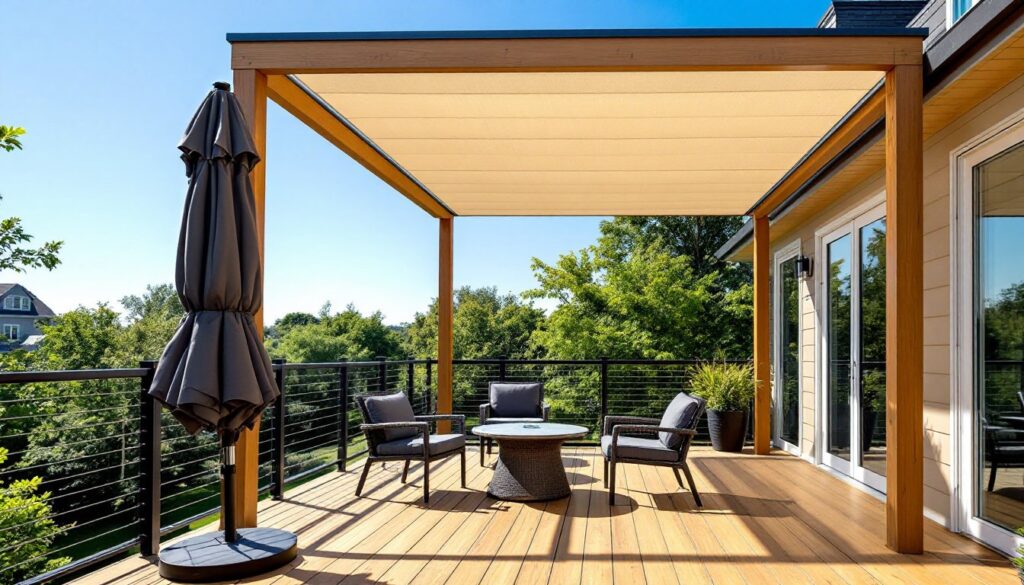
Permanent structures deliver reliable shade and add resale value, but they require planning. Most attach directly to deck framing or footings below grade.
Attached roof extensions tie into existing house structure using a ledger board (typically 2×8 or 2×10 pressure-treated lumber) bolted through exterior sheathing into wall studs or rim joists. These require flashing to prevent water intrusion and often need permits since they’re permanent structural additions. Corrugated polycarbonate panels or standing-seam metal roofing work well, both shed rain and block 90%+ of UV. Expect to consult local building codes for snow load requirements and setback rules.
Freestanding pavilions sit on their own post footings (12-inch diameter, 42+ inches deep in most frost zones) and don’t touch the house. This avoids ledger board complications but means digging, concrete, and often post-base hardware rated for uplift in wind. A 12×12 pavilion typically uses four 6×6 posts and 2×8 or 2×10 rafters. Hip or gable roofs add architectural interest but require confident carpentry skills, miter cuts and birdsmouth notches aren’t beginner-friendly.
Pergolas and Gazebos
Pergolas use open rafter construction (often 2×6 or 2×8 beams on 16- to 24-inch centers) to create partial shade. They block 30–60% of direct sun depending on rafter spacing and orientation. Homeowners often add climbing vines (wisteria, clematis, or hops) for additional coverage, but vines take 2–3 seasons to fill in and add weight, factor that into beam sizing. Pergolas attached to a deck require blocking between joists to distribute post loads: freestanding versions need concrete footings.
Gazebos are fully enclosed structures with solid roofs and optional screens or railings. They provide complete overhead protection and defined outdoor rooms. Most prefab gazebo kits specify a concrete slab or paver base rather than direct deck mounting, wood decks may not handle concentrated point loads without reinforcement. If installing on a deck, consult a structural engineer or add sister joists and blocking under each gazebo post. Gazebos often require permits since they’re permanent structures with roofs exceeding 200 square feet in most jurisdictions.
Retractable Shade Solutions That Adapt to Any Weather
Retractable options let homeowners adjust coverage as conditions change, full shade at noon, open sky by evening.
Motorized awnings mount to fascia boards or wall studs above the deck. Quality units extend 10–14 feet and retract into a cassette housing that protects fabric from weather. Look for solution-dyed acrylic fabrics (Sunbrella is the benchmark) rated for 5+ years of UV exposure without fading. Motors add $400–$800 but beat hand-crank operation for awnings over 12 feet wide. Most require a dedicated 120V outdoor outlet on a GFCI-protected circuit, hire an electrician if one isn’t available. Wind sensors (around $150) automatically retract the awning when gusts exceed 20–25 mph, preventing frame damage.
Retractable pergola canopies slide along tracks or cables mounted to pergola rafters. They work well for DIYers who’ve already built a pergola frame and want adjustable coverage. Kits typically include marine-grade fabric, stainless-steel hardware, and pulleys or crank systems. Installation involves mounting eye bolts into rafter ends and tensioning cables, straightforward if the pergola is square and level. Fabric longevity depends on whether it’s stored rolled or left exposed: rolling adds work but doubles lifespan.
Vertical drop screens mount above door or deck edges and roll down to block low-angle sun or wind. They’re especially useful on west-facing decks hammered by late-afternoon glare. Screens come in solar mesh (blocks UV but preserves views) or blackout vinyl. Manual systems cost $200–$500 per screen: motorized versions start around $600. Mounting brackets fasten to deck posts or overhead beams, confirm the mounting surface can handle wind loads, which can exceed 30 pounds per linear foot in gusts.
Fabric and Natural Shade Ideas for a Softer Look
Fabric solutions offer design flexibility and lower installation barriers, though most aren’t permanent.
Sail Shades and Canopies
Shade sails are tensioned fabric triangles or rectangles anchored at 3–4 corners. They’re popular for contemporary designs and provide 85–95% UV block. Installation requires solid anchor points: deck posts, fascia blocking, or dedicated 4×4 posts set in concrete 36+ inches deep. Use turnbuckles (stainless steel, rated for 400+ pounds) at each corner to tension the sail, slack fabric flaps in wind and wears faster. Position sails at a 20–30 degree angle to shed water: flat sails collect pooling rainwater that stresses seams and hardware.
Most quality sails use HDPE knitted mesh or polyester with reinforced edges. Cheaper sails ($80–$150) tear at grommets within a season: mid-range options ($200–$400) last 3–5 years. Remove and store sails before heavy snow or sustained high winds, they’re not engineered for winter weather in northern climates.
Pop-up canopies suit renters or homeowners testing shade positions before committing. Frame kits (10×10 is standard) anchor with weights, deck screws through base plates, or ratchet straps to railings. Straight-leg canopies offer more headroom than angled-leg models. Fabric quality varies wildly, look for denier ratings above 300 and double-stitched seams. Pop-ups collapse in minutes but aren’t wind-rated above 15–20 mph: take them down or expect bent frames.
Outdoor curtains hang from overhead beams, pergola rafters, or cable wire strung between posts. Use grommeted outdoor fabric (treated for mildew and UV) on stainless-steel rings or hooks. Curtains add privacy and filter light but require regular cleaning and aren’t waterproof. Secure bottom hems with Velcro ties or weights to prevent billowing.
Budget-Friendly DIY Deck Shade Options
Effective shade doesn’t require contractor-level budgets or skills.
Bamboo roll-up shades mount to pergola rafters or overhead beams with screw eyes and zip ties. They provide 60–70% shade, resist mildew better than fabric, and cost $40–$100 for 6×8-foot panels. Cut to length with tin snips: edges fray slightly but don’t unravel. They last 3–4 seasons before UV degrades the binding cord.
Pallet wood pergola toppers repurpose free or cheap pallets into rustic shade slats. Disassemble pallets, pull nails, and screw individual boards across pergola beams at 4–6 inch spacing. Use deck screws (not nails) for easier removal. This is a weekend project requiring a drill, circular saw, and basic measuring skills. Treat raw pallet wood with exterior stain or sealant, untreated wood grays and splinters within a year.
Outdoor umbrellas are the fastest shade solution. Cantilever models (offset pole design) cost $150–$600 and shade 8–11 feet without a center post blocking furniture. Standard market umbrellas ($60–$200) require a table with an umbrella hole or a weighted base (minimum 50 pounds for stability). Choose aluminum or fiberglass ribs over wood, they handle wind better and resist rust. Store umbrellas closed during storms: even heavy bases can’t prevent tipping in 30+ mph gusts.
Climbing vines on cable trellises create living shade for under $100. String galvanized aircraft cable (1/8-inch diameter) between deck posts using turnbuckles for tension. Plant fast growers like trumpet vine, hops, or clematis at post bases. Vines need 2–3 seasons to provide meaningful shade but require zero energy and improve with age. Prune annually to control weight and prevent stem damage to deck boards.
Choosing the Right Shade Solution for Your Deck
The best shade idea for a deck depends on structure, climate, and how homeowners use the space.
Assess deck load capacity first. Most residential decks are built to code for 40–50 PSF (pounds per square foot) live load. Adding a pergola or gazebo concentrates weight, consult the original deck plans or hire a structural engineer if plans aren’t available. Undersized joists (2×6 or smaller on spans over 8 feet) may need reinforcement before adding permanent structures.
Consider sun path and prevailing wind. South- and west-facing decks get the most intense afternoon heat: prioritize full-coverage solutions like roofs or retractable awnings. East-facing decks benefit from lighter options like shade sails or curtains. In high-wind areas (coastal zones, plains, or ridge-top lots), avoid large fabric sails and unsecured umbrellas, retractable awnings with wind sensors or solid roofs are safer.
Match style to architecture. Modern homes pair well with clean-lined shade sails or metal pergolas: traditional styles suit gabled gazebos or wood-frame awnings. Don’t ignore HOA rules, some communities restrict colors, heights, or permanent structures.
Budget realistically. DIY bamboo shades and pallet projects run $50–$200. Mid-range retractable awnings and quality shade sails cost $500–$1,500 installed. Permanent pergolas and pavilions with professional installation range from $3,000–$12,000 depending on size and materials. Permits (when required) add $100–$500.
Plan for maintenance. Fabric fades and needs replacement every 3–7 years. Wood structures require staining or sealing every 2–3 years. Motorized components need occasional lubrication and battery changes. Factor these costs and time commitments into the decision, otherwise, the perfect shade solution becomes an eyesore in three seasons.