




Table of Contents
ToggleChoosing the right shower tile can make or break a bathroom remodel. Beyond aesthetics, tile choice affects water resistance, maintenance, and long-term durability. Homeowners face a sea of options, from classic subway patterns to bold geometric designs, each offering different installation challenges and visual payoffs. This guide covers practical bathroom shower tile ideas that balance style with real-world performance, helping DIYers and contractors alike navigate material specs, layout strategies, and design trends worth considering in 2026. Whether tackling a weekend refresh or a full gut job, the right tile selection sets the foundation for a shower that looks sharp and holds up under daily use.
Key Takeaways
- Bathroom shower tile ideas range from affordable classic subway patterns ($2–$6 per square foot) to luxurious natural stone ($8–$25+), each with distinct installation demands and maintenance requirements.
- Porcelain is the ideal material for wet shower areas due to its impervious rating (less than 0.5% water absorption) and superior durability compared to ceramic or natural stone.
- Proper waterproofing with liquid or sheet membrane systems over fiber-cement backer board is non-negotiable to prevent costly mold, rot, and tile failure.
- Large-format tiles (12″ × 24″ or bigger) create a seamless modern look but require perfectly flat substrates checked with a straightedge, as any variance over 1/8″ per 10 feet will show.
- Mix and match tile combinations—such as subway walls, mosaic floors, and contrasting accent strips—balance cost, function, and style without requiring custom designs.
- Always purchase 10–15% extra tile for cuts, breakage, and future repairs, since discontinued lines make exact color matches impossible later.
Classic Subway Tile Patterns for Timeless Appeal
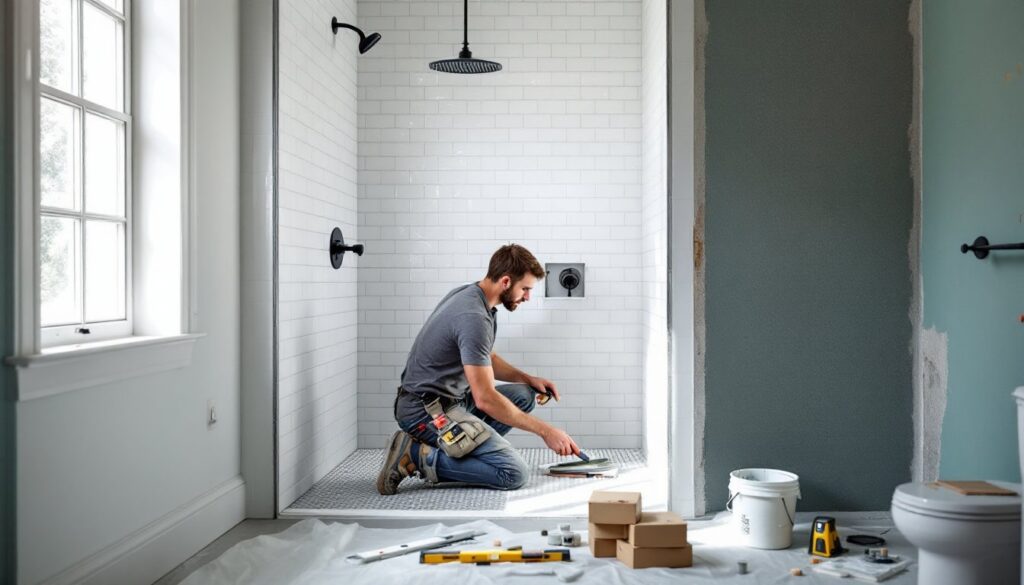
Subway tile remains a workhorse in shower design, affordable, readily available, and forgiving for first-time installers. Standard 3″ × 6″ ceramic or porcelain rectangles run about $2–$6 per square foot, though handmade or glass versions push higher. The traditional running bond (offset by half) is the easiest layout for beginners: it self-corrects minor lippage and uses minimal cuts.
Vertical stacking (grid pattern) creates clean, modern lines but demands precise leveling, any deviation shows immediately. Herringbone and chevron arrangements add movement and visual texture, though they increase labor time and waste due to angled cuts. A wet tile saw with a decent diamond blade is essential for diagonal work: scoring wheels crack more often on beveled edges.
For shower wall tile ideas, many pros run subway tile to the ceiling and switch to smaller mosaics on the floor for slip resistance. White remains the most popular, but soft grays, sage greens, and matte blacks have gained traction. Rectified edges (machine-cut, perfectly square) allow tighter grout lines, down to 1/16″, which gives a sleeker, more contemporary look and simplifies cleaning.
One caution: glossy subway tile shows water spots and soap scum faster than matte or textured finishes. If low maintenance matters, consider a satin or honed glaze. Always use epoxy grout in wet areas: traditional sanded grout absorbs moisture and can harbor mold, even when sealed.
Natural Stone Tiles for a Luxurious Spa Experience
Natural stone, marble, travertine, slate, and quartzite, brings organic color variation and tactile depth that porcelain can’t fully replicate. Marble slabs or large-format tiles (12″ × 24″ or bigger) deliver high-end aesthetic but require sealing every 6–12 months with a penetrating impregnator to resist staining and etching from acidic cleaners.
Travertine offers a more rustic, tumbled look with natural pitting. Installers often fill voids with matching epoxy before grouting to prevent water infiltration. Slate provides excellent slip resistance and works well on shower floors, though its cleft (rough) surface can be harder to clean. Honed or polished finishes suit walls: flamed or brushed textures suit floors.
Stone is heavier than ceramic, up to 8–10 pounds per square foot for thicker slabs, so proper waterproofing and substrate support are non-negotiable. Use a fiber-cement backer board rated for wet areas (not standard drywall or green board) and apply a liquid or sheet membrane system per manufacturer specs. Some jurisdictions require a mortar bed over a sloped pan liner for tile showers: check local code.
Budget-wise, expect $8–$25+ per square foot for material alone. Installation runs higher because stone often needs back-buttering (thinset on both tile and substrate) to ensure full adhesion. If cost is a concern, consider a stone feature wall or niche accent paired with porcelain field tile that mimics the same look at a fraction of the price.
Bold Geometric and Patterned Tile Designs
Geometric tiles, hexagons, arabesque (lantern), fish scales, and encaustic-look patterns, inject personality into neutral bathrooms. Hexagon mosaics (2″ or 3″ per tile) come on 12″ × 12″ mesh sheets, simplifying layout but requiring careful alignment to avoid wandering grout lines. They work beautifully as shower floor tile or as an accent band at eye level.
Encaustic cement tiles offer vibrant, hand-painted patterns but aren’t ideal for high-moisture showers unless properly sealed: porcelain versions replicate the look with better water resistance. Large-format patterned slabs (think Moroccan or terrazzo effects printed on 24″ × 48″ porcelain) create drama with fewer grout joints, cutting install time and maintenance.
When mixing bold patterns with solid field tile, the 60-30-10 rule helps: 60% neutral base, 30% secondary color or texture, 10% bold accent. Overloading a small shower with busy tile can feel chaotic. A single feature wall or floor inlay often delivers more impact than wrapping all four walls.
Layout precision matters more with geometric designs. Laser levels and tile spacers keep lines true: even a 1/8″ drift compounds across a wall. Dry-fit the first few rows before committing to thinset. If cutting complex shapes (curves, notches around fixtures), a manual tile nipper and carbide hole saw supplement the wet saw.
Pattern tiles typically cost $10–$30 per square foot, and waste runs higher, plan for 15–20% overage to account for cuts and breakage.
Modern Large Format Tiles for a Seamless Look
Large-format tiles, anything over 15″ on the shortest side, minimize grout lines and create a sleek, expansive feel. Common sizes include 12″ × 24″, 24″ × 48″, and even 48″ × 120″ slabs. Porcelain dominates this category due to its strength-to-weight ratio and availability in thin-profile options (around 6mm thick).
Installation demands a perfectly flat substrate. Any bow or dip telegraphs through large tiles as lippage (uneven edges). Use a straightedge to check walls: if variance exceeds 1/8″ over 10 feet, skim-coat with self-leveling underlayment or thinset. Medium-bed mortar works better than standard thinset for tiles over 15″: it has higher polymer content to support the weight and accommodate slight irregularities.
Handling these tiles solo is tough, two people make installation safer and more accurate. A suction cup tile lifter (around $25) helps position heavy slabs without fingerprints in the wet mortar. Use a 1/2″ × 1/2″ square-notch trowel for larger formats to ensure proper coverage: back-buttering is standard practice.
For shower bathroom tile ideas, running the same large-format tile on walls and floors creates continuity and makes small bathrooms feel bigger. Rectified edges allow 1/16″ grout joints, enhancing the seamless effect. Pair with a linear drain rather than a center point drain to simplify sloping and maintain clean lines.
Cost ranges from $6–$20 per square foot depending on finish and brand. Porcelain that mimics marble or concrete is widely available and holds up better than natural stone in wet conditions.
Mix and Match Tile Combinations for Visual Interest
Combining tile types, sizes, and textures adds depth without requiring a full custom design. A popular approach: subway tile on walls, mosaic on floors, and a contrasting accent strip at mid-height or inside niches. This strategy balances cost (subway is cheap), function (mosaic grip underfoot), and style.
Another option: pair matte field tile with a metallic or glass mosaic border. Glass reflects light and adds sparkle: metal (stainless, copper, or bronze finishes) introduces warmth. Both require careful thinset selection, white thinset for translucent glass to avoid color shadowing, and non-sag formulas to prevent slippage on vertical surfaces.
When mixing finishes, keep the color palette cohesive. Stick to two or three hues max. Neutral bases (white, gray, beige) let bolder accents shine. Contrasting grout color, dark grout with light tile or vice versa, emphasizes pattern and geometry but shows dirt faster on floors.
Tile transition strips (Schluter profiles, for example) provide clean edges where different materials meet, especially at thresholds or between wall and floor planes. They also protect tile edges from chipping and simplify waterproofing transitions.
Don’t forget the ceiling. Extending shower tile a few courses above the showerhead (or all the way up) prevents moisture damage to drywall. If budget allows, carry the accent tile into this zone for a custom look.
Practical Considerations When Choosing Shower Tile
Style aside, shower tile must meet performance benchmarks. Water absorption is the primary spec: porcelain is rated impervious (less than 0.5% absorption) and outperforms ceramic or natural stone in wet areas. Look for tile rated PEI 3 or higher for durability, though wall tile can go lower since it sees less abrasion.
Slip resistance matters on floors. The DCOF (Dynamic Coefficient of Friction) should be 0.42 or higher for wet areas per ADA and most building codes. Textured, matte, or smaller mosaic tiles (which have more grout joints) provide better grip than large polished slabs.
Grout joint size affects cleaning and longevity. Epoxy grout resists staining and mildew but is harder to work with: it sets fast and requires immediate cleanup. Urethane grout splits the difference, easier to apply than epoxy, more stain-resistant than cement-based. Budget an extra $1–$2 per square foot for premium grout.
Waterproofing is non-negotiable. Apply a liquid or sheet membrane over backer board before tile. Failures here cause rot, mold, and costly tear-outs. Seams, corners, and penetrations (valve stems, drains) need reinforcing fabric and extra coats. Some installers prefer Kerdi or RedGard systems: both meet ANSI A118.10 standards.
If the project involves moving plumbing or altering the shower pan, most jurisdictions require a plumbing permit and inspections. Tile work alone typically doesn’t, but verify locally. DIYers comfortable with layout and thinset can handle cosmetic retiles: anything structural or involving waterproofing behind the tile benefits from a licensed pro.
Finally, buy 10–15% extra tile for cuts, breakage, and future repairs. Dye lots vary, and discontinued lines make exact matches impossible down the road.
Conclusion
Selecting bathroom shower tile ideas that work long-term means balancing aesthetics with material performance, installation realities, and budget. Classic subway stays reliable for good reason, while natural stone and bold patterns bring character at higher cost and complexity. Large-format tiles streamline modern designs, and thoughtful mixing lets homeowners personalize without starting from scratch. Prioritize proper waterproofing, appropriate substrate prep, and realistic assessments of skill level, the tile is only as good as what’s behind it. With the right planning, a shower tile project delivers years of style and function.