





Table of Contents
ToggleA shared bedroom should feel like a sanctuary, not a battleground of mismatched preferences or a cluttered storage room that happens to contain a bed. Couples who get this space right create a foundation for better sleep, more connection, and fewer arguments about throw pillows. The good news? Turning a bedroom into a retreat doesn’t require a contractor or a five-figure budget. It takes intentional choices about color, lighting, layout, and the small details that make a space feel personal. Whether working with a cramped guest room or a sprawling master suite, these bedroom ideas for couples focus on practical changes that improve both function and atmosphere.
Key Takeaways
- Bedroom ideas for couples start with a neutral color foundation—soft grays, warm taupes, or muted greens—that both partners love, then layer personality through bedding, artwork, and textiles.
- Invest in a quality mattress and long-staple cotton sheets (300–500 thread count) with layered bedding options to accommodate different sleep temperatures and comfort preferences.
- Create separate personal zones within the shared bedroom with individual nightstands, reading corners, or vanity spaces to respect each partner’s need for individual territory.
- Implement layered lighting with dimmers, bedside lamps, and accent lights to replace overhead-only fixtures, allowing each partner independent control for different moods and tasks.
- Eliminate clutter by removing non-essential items, using closed storage instead of open shelving, and establishing a rule that surfaces stay clear for a peaceful, retreat-like environment.
- Add intentional personal touches like a few framed photos, meaningful artwork, textured textiles, and subtle scents to reflect your relationship without creating visual chaos.
Create a Calming Color Palette That You Both Love
Mismatched color preferences kill more bedroom renovations than structural issues. One partner wants charcoal and steel: the other leans toward blush and cream. The solution isn’t compromise that leaves both people unhappy, it’s finding a neutral foundation with accent flexibility.
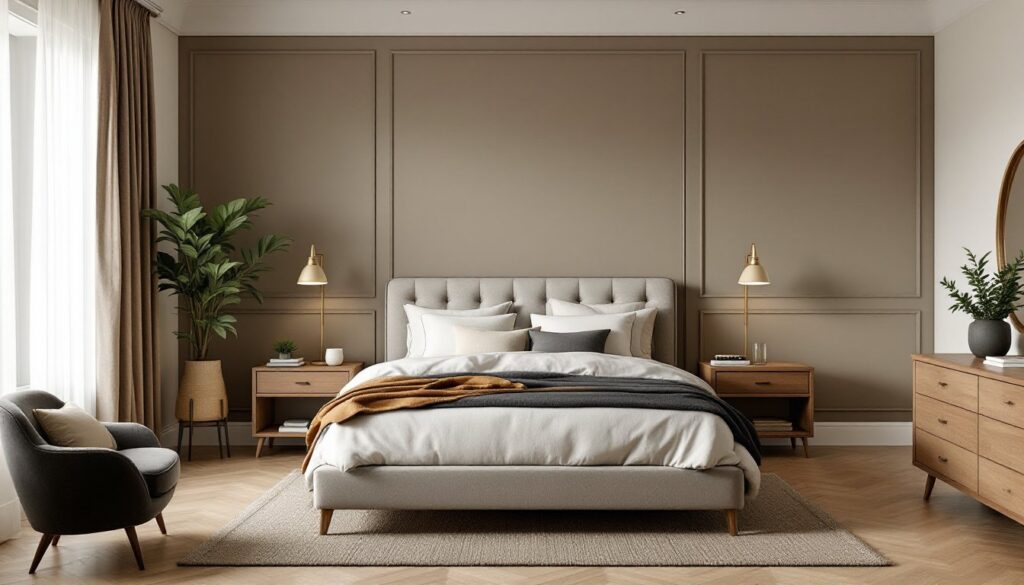
Neutral bases work. Soft grays, warm taupes, and muted greens provide a calming backdrop without skewing too masculine or feminine. Benjamin Moore’s Revere Pewter or Sherwin-Williams’ Accessible Beige are go-to choices for a reason: they read differently depending on natural light and pair well with nearly any accent color. Paint the walls in a single neutral, then let bedding, artwork, and textiles introduce personality.
For modern bedroom ideas for couples, consider a monochromatic scheme with tonal variation, think three shades of blue-gray from pale to slate, or layered earth tones from sand to chocolate. This approach feels cohesive and sophisticated without requiring design expertise.
Avoid high-contrast or overly saturated colors in large doses. Bright reds, deep purples, and stark black-and-white schemes can feel energizing rather than restful. Save bold hues for small accent pieces that can be swapped out, throw pillows, a single accent wall, or framed art.
Test paint samples on at least two walls before committing. Colors shift dramatically between morning and evening light, and a shade that looks perfect at noon may feel cold or dingy after sunset.
Invest in Luxurious Bedding for Comfort and Romance
Cheap sheets telegraph “temporary apartment,” not “romantic retreat.” Quality bedding isn’t about thread count alone, it’s about fabric type, weight, and how the bed feels at the end of a long day.
Start with a good mattress. If the current mattress is over eight years old, sagging, or causing either partner to wake up stiff, replace it. Mattress preferences vary wildly: couples with different firmness needs should consider a split king setup (two Twin XL mattresses on a king frame) or a model with adjustable firmness zones. This is one area where spending more upfront prevents frustration later.
For sheets, long-staple cotton (Egyptian or Pima) in the 300–500 thread count range balances softness and breathability. Anything above 600 often involves multi-ply yarns that trap heat. Linen sheets are another strong choice for couples who run hot, they’re naturally moisture-wicking and get softer with every wash.
Layer the bed thoughtfully. A duvet with a removable cover is easier to clean than a traditional comforter and allows seasonal swaps. Add a lightweight cotton or linen blanket folded at the foot of the bed for temperature flexibility, one partner can kick off the duvet while the other stays warm.
Euro shams and throw pillows elevate the look, but keep it reasonable. Four sleeping pillows, two to four decorative pillows max. More than that becomes a nightly chore to clear off the bed.
Finally, invest in a quality bed frame with a substantial headboard. Upholstered headboards in linen or velvet add softness and insulation, while solid wood frames (especially in walnut or oak) anchor the room with a sense of permanence. Avoid platform beds with sharp edges or ultra-minimalist metal frames that feel cold and impersonal.
Design Separate Yet Connected Personal Spaces
Couple romantic bedroom ideas often overlook a practical truth: even in a shared space, individuals need a little territory. Bedrooms that feel too “ours” without any “mine” breed frustration.
Nightstands are non-negotiable. Each partner should have one, matching or not, with enough surface area for a lamp, a book, a phone, and a glass of water. Nightstands with at least one drawer keep personal items (chargers, reading glasses, hand lotion) accessible but out of sight. If space is tight, floating shelves or wall-mounted options work, but they should be at least 12 inches deep to be functional.
If square footage allows, carve out individual zones within the room. One partner might claim a corner chair and reading lamp: the other might set up a small vanity or a bench at the foot of the bed for morning routines. These zones don’t need to be large, just defined.
Closet space is another flashpoint. If sharing a closet, divide it clearly: rods, shelves, and drawer space should be equitably split. Closet systems (wire or wood) with adjustable shelving prevent the slow creep of one person’s wardrobe into the other’s zone. If the bedroom has a walk-in closet, consider adding a small stool or bench inside so one partner can get dressed without waking the other.
For master bedroom ideas for couples, consider dual sinks if the bedroom includes an en-suite bath. It eliminates morning bottlenecks and reduces petty territorial disputes. If that’s not feasible, a wall-mounted mirror and small shelf outside the bathroom gives one partner a grooming space when the bathroom’s occupied.
Set the Mood With Layered Lighting
Overhead lighting alone is a mistake. A single ceiling fixture, especially a builder-grade dome light, flattens a room and offers no flexibility for different moods or tasks.
Layered lighting means combining three types: ambient (general illumination), task (reading, dressing), and accent (decorative or mood-setting). Start by installing a dimmer switch on the main overhead fixture. This is a straightforward DIY swap, turn off the breaker, remove the old switch, connect the dimmer’s wires (typically matching black to black, white to white, and grounding the bare copper), and secure it in the box. If unfamiliar with electrical work, hire an electrician: most will do this in under 30 minutes.
Add bedside lamps with three-way bulbs or built-in dimmers. Each partner should be able to control their own light without affecting the other. Swing-arm wall sconces save nightstand space and direct light precisely where it’s needed for reading without spilling across the bed.
For ambient mood lighting, consider LED strip lights behind the headboard or under floating nightstands. These are low-voltage, easy to install (peel-and-stick backing), and many models offer color temperature adjustment from warm amber to cool white. Warm white (2700K–3000K) is ideal for evening wind-down.
Table lamps or floor lamps in opposite corners of the room add visual balance and fill in shadows. Avoid cool-toned or overly bright bulbs in the bedroom, soft white LEDs (2700K, 40–60 watt equivalent) mimic the warmth of incandescent bulbs without the energy waste.
If the bedroom includes a ceiling fan, choose a model with a remote control or smart integration so both partners can adjust speed and lighting without getting out of bed.
Minimize Clutter for a Peaceful Environment
Clutter kills romance faster than mismatched sleep schedules. A bedroom piled with laundry, stacks of mail, or random junk feels like an extension of the to-do list, not a retreat.
Start with a purge. Remove anything that doesn’t directly support sleep, intimacy, or getting dressed. That means no work files, no exercise equipment (unless there’s truly no other space), no piles of stuff that “need to be dealt with.” If the bedroom has become a catch-all storage room, reassign those items to other zones in the home.
Closed storage beats open shelving. Floating shelves look clean in photos but quickly accumulate visual noise in real life. Instead, use dressers, armoires, or storage benches that hide contents. A storage bench at the foot of the bed holds extra blankets, pillows, or off-season clothing without adding visual clutter.
If the bedroom lacks a closet or the closet is undersized, consider a freestanding wardrobe in solid wood or a sleek modern design. Avoid cheap particle-board options that sag or fall apart within a year.
Cable management matters more than most people think. Charging cables, lamp cords, and device wires create low-level chaos. Use cable clips or velcro ties to bundle and route cords along the back edge of nightstands or under the bed frame. Wireless charging pads eliminate some cables entirely.
Set a rule: surfaces stay clear. Nightstands should hold only what’s actively in use, everything else goes in a drawer. Dressers shouldn’t become dumping grounds for loose change, receipts, or random items from pockets. A small tray or valet box corrals daily carry items (keys, wallet, watch) in one contained spot.
Add Personal Touches That Reflect Your Relationship
Generic hotel-room decor feels impersonal. A bedroom for two should tell a story, subtly, not with wall decals that spell out “L-O-V-E” in decorative letters.
Framed photos work if done thoughtfully. Choose a few meaningful images, a favorite trip, a candid moment, a meaningful place, and frame them in matching or complementary frames. Black or natural wood frames in consistent sizes (three to five frames max) look intentional. Avoid the cluttered gallery wall approach in a bedroom: it’s too visually busy.
Artwork sets tone. Abstract pieces, landscapes, or black-and-white photography feel mature and romantic without veering into cliché. Skip overtly literal imagery (hearts, lips, overly sentimental quotes). If unsure, lean toward oversized single pieces rather than a collection of small prints, one large canvas above the bed or on the longest wall anchors the space.
Textiles add warmth and personal style. A handwoven throw blanket, a vintage quilt, or a textured area rug grounds the room and introduces color or pattern in a changeable way. If both partners have strong but different style preferences, textiles are an easy place to blend them, pair modern bedding with a vintage rug, or balance rustic wood furniture with sleek linen curtains.
Plants bring life to the space without demanding much attention. Snake plants, pothos, or ZZ plants tolerate low light and irregular watering. Avoid anything with a strong fragrance (some people find floral scents overwhelming at night) or plants that require intense care.
Finally, consider scent. A subtle room spray, a diffuser with essential oils (lavender, cedarwood, eucalyptus), or a high-quality candle (in a soy or beeswax base to avoid petroleum fumes) can make the room feel intentional and cared for. Keep it light, overpowering scent is as bad as no scent at all.
Conclusion
Creating a bedroom that works for two people isn’t about sacrifice or settling for bland neutrality. It’s about being intentional with color, investing in comfort, respecting each other’s space, controlling lighting, eliminating clutter, and adding touches that reflect the relationship. Most of these changes are cosmetic, paint, bedding, lighting, storage, and well within DIY capability. The result is a space that feels like a retreat rather than just the room where the bed happens to be.