




Table of Contents
ToggleMost homeowners stop decorating at eye level, leaving their ceilings bare and forgotten. But the “fifth wall” offers untapped potential for adding drama, depth, and personality to any room. Ceiling wallpaper has surged in popularity as designers and DIYers alike recognize its power to transform ordinary spaces into showstoppers. Whether someone wants to create a cozy cocoon in a bedroom or add architectural interest to a plain dining room, wallpaper on the ceiling delivers impact without major construction. This guide covers practical wallpaper ceiling ideas that work in real homes, plus installation advice to help anyone tackle this surprisingly doable project.
Key Takeaways
- Ceiling wallpaper transforms ordinary rooms into design showstoppers by drawing the eye upward and creating dramatic visual impact without major construction.
- Bold patterns and dark wallpapers work best on standard or high ceilings, while light colors and small patterns suit low ceilings under 8 feet to avoid an oppressive feeling.
- Ceiling wallpaper ideas include bold florals and geometric patterns for statement designs, grasscloth textures for warmth, and metallic finishes for elegant subtlety depending on your room’s style.
- Room-specific selection matters: bedrooms benefit from cozy florals or soft geometrics, bathrooms require moisture-resistant vinyl, and dining rooms are ideal for dramatic damask or Art Deco patterns.
- Proper surface prep, including filling cracks, priming with quality acrylic primer, and using the right tools—like a smoother and seam roller—ensures flawless installation of ceiling wallpaper.
- Working with a partner and testing samples under different lighting conditions before committing helps avoid costly mistakes and ensures the design complements your space.
Why Ceiling Wallpaper Is the Design Trend You Can’t Ignore
Ceiling wallpaper solves multiple design challenges at once. It draws the eye upward, making rooms feel taller and more dynamic. In spaces with awkward proportions, low ceilings, narrow hallways, or boxy rooms, a well-chosen pattern adds dimension that paint alone can’t achieve.
From a practical standpoint, wallpaper hides imperfections better than flat paint. Popcorn texture, minor cracks, or uneven drywall tape all disappear under patterned paper. For renters or homeowners who don’t want to invest in skim-coating or resurfacing, ceiling wallpaper offers a faster fix.
The trend has staying power because it’s flexible. Bold patterns create focal points in minimalist rooms, while subtle textures add warmth without overwhelming existing décor. Unlike accent walls, which can feel expected, ceiling treatments still surprise visitors and give any space a custom, high-end look.
One note: Not every ceiling is a good candidate. If there’s active moisture intrusion (roof leaks, bathroom condensation without proper ventilation), fix that first. Wallpaper adhesive won’t hold on damp surfaces, and trapped moisture leads to mold. Check local building codes if the space has fire-rated drywall requirements, some commercial or multi-unit residential buildings restrict wall coverings.
Bold Pattern Ceiling Wallpaper for Maximum Impact
High-contrast, large-scale patterns turn ceilings into statement pieces. These work best in rooms with simple furnishings, where the ceiling becomes the main attraction. Dark backgrounds with metallic or bright details add drama without making the space feel heavy, especially when paired with adequate lighting.
Florals and botanicals scaled to 18–24 inches per repeat create lush, enveloping environments. They’re particularly effective in dining rooms and bedrooms, where people spend time looking up while seated or lying down. Choose designs with depth, layered petals, overlapping leaves, to avoid a flat, wallpaper-sample look.
Cloud or sky murals bring the outdoors in. Realistic photography-based options suit modern spaces, while painted or watercolor styles fit traditional homes. These work in kids’ rooms, bathrooms, and home offices where a sense of openness counteracts small square footage.
Geometric and Damask Designs
Geometric patterns, hexagons, chevrons, or Moroccan tiles, add structure and movement. They’re ideal for contemporary or mid-century modern interiors. Opt for two-tone designs rather than multicolor to avoid visual chaos. Scale matters: smaller repeats (4–6 inches) suit powder rooms or closets, while larger patterns (12+ inches) work in living areas.
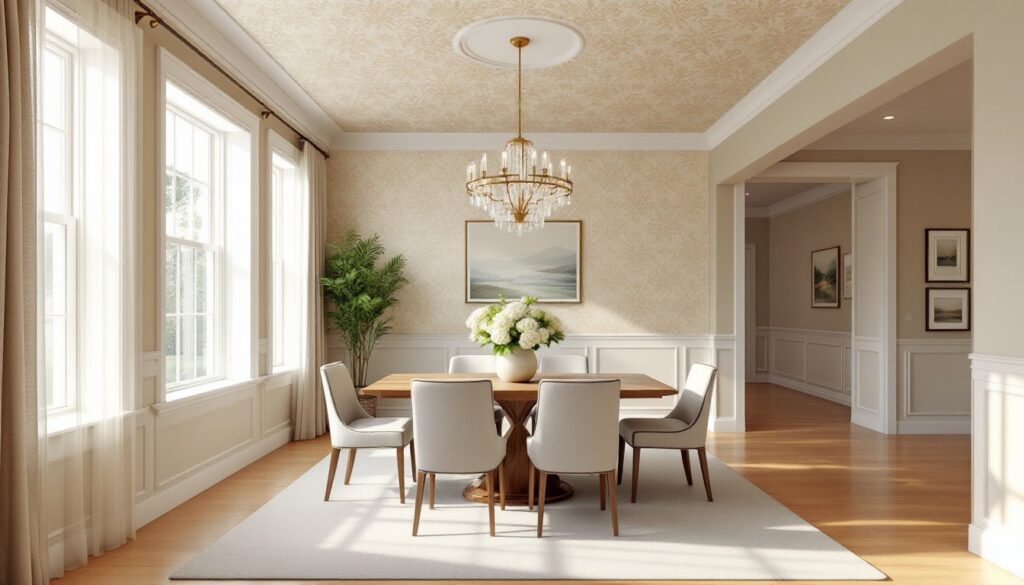
Damask and medallion prints bring traditional elegance. These ornate designs pair well with crown molding, coffered details, or tray ceilings. Metallic damasks in silver, gold, or bronze catch light and add richness to formal dining rooms and entryways. Avoid them in rooms with competing patterns on walls or upholstery, one statement surface is enough.
Subtle and Elegant Ceiling Wallpaper Options
Not every ceiling needs to shout. Subtle patterns and textures enhance a room without dominating it, making them versatile for homes with existing bold décor or for homeowners testing the ceiling wallpaper idea for the first time.
Grasscloth and linen textures add warmth and depth through tactile variation rather than printed pattern. These natural fiber looks (often vinyl-coated for durability) suit coastal, farmhouse, and Scandinavian styles. They diffuse light softly and pair well with wood beams or shiplap.
Tone-on-tone patterns, like white-on-white damask or beige latticework, create shadow and dimension under different lighting conditions. They’re a safe entry point for anyone nervous about committing to color overhead. These work everywhere: bedrooms, living rooms, even kitchens where a loud ceiling might compete with backsplash or cabinetry.
Metallic and pearlescent finishes deliver elegance without pattern. A soft shimmer catches natural and artificial light, making ceilings appear higher. Champagne, pewter, and blush metallic papers suit glam or transitional interiors. Use these in powder rooms, walk-in closets, or master suites for a luxe touch.
Wood plank or shiplap prints mimic architectural treatments at a fraction of the cost and weight. Peel-and-stick versions make installation faster than real wood and avoid structural concerns about adding weight to ceiling joists. These fit rustic, cottage, and modern farmhouse aesthetics.
Room-Specific Ceiling Wallpaper Ideas That Work
Different rooms have different demands, moisture, traffic, and sight lines all influence what patterns and materials hold up.
Bedrooms benefit from cocooning designs. Dark colors or dense patterns make the ceiling feel lower and the space cozier, which aids relaxation. Florals, celestial themes, or soft geometrics all work. Keep patterns calm if the walls are busy, or go bold on the ceiling if bedding and furniture are neutral.
Bathrooms require moisture-resistant materials. Look for vinyl-coated or solid vinyl wallpapers rated for high-humidity areas. Small powder rooms can handle dramatic patterns, bold stripes or graphic prints, because the space is temporary-use. Larger bathrooms with tubs or showers need proper exhaust fans (check that it’s rated for the room’s cubic footage) to prevent adhesive failure.
Dining rooms are prime real estate for statement ceilings. Guests sit for extended periods, making the ceiling a natural focal point. Damask, medallions, or Art Deco patterns pair well with chandeliers. Coordinate the wallpaper’s dominant color with drapery or upholstery to tie the room together.
Entryways and hallways benefit from pattern that pulls the eye forward or upward. Runners on the floor plus a patterned ceiling create visual bookends. Stick with lighter colors in narrow halls to avoid a tunnel effect.
Kids’ rooms are a playground for fun. Maps, constellations, jungle canopies, or abstract color blocks all work. Choose peel-and-stick options for easier updates as tastes change.
How to Choose the Right Ceiling Wallpaper for Your Space
Start with ceiling height and room size. Low ceilings (under 8 feet) handle light colors and small-to-medium patterns best. Dark colors or large prints can make the ceiling feel oppressive. Standard 8–9 foot ceilings are flexible, most patterns work if balanced with wall color. High ceilings (10+ feet) can take bold, dark, or dense designs without feeling closed in.
Consider lighting. Rooms with lots of natural light can handle darker wallpapers without feeling dim. Spaces relying on artificial light need reflective or lighter papers to avoid a cave-like atmosphere. Metallic or glossy finishes help bounce light around.
Match the paper type to the application method. Traditional paste-the-wall wallpaper offers the widest design selection and works on smooth, well-prepped drywall or plaster. Peel-and-stick wallpaper is beginner-friendly, repositionable, and ideal for renters or anyone skittish about commitment. It adheres best to flat, non-textured surfaces. Pre-pasted paper splits the difference, easier than traditional, but less forgiving than peel-and-stick.
Test samples. Most manufacturers sell 12-inch or 18-inch squares. Tape them to the ceiling and live with them for a few days, checking how they look in morning light, evening lamplight, and nighttime. Patterns read differently overhead than on a vertical wall.
Coordinate but don’t match. The ceiling wallpaper should relate to the room’s palette without replicating wall colors exactly. Pull an accent color from furniture, rugs, or art to tie things together.
Installation Tips for Flawless Ceiling Wallpaper Application
Ceiling installation is more physically demanding than walls, but the process is similar. Prep the surface thoroughly. Fill any holes or cracks with joint compound, sand smooth once dry, and wipe down with a damp cloth to remove dust. Prime with a quality acrylic primer to ensure even adhesion, especially critical on previously painted or textured ceilings. Let primer dry fully (usually 4 hours minimum, check can instructions).
Gather the right tools:
- Wallpaper smoother or plastic squeegee to press out bubbles
- Utility knife with fresh blades, dull blades tear paper
- Straightedge or metal ruler for clean cuts
- Seam roller for edges
- Stepladder or sturdy scaffold plank spanning two ladders for mobility
- Drop cloths for floors and furniture
- Sponge and bucket for cleanup
Safety first: Wear safety goggles if working with paste (drips happen) and knee pads if kneeling on a scaffold. Work gloves prevent blisters during long sessions.
Measure and cut strips before starting. Account for pattern repeats and add 2 inches to each end for trimming. Number strips on the back with pencil to keep them in order.
Start along the longest, straightest edge (usually parallel to the longest wall). Use a chalk line to mark the first strip’s placement, ceilings aren’t always square. For traditional wallpaper, apply paste to the back, book the strip (fold it paste-to-paste without creasing), and let it rest per manufacturer’s instructions (usually 5–10 minutes). For peel-and-stick, peel a foot at a time to avoid tangling.
Work with a partner if possible. One person positions while the other smooths, which drastically reduces bubbles and misalignment. If solo, use painter’s tape to hold one end in place while adjusting the other.
Smooth from center outward using the smoother, pushing air bubbles toward edges. Overlap seams slightly, then use a straightedge and knife to double-cut through both layers for a perfect butt seam. Roll seams gently with the seam roller, don’t press so hard that adhesive squeezes out.
Trim edges while the paper is still slightly damp for cleaner cuts. Hold the straightedge firmly against crown molding or the wall and run the knife along it in one smooth motion.
Let the ceiling cure for 24–48 hours before turning on ceiling fans or doing heavy cleaning. Some papers darken slightly as adhesive dries, this is normal and evens out.
If bubbles appear after drying, use a syringe to inject a small amount of adhesive under the bubble, then smooth and wipe away excess. Small bubbles (under 1/4 inch) often disappear as the paper fully cures.