




Table of Contents
ToggleThe entryway takes the brunt of daily traffic, wet boots, dropped bags, muddy paw prints, and countless trips in and out. It’s the first thing guests see and the last defense against outdoor grime tracking through the house. Choosing the right tile for this space isn’t just about aesthetics: it’s about durability, maintenance, and setting the tone for the rest of the home. From timeless patterns to bold modern designs, the right entryway tile ideas can elevate a functional space into a welcoming focal point that handles real life without flinching.
Key Takeaways
- Tile is the ideal material for entryway flooring because it resists moisture, withstands heavy foot traffic, and requires minimal maintenance compared to hardwood or carpet.
- Entryway tile ideas range from timeless patterns like herringbone and checkerboard to modern trends including large-format tiles, terrazzo, and matte finishes that enhance both style and slip resistance.
- Porcelain tile with a PEI rating of 4 or 5 is the best choice for high-traffic entryways, offering superior durability and stain resistance over ceramic or natural stone alternatives.
- Neutral tones like warm gray and beige hide dirt effectively, while dark tiles create drama but require more frequent cleaning to maintain their appearance.
- Large-format tiles with rectified edges and matte finishes reduce grout lines, lower maintenance needs, and provide a sleek, contemporary look that works in both modern and traditional entryway designs.
Why Tile Is the Perfect Material for Entryways
Tile outperforms nearly every other flooring material when it comes to entryway demands. It’s inherently moisture-resistant, making it ideal for wet shoes and melting snow. Unlike hardwood, which can warp or stain from water exposure, or carpet that traps dirt and moisture, tile sheds both with minimal effort.
Durability is another major factor. High-quality ceramic or porcelain tile withstands the kind of foot traffic that would wear through vinyl or laminate in a few years. Tile won’t dent from dropped keys or scratch from grit dragged in on shoe soles. For homes in snowy or rainy climates, that resilience matters.
Maintenance is straightforward. A quick sweep and damp mop keep most tile looking fresh. Grout requires occasional sealing, typically once a year for high-traffic areas, but that’s a small trade-off for a surface that doesn’t need refinishing, resealing, or replacement every decade. Tile also offers design flexibility that few materials can match, from small-format mosaics to large-format slabs, and everything in between.
Classic Entryway Tile Patterns That Never Go Out of Style
Some tile layouts have endured for good reason, they work with nearly any home style and age gracefully. A straight lay (or grid) pattern is the most common and cost-effective option. It’s clean, simple, and lets the tile itself be the focus. It works especially well with 12″×12″ or larger tiles in a foyer tile or entryway.
A diagonal grid adds visual interest without complexity. The same tiles, rotated 45 degrees, create movement and make narrow entryways feel wider. Installers will need to make more cuts along the edges, so expect a bit more labor cost.
Checkerboard patterns, alternating light and dark tiles, bring a vintage or farmhouse feel. They’re particularly effective in small entryway foyer tile ideas where contrast creates definition. Black and white is the classic combo, but gray and cream or navy and white offer softer alternatives.
Herringbone and Chevron Layouts
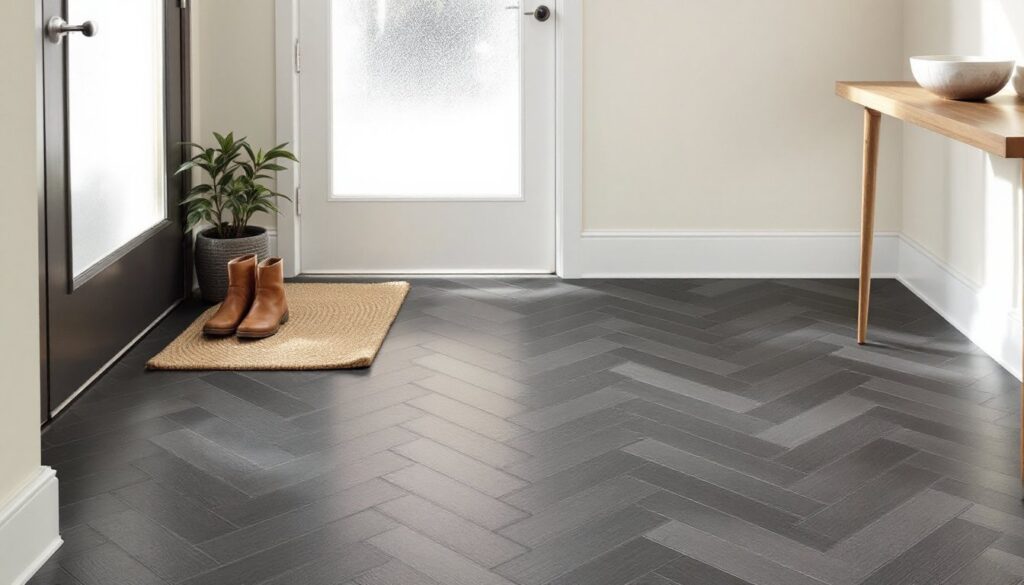
Herringbone and chevron are often confused, but they’re distinct. Herringbone uses rectangular tiles (commonly 3″×6″ or 4″×12″) laid at 90-degree angles to each other, creating a broken zigzag. Chevron tiles are cut at an angle so the ends meet in a continuous V-shape.
Both patterns add a sophisticated, high-end look and work beautifully in modern entryway tile ideas or traditional spaces. The downside? More material waste (expect 15–20% overage for cuts) and higher installation labor. If tackling this as a DIY project, a wet saw is essential for clean cuts, and dry-fitting the layout beforehand saves headaches. These patterns also draw the eye along the length of the entryway, making it feel larger.
Modern Entryway Tile Trends for 2026
Current trends lean toward large-format tiles, 24″×24″ and bigger, including plank tiles that mimic wood. Fewer grout lines mean less maintenance and a sleeker, more contemporary look. Rectified edges (precisely cut, not rounded) allow for tighter grout joints, sometimes as narrow as 1/16″, which enhances the seamless appearance.
Terrazzo has made a strong comeback. Once associated with mid-century institutions, modern terrazzo tiles feature aggregate chips in softer palettes, blush, sage, charcoal, and are available in both large slabs and smaller formats. The speckled texture hides dirt well, a practical bonus for entryways.
Encaustic and patterned cement tiles remain popular for adding bold graphic interest. These handmade tiles offer intricate geometric or floral motifs and work especially well in tile entryway ideas for smaller foyers where a statement floor doesn’t overwhelm. Keep in mind that cement tiles are porous and require sealing before grouting and periodic resealing.
Textured and matte finishes are replacing high-gloss surfaces. Matte porcelain and honed stone provide slip resistance when wet, critical for an entryway, and show fewer water spots and scratches. Textured tiles, like those with a linen or concrete look, add subtle depth without busy patterns.
Best Tile Materials for High-Traffic Entryways
Not all tile is created equal, and entryways demand materials that can take a beating.
Porcelain tile is the workhorse. It’s denser and less porous than ceramic, making it more resistant to moisture, staining, and cracking. Look for a PEI rating (Porcelain Enamel Institute) of 4 or 5, which indicates suitability for heavy residential or commercial traffic. Through-body porcelain, where the color runs through the entire tile, hides chips better than glazed surface-only color.
Ceramic tile works for moderate-traffic entryways and costs less than porcelain. It’s easier to cut, which helps with DIY installs, but it’s more prone to chipping and moisture absorption. Stick with glazed ceramic rated for floors, not walls.
Natural stone, slate, travertine, limestone, marble, offers unique beauty and texture. Slate is particularly durable and naturally slip-resistant, making it a solid choice for entryways. Travertine and limestone are softer and require sealing every 1–2 years to prevent staining from water, salt, and dirt. Marble is elegant but scratches and etches easily: it’s better suited to low-traffic or formal entryways.
Quarry tile, an unglazed ceramic, is extremely durable and slip-resistant but comes in limited earthy colors. It’s a practical, no-nonsense choice that fits industrial or rustic styles.
Avoid glass tile on floors, it’s slippery and can crack under impact. Save it for accents or backsplashes.
Color and Design Ideas to Match Your Home Style
Tile color and finish should complement the home’s overall aesthetic while standing up to dirt and wear.
Neutral tones, grays, beiges, taupes, are versatile and forgiving. They hide dust and light dirt better than pure white or black. Warm grays pair well with modern and transitional interiors, while beige and cream suit traditional or farmhouse styles.
Dark tiles (charcoal, navy, black) create drama and contrast but show dust, pet hair, and water spots more readily. They work best in homes where regular sweeping is part of the routine. Pairing dark tile with light grout softens the look: dark grout keeps it moody and low-maintenance.
Light tiles (white, light gray, soft pastels) make small entryways feel larger and brighter. White subway tiles in a herringbone layout offer a crisp, clean look. Be realistic about maintenance, light tile and grout require more frequent cleaning to stay fresh.
Patterned or colorful tiles can anchor the entryway as a statement piece. Moroccan-inspired zellige, Spanish-style talavera, or geometric encaustic tiles add personality. Use them as a full floor treatment in a small foyer or as a bordered inset within a neutral field tile in larger spaces.
Wood-look porcelain bridges the gap for homeowners who want the warmth of wood with tile’s durability. These plank tiles come in realistic oak, walnut, and reclaimed finishes and install like standard tile. They’re especially effective in open-concept homes where the entryway flows into wood or wood-look floors in adjacent rooms.
Consider adding a tile border or inlay to define the entryway zone in an open floor plan. A contrasting color, smaller mosaic tiles, or a decorative trim piece can visually separate the entry from the main living space without a physical transition strip.
Conclusion
The right entryway tile balances durability, design, and ease of maintenance. Whether opting for a timeless herringbone, a bold terrazzo, or a sleek large-format porcelain, the choice should reflect both the home’s style and the realities of daily wear. Investing in quality materials and proper installation pays off in a floor that welcomes guests and withstands years of heavy use without looking worn.