




Table of Contents
ToggleGravel patios offer a winning combination of affordability, drainage, and versatility that’s hard to beat for DIYers tackling outdoor projects. Unlike poured concrete or pavers, crushed stone installs in a weekend, adapts to irregular terrain, and costs a fraction of the price, typically $3 to $6 per square foot for materials. Whether planning a small gravel patio tucked into a courtyard or a sprawling entertainment area, homeowners find gravel forgiving to work with and easy to customize. This guide covers modern, rustic, and creative gravel patio ideas along with practical installation and maintenance tips to ensure long-lasting results.
Key Takeaways
- Gravel patios cost $3 to $6 per square foot and can be installed in a weekend without specialized equipment, making them an affordable and accessible DIY option.
- Gravel patio ideas work well on sloped or uneven terrain because they require minimal excavation and adapt easily to irregular landscapes without cutting or fitting rigid materials.
- Modern gravel patio designs use steel edging, geometric layouts, and LED lighting, while rustic approaches combine decomposed granite, fieldstone borders, and native plantings for natural aesthetics.
- Proper site preparation with 6 to 8 inches of excavation, landscape fabric, and 4 inches of compacted base stone prevents settling and ensures long-term durability.
- Monthly raking and annual top-dressing of ½ to 1 inch of fresh gravel maintains the patio’s appearance and prevents weeds, making maintenance simple and cost-effective.
Why Choose a Gravel Patio for Your Outdoor Space
Gravel patios solve drainage problems that plague solid surfaces. Water percolates straight through crushed stone rather than pooling or requiring slope adjustments and french drains. This makes gravel ideal for areas with heavy rainfall or clay soils that retain moisture.
Installation doesn’t demand specialized skills or equipment. A shovel, landscape rake, tamper, and wheelbarrow handle most jobs. No mixing concrete, cutting pavers to fit curves, or renting a plate compactor unless working with larger projects. Most homeowners complete a 10×12-foot patio in one weekend.
Material costs stay low compared to alternatives. Pea gravel runs $30 to $50 per ton, covering roughly 80 square feet at 3-inch depth. Crushed granite or decomposed granite (DG) costs slightly more but compacts firmer for high-traffic areas. Concrete pavers, by comparison, start around $8 per square foot installed.
Gravel suits sloped or uneven yards without extensive excavation. Minor grading and a stable base layer handle most terrain challenges. Homeowners working around tree roots or irregular property lines appreciate gravel’s flexibility, no cutting, scoring, or wrestling with rigid materials.
Permitting rarely applies to gravel patios since they’re considered permeable landscaping rather than permanent structures. Always check local codes, but most jurisdictions don’t require permits for non-structural, ground-level installations.
Modern Gravel Patio Designs That Make a Statement
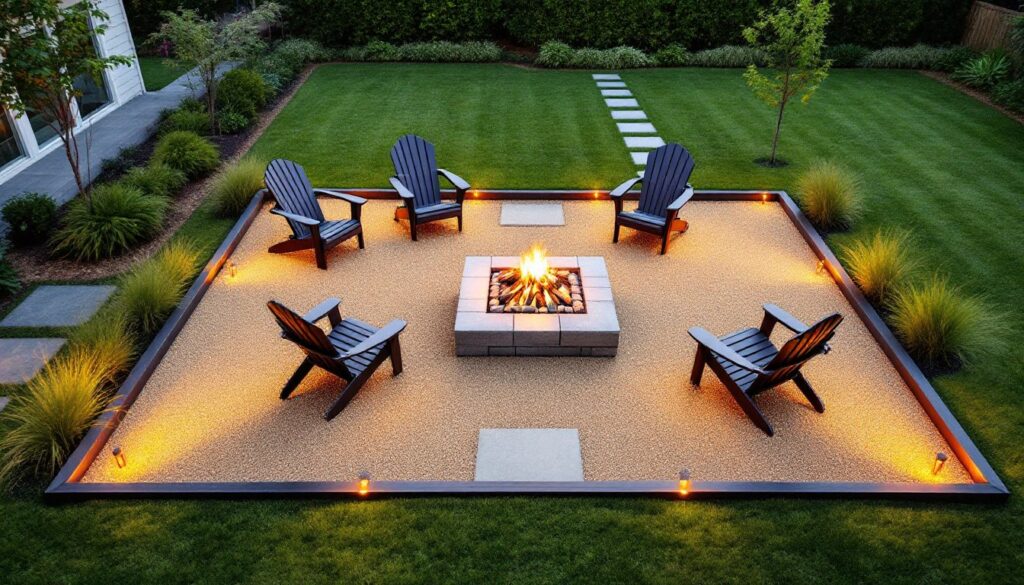
Clean geometric layouts define modern gravel patio ideas. Rectangular or square footprints bordered by steel edging create sharp lines that contrast with plantings. The edging, typically 1/8-inch thick by 4 to 6 inches tall, flexes to curves but holds crisp angles when staked properly.
Large format pavers set in a grid pattern over gravel deliver contemporary appeal. Space 24×24-inch concrete pavers 4 to 6 inches apart, backfilling gaps with crushed white marble or black lava rock. This slab and gravel patio idea reduces stone volume while maintaining permeability and visual interest.
Monochromatic color schemes amplify modern aesthetics. Crushed bluestone or gray granite pairs with charcoal furniture and galvanized steel planters for an industrial-chic look. Alternatively, white or cream limestone gravel brightens shaded areas and complements minimalist architecture.
Linear lighting emphasizes geometry after dark. Low-voltage LED strip lights mounted beneath edging or along seating walls cast subtle glows across the gravel surface. Solar path lights positioned at corners or transitions provide functional illumination without trenching for wiring.
For small gravel patio ideas, consider a compact 8×10-foot footprint anchored by a single statement piece, a modern fire table or sculptural water feature. Borders of dwarf ornamental grasses or boxwood hedge maintain proportions without overwhelming limited square footage.
Rustic and Natural Gravel Patio Layouts
Organic shapes and earthy materials characterize rustic gravel designs. Curved borders made from stacked fieldstone or weathered railroad ties (sealed to prevent creosote leaching) soften hardscape transitions. Irregular flagstone steppers embedded in pea gravel create meandering pathways that feel discovered rather than planned.
Decomposed granite suits rustic themes particularly well. When wetted and compacted, DG forms a semi-solid surface that resembles packed earth but sheds water better. Colors range from tan to reddish-brown depending on quarry source. Expect to replenish edges annually as material migrates with foot traffic.
Native plantings blur boundaries between patio and landscape. Tucking low-growing thyme, sedum, or creeping Jenny between border stones introduces texture and fragrance. Self-seeding grasses like blue grama or little bluestem add movement without maintenance.
Reclaimed materials reinforce rustic character. Antique brick edging salvaged from old chimneys, granite cobblestones from demolished streets, or river rock collected from creek beds all contribute authenticity. Verify that salvaged stone is free of contaminants before using in residential applications.
Fire features anchor rustic patios. A simple in-ground fire pit lined with firebrick and surrounded by crushed gravel maintains the natural aesthetic. Positioned at least 10 feet from structures and overhead branches per fire safety guidelines, these gathering spots extend outdoor living seasons well into fall.
Creative Gravel Combinations and Border Ideas
Layering different gravel types adds dimension and function. A base of ¾-inch crushed stone provides stability, while a 2-inch top layer of pea gravel or smooth river rock creates comfortable walking surfaces. Mixing textures, angular crushed granite with rounded pebbles, prevents monotony across large areas.
Contrasting stone colors define zones without physical barriers. Use tan pea gravel for dining areas and transition to charcoal slate chips surrounding fire pits. The color shift guides traffic flow visually while maintaining permeability throughout.
Border options extend beyond traditional edging:
- Treated 4×4 or 6×6 timbers staked with rebar create raised borders that double as casual seating
- Poured concrete curbing (4 inches wide, 6 inches deep) offers permanent, mow-friendly edges
- Brick pavers set on edge in a soldier course add formality
- Cobblestone or Belgian block mortared in place withstands plowing and prevents gravel migration
Incorporating flagstone steppers or bluestone slabs within gravel creates functional pathways and breaks up expanses. Space stones 18 to 24 inches apart for comfortable strides. Set them slightly below gravel level to prevent tripping hazards and allow mower blades to pass over.
For diy gravel patio ideas on a budget, repurpose materials already on-site. Stack fieldstone cleared during excavation into dry-laid retaining walls. Use crushed concrete from demolished walkways as base layers, it compacts nearly as well as quarried stone at zero cost.
Gravel Patio Seating Areas and Furniture Arrangements
Furniture selection impacts usability on gravel surfaces. Chairs and tables with wide, flat feet distribute weight better than narrow legs that sink into loose stone. Look for leg diameters of at least 2 inches or furniture designed with sled bases. Avoid delicate wrought iron pieces with thin legs.
Flagstone pads (2×2 feet or larger) placed beneath furniture legs prevent sinking and create stable dining surfaces. Pour a 2-inch crushed stone base, tamp firm, then set flagstone with minimal gaps. Backfill around pads with pea gravel to maintain drainage.
Conversation areas work best in clusters. Arrange four to six Adirondack chairs in a semicircle around a fire pit, spacing seats 24 to 30 inches apart. This configuration allows comfortable conversation while keeping everyone within the warmth zone (typically a 6-foot radius for standard fire pits).
Built-in seating maximizes small gravel patio ideas. Poured concrete benches (16 to 18 inches tall, 14 to 16 inches deep) topped with outdoor cushions define edges while preserving open floor space. Cap benches with bluestone or limestone slabs for finished seating surfaces that resist staining.
Shade structures extend usability. A 10×10-foot pergola anchored with concrete footings (12 inches diameter, 36 inches deep below frost line) provides overhead definition without blocking breezes. Run pressure-treated 4×4 posts to doubled 2×8 beams and top with 2×4 rafters spaced 16 inches on center. Stain or paint within two weeks of installation before wood weathers.
Outdoor rugs define zones and add comfort underfoot. Choose polypropylene or recycled plastic rugs rated for outdoor use, they resist mildew and rinse clean with a hose. Rug size should extend 18 to 24 inches beyond furniture footprints to anchor visual groupings.
Essential Tips for Installing and Maintaining Your Gravel Patio
Site Preparation
Excavate to 6 to 8 inches below finished grade for proper base depth. Remove sod, roots, and organic debris that decompose and cause settling. Slope the base ¼ inch per foot away from structures to direct water flow.
Install landscape fabric (woven polypropylene, 3 to 4 oz. per square yard) over compacted subgrade. This barrier suppresses weeds while allowing drainage. Overlap seams 6 inches and secure with landscape staples every 3 feet.
Base Layer
Spread ¾-inch crushed stone (also called road base or Class II) to 4-inch depth. Rake level, then compact with a hand tamper for small areas or rent a plate compactor ($60 to $90 per day) for patios exceeding 100 square feet. Make two passes in perpendicular directions for uniform compaction.
Edging Installation
Set edging before adding gravel. Drive 10-inch landscape spikes through edging every 24 inches, angling spikes outward slightly to resist frost heave. For flexible materials like steel or composite, stake curves at 12-inch intervals.
Gravel Application
Spread finish gravel to 2 to 3-inch depth. Pea gravel (⅜ inch diameter) and crushed granite (¼ inch minus) are top choices for walking surfaces. Avoid stone larger than ¾ inch, it’s uncomfortable underfoot and difficult to rake smooth.
Maintenance Schedule
Monthly: Rake to redistribute gravel and break up compaction from foot traffic. Remove leaves and debris that decompose into soil pockets where weeds germinate.
Seasonally: Top-dress with fresh gravel to maintain depth. Expect to add ½ to 1 inch annually to compensate for settling and migration. A 10×12-foot patio requires roughly ¼ ton of gravel per top-dressing.
Annually: Treat weeds with vinegar-based herbicides (20% acetic acid) or hand-pull before they set seed. Reapply landscape fabric to problem areas if weed pressure increases.
Common Mistakes to Avoid
Skipping base compaction leads to uneven settling within months. Don’t rely on foot traffic to compact, mechanical tamping is essential.
Using insufficiently deep bases causes frost heave in cold climates. In USDA zones 5 and colder, excavate to 8 inches and use 6 inches of crushed stone base.
Omitting edging allows gravel to migrate into lawns and gardens. Even low-profile edging (2 to 3 inches tall) anchors stone effectively when properly installed.
Conclusion
Gravel patios deliver professional results on DIY budgets when homeowners follow proper installation techniques. Whether pursuing modern geometry with slab and gravel combinations or rustic charm with decomposed granite and fieldstone borders, attention to base preparation and edging determines long-term success. Regular maintenance, monthly raking and seasonal top-dressing, keeps crushed stone patio ideas looking sharp for years with minimal effort or expense.