




Table of Contents
ToggleA pergola transforms a yard into an outdoor room, but without shade, it’s just decorative framing under the blazing sun. The right shade solution changes everything, suddenly, that patio becomes usable at noon, furniture stops fading, and guests linger longer. Whether homeowners want leafy green coverage, sleek retractable fabric, or a permanent weather-proof roof, dozens of pergola shade ideas exist to match any budget, skill level, and aesthetic. This guide covers natural plantings, fabric systems, solid roofing, and modern louvered options, each with practical installation notes, material specs, and honest assessments of what works where. No fluff, just actionable pergola shade cover ideas to make outdoor living actually comfortable.
Key Takeaways
- Adding shade to your pergola drops surface temperatures by 15–30°F and extends usable hours while protecting furniture from UV damage.
- Living vines like wisteria and grapevines offer natural cooling through transpiration but require 2–4 seasons to establish full coverage and ongoing pruning maintenance.
- Retractable shade cloth and shade sails provide instant, affordable pergola shade solutions under $100, though fabric requires replacement every 3–7 years depending on UV exposure.
- Permanent roofing materials like polycarbonate, metal panels, or asphalt shingles offer year-round weather protection but require building permits, structural upgrades, and eliminate the open-air pergola feel.
- Motorized louvered pergola systems deliver adjustable shade and modern aesthetics with remote control or smartphone integration, costing $6,000–$15,000+ installed with 20+ year lifespans.
- Check local zoning codes and HOA covenants before installation, as permanent roofing may trigger IRC permit requirements while fabric and plantings typically do not.
Why Add Shade to Your Pergola?
Bare pergolas provide minimal sun protection, typically just 10–20% shade depending on rafter spacing. That’s not enough to cool a seating area or protect outdoor furniture from UV damage. Adding shade drops surface temperatures by 15–30°F, extends the usable hours of the space, and protects investment in cushions, rugs, and finishes.
Shade also reduces glare for dining or screen time, cuts cooling costs for adjacent indoor rooms, and creates defined zones in larger yards. From a structural standpoint, some shade solutions add lateral bracing that stiffens the pergola frame, helpful if the original build lacks diagonal supports.
Code considerations vary by region. Permanent roofing that sheds water may trigger permit requirements under the International Residential Code (IRC), especially if the pergola is attached to the house. Fabric canopies and plantings usually don’t. Homeowners should check local zoning for setback rules and HOA covenants before adding solid covers or expanding footprints.
Natural Shade Solutions for Pergolas
Climbing Plants and Vines
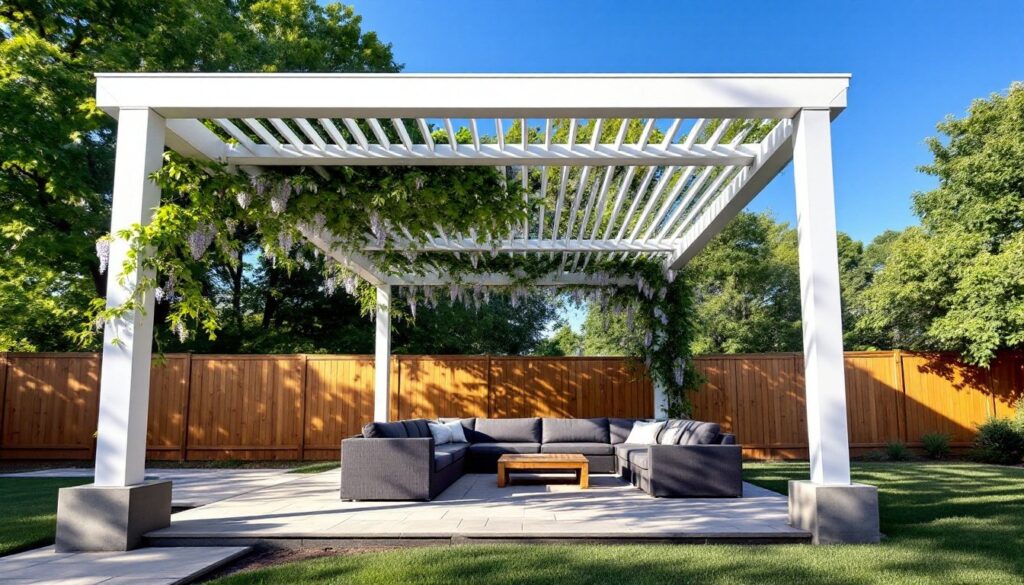
Living shade is the slowest to establish but offers unmatched aesthetics and cooling. Vines transpire moisture, lowering ambient temperature more than inert fabric. They also soften hard edges and attract pollinators.
Top vine choices:
- Wisteria: Fast-growing, fragrant blooms in spring: requires annual pruning to prevent weight overload on rafters. Plant near posts, not directly under beams.
- Climbing roses: Moderate growth, seasonal flowers, thorny (wear leather gloves). Best on pergolas with 4×4 or larger posts for anchoring guide wires.
- Grapevines: Edible fruit, dense summer canopy, winter dormancy exposes structure. Prune hard in late winter: expect 70–80% shade by mid-summer.
- Clematis: Lighter weight, smaller flowers, less aggressive. Good for narrow pergolas or mixed plantings.
- Boston ivy or Virginia creeper: Extremely vigorous, adhesive tendrils. Can damage painted surfaces: use only on bare wood or metal pergolas.
Installation tips:
- Anchor points: Screw stainless-steel eyebolts into rafters or beams (not into end grain). Space every 18–24 inches for horizontal wire runs.
- Wire or cable: Use 1/8-inch galvanized or vinyl-coated wire. Tension with turnbuckles: check annually as vines add weight.
- Planting: Dig holes 12 inches from posts to avoid concrete footings. Amend soil with compost: mulch 3 inches deep but keep mulch away from stems.
- Training: Weave new growth through wires weekly during the growing season. Don’t let vines wrap posts tightly, they’ll girdle the wood as they thicken.
Drawbacks: Full coverage takes 2–4 seasons. Vines require watering, fertilizing, and pruning. Deciduous varieties offer zero shade in winter. Falling leaves and petals mean regular cleanup, and some vines (wisteria, trumpet vine) can become invasive if not managed.
DIY pergola shade ideas using vines work best for homeowners willing to commit to seasonal maintenance and who aren’t in a rush.
Fabric and Textile Shade Options
Retractable Canopies and Shade Sails
Fabric offers instant shade, seasonal flexibility, and simple installation, ideal for renters or anyone testing layouts before committing to permanent solutions.
Retractable canopy kits mount to the pergola’s beams with tracks or wire guides. Most use shade cloth (knitted polyethylene) or Sunbrella-style acrylic canvas. Shade cloth blocks 70–90% of UV but allows rain to pass through: canvas is waterproof but must slope for drainage.
Installation steps:
- Measure the pergola’s interior dimensions. Order fabric 2–4 inches narrower than the opening to allow clearance.
- Mount tracks or cable guides parallel to the rafters using lag screws into the top beam faces. Pre-drill to avoid splitting.
- Thread the canopy onto the track. Most kits include rope-and-pulley or crank mechanisms.
- Tension the fabric snugly. Slack causes flapping in wind, which tears grommets and fatigues the weave.
Shade sails are triangular or rectangular fabric panels tensioned at corner points. They add a modern, sculptural look and work well over asymmetrical or freestanding pergolas.
Shade sail tips:
- Use marine-grade stainless-steel hardware: turnbuckles, carabiners, and pad eyes rated for 200+ lbs of tension.
- Angle the sail 10–15 degrees to shed rain. One corner should be lower than the others.
- Attach to pergola posts 6–8 inches below the beam to create airflow underneath, reduces heat buildup.
- Choose HDPE shade cloth (blocks 85–95% UV) or PES polyester (waterproof, heavier, more expensive).
Removable options: Velcro tabs, grommets with bungee cords, or simple curtain rods with outdoor fabric panels. These DIY pergola canopy ideas cost under $100 and install in under an hour, but durability is limited, expect 1–3 seasons before replacement.
Fabric fades in full sun: budget for replacement every 3–7 years depending on UV exposure and fabric grade. Always remove fabric before heavy snow or high winds (40+ mph). Mildew can develop on canvas in humid climates, hose off and air-dry monthly.
Permanent Roof Additions for Maximum Coverage
When year-round weather protection matters more than open-air ambiance, a solid roof is the answer. This shifts the pergola toward a pavilion or covered patio, often requiring a building permit and compliance with snow load, wind rating, and flashing details per IRC Chapter 8.
Common roofing materials:
- Polycarbonate panels: Lightweight, translucent, blocks 99% UV while letting diffused light through. Available in corrugated or multiwall (twin-wall, triple-wall) sheets. Multiwall offers better insulation. Secure with special fasteners that include rubber washers to prevent leaks. Expands/contracts with temperature, leave 1/8-inch gaps at edges.
- Metal roofing: Galvanized steel or aluminum panels in standing-seam or corrugated profiles. Durable (30–50 years), fire-resistant, sheds snow and rain efficiently. Louder in rain: consider acoustic foam underlayment. Requires 2×6 or larger rafters spaced 24 inches on center (o.c.) for most profiles.
- Asphalt shingles over sheathing: Heaviest option: needs 2×6 or 2×8 rafters at 16 inches o.c., 1/2-inch plywood or OSB sheathing, and underlayment (felt or synthetic). Matches house roof but eliminates light transmission. Budget $8–$12 per square foot installed.
- Cedar shakes or shingles: Traditional look, natural insulation, moderate cost. Requires annual treatment to prevent rot and moss. Expect 20–30 year lifespan with maintenance.
Structural upgrades:
Adding a solid roof increases dead load (weight of materials) and live load (snow, maintenance access). Existing 4×4 posts may need sistering or replacement with 6×6 posts. Rafters should be 2×6 minimum for spans over 8 feet: use a span table or consult a structural engineer for loads over 40 psf.
Flashing and drainage: If the pergola is attached to the house, install step flashing where the roof meets siding and a kick-out flashing at the bottom to direct water away from the wall. Slope the roof at least 1/4 inch per foot (2% grade) toward gutters or drip edges.
Permits: Most jurisdictions require permits for structures over 200 square feet with a roof, or any attached structure that modifies exterior drainage. Inspections typically cover footing depth, post-to-beam connections, and roofing attachment.
Permanent roofing transforms usability but sacrifices the airy, open feel of a pergola. It’s a one-way decision, removing a shingled roof leaves behind sheathing and potentially oversized framing.
Modern Louvered and Adjustable Pergola Systems
Louvered pergolas offer the best of both worlds: full sun, full shade, or anything in between, adjusted with a button or crank. Aluminum louvers rotate 0–120 degrees, allowing users to track the sun, create ventilation, or close completely for rain protection.
System types:
- Manual crank: Louvers link via a drive rod: turning a hand crank rotates all blades simultaneously. Costs $3,000–$8,000 for a 10×12-foot kit.
- Motorized with remote: Electric actuators controlled by remote, wall switch, or smartphone app. Some models integrate rain sensors that auto-close louvers. Costs $6,000–$15,000+ installed.
- Solar-powered: Off-grid option using a roof-mounted photovoltaic panel and battery. Slower operation: best for sunny climates. Add $1,200–$2,000 to motorized pricing.
Materials: Extruded aluminum frames powder-coated for corrosion resistance. Louvers are typically 4–6 inches wide, nested when closed to create a watertight seal (with integrated gutters). Look for tempered-aluminum alloy rated for 90+ mph wind loads and 30+ psf snow load if installing in cold climates.
Installation notes:
Most louvered systems are prefabricated kits that bolt together on-site. Footings require 12-inch diameter sonotubes extending 36–48 inches deep (below frost line). Posts anchor with embedded galvanized brackets or epoxy-set threaded rods. Electrical systems need a dedicated 15-amp circuit run in conduit: hire a licensed electrician to meet NEC Article 680 (outdoor wiring).
DIY installation is possible for mechanically inclined homeowners with helpers, louver sections weigh 60–100 lbs each. Budget 2–3 days for a standard kit. Professional installation adds $1,500–$3,000 but includes electrical hookup, leveling, and warranty protection.
Pros: Infinite adjustability, modern aesthetic, integrated gutters and downspouts, long lifespan (20+ years). Some models include LED strip lighting, ceiling fans, and heaters.
Cons: High upfront cost, maintenance on motors and seals, potential for mechanical failure (manual cranks are more reliable). Not a good retrofit for existing wood pergolas, louvers require proprietary mounting channels.
For homeowners seeking premium pergola shade cover ideas with smart-home integration and zero seasonal swap-out, louvered systems deliver, but the price reflects the engineering.