





Table of Contents
ToggleThe range hood doesn’t have to be the appliance everyone ignores. It’s prime real estate in the kitchen, right above the cooktop, at eye level, often the first thing people notice when they walk in. Yet most homeowners settle for a stainless steel box that blends into the background. With the right design, a range hood becomes a focal point that sets the tone for the entire space. From custom range hood ideas that involve reclaimed wood and hand-hammered copper to modern kitchen range hood ideas that disappear into the ceiling, the options in 2026 go well beyond standard builder-grade units. This guide breaks down unique range hood ideas by style, material, and installation approach, so DIYers and renovators can choose a design that matches their skill level and kitchen vision.
Key Takeaways
- Unique range hood ideas transform a functional appliance into a kitchen focal point by combining standard inserts with creative custom surrounds using materials like reclaimed wood, stucco, brick, or metal.
- Maintain proper clearance between your range hood and cooktop—24 inches for electric and 30 inches for gas ranges—and always check local building codes and appliance manuals before installation.
- Popular custom range hood designs include shiplap for farmhouse aesthetics, reclaimed beam mantels for rustic character, and hidden ceiling cassettes or integrated cabinet hoods for modern minimalism.
- Metal range hoods in stainless steel, copper, or blackened steel require appropriate mounting support (threaded rod or aircraft cable for heavy units) and sealed finishes to resist heat, humidity, and grease.
- Bold paint colors, tile cladding, and artistic details make range hoods design statements, but textured finishes trap grease and require weekly degreasing maintenance.
- Most DIY-friendly unique range hood projects pair a code-compliant mechanical insert with a custom surround, balancing aesthetic creativity with reliable ventilation and safety.
Statement-Making Custom Range Hoods
Custom range hoods offer full control over dimensions, materials, and finish, especially useful in kitchens with non-standard layouts or ceiling heights. A custom surround can house a standard insert (the fan and ductwork), which keeps costs and complexity manageable while still delivering a one-of-a-kind look.
Plaster and stucco finishes give a Mediterranean or Spanish Revival feel. The hood surround is typically framed with 2×4 studs or metal studs, sheathed in cement board (like HardieBacker or DuRock), then finished with a trowel-applied stucco or Venetian plaster. This approach requires decent finishing skills, uneven trowel strokes show up under task lighting. For a DIYer new to plaster work, practicing on scrap cement board is worth the time.
Brick or stone veneer wraps the hood in texture and mass. Thin brick (about ½ inch thick) or cultured stone veneer can be adhered directly to cement board using thinset mortar. Total added weight varies, but a full surround might add 50–150 pounds depending on size. Check that the wall framing and support brackets are adequate: if the hood is cantilevered or island-mounted, consult a structural engineer or experienced contractor. Building codes (IRC) require range hoods to be 24–30 inches above the cooktop for fire safety, so plan the veneer thickness accordingly.
Shiplap or paneling creates a farmhouse or cottage look. This is one of the more DIY-friendly custom options: frame the hood surround, sheath it with ½-inch plywood, then apply horizontal shiplap boards (usually ¾ inch thick, 5½ or 7¼ inches wide). Use a nickel or quarter as a spacer for consistent gaps. Seal all wood surfaces with a high-heat primer and semi-gloss or satin paint rated for kitchens: grease and steam are hard on raw or poorly sealed wood. If the hood will be over a gas range, verify local codes, some jurisdictions require non-combustible materials within a certain distance of the burners.
Wood and Reclaimed Material Range Hoods
Reclaimed wood brings warmth and character, but it’s not a grab-and-go material. Old barn siding, pallet wood, or salvaged flooring often contains nails, staples, and uneven moisture content. Run every board through a metal detector or carefully pull fasteners before cutting. Plane or sand boards to a uniform thickness if they’ll be joined edge-to-edge.
Reclaimed beam hoods use a single large timber, often a 6×6, 8×8, or larger hand-hewn beam, as a mantel or lower trim piece. The beam is lag-bolted into wall studs or ceiling joists (use ½-inch lag screws with washers, sunk into pilot holes). Behind and above the beam, a wood or metal surround houses the duct and insert. This design works especially well in kitchens with exposed ceiling joists or rustic finishes.
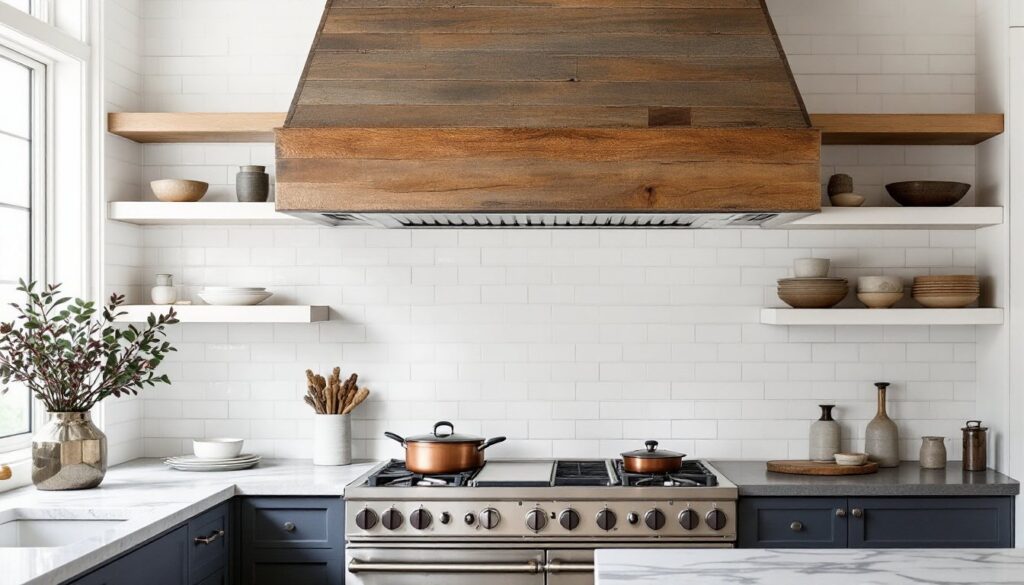
Planked wood hoods layer horizontal or vertical boards over a framed box. For a modern custom range hood idea, consider tongue-and-groove cedar or walnut with a clear matte sealer. For a farmhouse look, use whitewashed or gray-stained pine. Always seal end grain and back faces to minimize warping from heat and humidity. Avoid finishing with polyurethane directly over a gas range, high heat can cause yellowing or off-gassing. Instead, use a water-based acrylic sealer or a product rated for high-heat applications.
One common mistake: mounting wood too close to the cooktop. Even with an insert fan, heat rises. The International Residential Code (IRC) requires a minimum clearance of 24 inches for electric ranges and 30 inches for gas. Some range manufacturers specify even greater distances. Always check the appliance’s installation manual and local amendments to the IRC.
Modern Minimalist and Hidden Range Hood Designs
Modern kitchen range hood ideas often emphasize clean lines and invisibility. The goal is ventilation without visual clutter.
Flush-mount ceiling hoods (also called ceiling cassettes) sit recessed into the ceiling plane. Installation requires access above the ceiling, either from an attic, crawl space, or by cutting into drywall and reframing. The unit is mounted between ceiling joists (typically on 16-inch or 24-inch centers), and ductwork runs through the joist bays or attic to an exterior wall cap. This is not a beginner project: it involves framing, drywall finishing, and HVAC routing. If the kitchen is on a second floor or under a finished space, coordinate with an HVAC contractor to map duct paths and avoid conflicts with plumbing or electrical.
Downdraft vents pull air downward through the cooktop and exhaust it beneath the floor or through a rear wall. These are popular in islands or peninsula layouts where overhead hoods would block sightlines. The tradeoff: downdrafts are less effective at capturing heat and grease than overhead hoods, especially with tall pots. Ductwork usually runs under the floor slab or in a crawl space, so retrofitting can be invasive. Downdraft vents work best with electric or induction cooktops: gas burners produce more heat and combustion byproducts that benefit from overhead capture.
Integrated cabinet hoods hide the fan inside a wall cabinet or custom millwork box. The face of the cabinet can be flat-panel, louvered, or finished to match the rest of the kitchen. This approach requires a low-profile insert (typically 6–10 inches tall) that fits inside a standard 12-inch-deep cabinet. Make sure the cabinet box is built with enough clearance for the ductwork transition: round ducts are easier to route than rectangular, but they may require a reducer elbow at the top of the insert.
Industrial and Metal Range Hood Styles
Metal hoods suit loft-style kitchens, contemporary designs, or anyone who wants a commercial-grade look at home.
Stainless steel remains the workhorse. It’s durable, non-combustible, and easy to clean, though fingerprints and water spots show readily on polished finishes. Brushed or satin stainless hides smudges better. Custom stainless hoods can be fabricated by a local sheet metal shop: provide exact dimensions, radius corners, and weld finish preferences. Expect to pay a premium for tight corners or complex angles. For a DIY build, some fabricators sell flat patterns that can be bent and welded at home if you have a sheet metal brake and TIG welder.
Copper hoods develop a patina over time, shifting from bright penny to bronze to verdigris, depending on the alloy and sealer. Unsealed raw copper will darken and mottle: sealed copper (clear lacquer or wax) holds its original tone longer. Hammered or hand-textured copper adds visual interest and hides minor dents. Copper is softer than stainless, so handle seams and mounting flanges carefully during installation.
Zinc and blackened steel (also called hot-rolled or raw steel) bring an edgier, gallery-like vibe. Raw steel will rust without treatment: options include a clear coat, wax finish, or intentional rust patina sealed with a matte acrylic. Blackened steel (Parkerized or oxide-treated) offers corrosion resistance and a matte black surface that doesn’t show fingerprints. This finish is fragile, abrasive cleaners will strip it. Wipe with a damp microfiber cloth and avoid acidic cleaners.
For island hoods, ensure the ceiling structure can support the weight. A large stainless or copper hood may weigh 75–200 pounds empty. Use threaded rod or aircraft cable anchored into ceiling joists or a steel beam, never just drywall anchors. If unsure, hire a structural engineer to spec the support.
Colorful and Patterned Range Hood Ideas
Color turns a functional vent into a design moment. This approach works especially well in kitchens with neutral cabinets or minimal backsplashes.
Bold paint colors, deep navy, forest green, burnt orange, or glossy black, add personality without requiring new materials. Use a high-adhesion primer (like Zinsser Bulls Eye 1-2-3 or KILZ Adhesion) on metal or laminate surfaces, then follow with a durable enamel or cabinet-grade paint in a semi-gloss or satin finish. Two thin coats beat one thick coat: let each cure fully (24–48 hours) before exposing to heat and steam. For gas ranges, choose a paint rated to 200°F or higher to prevent discoloration.
Tile cladding offers limitless pattern and color combinations. Cement tile, zellige, subway tile in bold glazes, or mosaic sheets can wrap the front and sides of a hood surround. Adhere tiles to cement board using thinset mortar (polymer-modified is more flexible and water-resistant). Use unsanded grout for joints narrower than ⅛ inch, sanded for wider joints. Seal grout lines with a penetrating sealer to resist grease buildup.
Wallpaper or adhesive film is the fastest, lowest-commitment option. Peel-and-stick films (like those from Chasing Paper or Tempaper) can be applied to smooth, primed surfaces. They won’t withstand direct heat, so keep them at least 24 inches above the cooktop and ensure good ventilation. This solution is temporary and best for renters or those planning a future remodel.
One caution: highly textured or porous finishes (like unsealed cement tile or raw plaster) trap grease. If using a bold, textured finish, apply a stain-blocking sealer and plan to wipe the surface weekly with a degreasing cleaner.
Artistic and Sculptural Range Hoods
Some range hoods double as sculpture, curved forms, asymmetrical shapes, or mixed-media installations that demand attention.
Curved plaster or concrete hoods require formwork and finishing expertise. A curved plywood or foam substrate is shaped, then covered with layers of joint compound, plaster, or micro-topping concrete. Each layer is troweled smooth, sanded, and sealed. The result is organic and sculptural, but labor-intensive. This is best left to professionals or very experienced DIYers with plastering or concrete countertop experience.
Mixed-material hoods combine wood, metal, tile, and stone in a single design. For example, a reclaimed wood mantel with a hammered copper skirt and mosaic tile inlay. These projects require careful planning, each material expands and contracts at different rates with heat and humidity. Use flexible construction adhesive (like PL Premium) at material transitions, and avoid rigid fasteners that can crack or warp.
Art tile murals or hand-painted panels personalize the hood surface. Commission a local tile artist or painter to create a custom panel, or use decals and high-heat vinyl for a DIY version. If painting directly onto a metal or wood hood, prep with degreaser, high-adhesion primer, and heat-resistant enamel. Clear-coat with a polycrylic or water-based sealer for durability.
Structural considerations matter more with sculptural hoods. Curved or cantilevered forms may need internal steel or aluminum framing to prevent sagging. Consult a metal fabricator or structural contractor if the design extends more than 12 inches from the wall or weighs over 100 pounds. Always install a code-compliant range hood insert inside: even the most artistic hood must meet ventilation requirements for safety and resale value.
Conclusion
A unique range hood can anchor a kitchen’s design without requiring a gut renovation or major structural work. Whether the goal is a custom wood surround, a sleek hidden vent, or a bold color statement, the key is planning around the existing duct path, cooktop clearances, and structural support. Most projects combine a standard insert with a creative surround, keeping the mechanical side simple and the aesthetic side personal. With careful material selection and proper sealing, even DIY-built hoods hold up to daily cooking. The result is a kitchen that feels intentional, not builder-grade.